
Guide
How to start a plant health care program at a tree service.
You already climb, prune, and remove. PHC is the recurring-revenue line that keeps the same clients on the books between big jobs. Here is the order to do it in: license, five services, price per inch, one rig, a diagnosis process, and a first-year calendar. Written for an owner, not a chemical rep.
Key takeaways
- Get the commercial applicator license before you buy anything. Ornamental and turf category in most states, 4 to 10 weeks including the exam.
- Start with five services, not fifteen: trunk injection, soil drench, dormant oil, foliar spray, soil services (root collar excavation and soil decompaction/amendments).
- Price per inch of DBH with a per-visit minimum. $10 to $25 per inch is the working range; the product is usually under a third of that.
- One truck, one rig, one tech. Sell the first season to clients you already have.
- Write down the diagnosis, the rate, and the label check for every tree from day one. It is easier than adding it later, and it is what makes the program defensible.
Step 1: License first
Every state requires a commercial pesticide applicator license to apply anything for hire, and most put trees under an Ornamental and Turf (or Ornamental and Shade Tree) category. The path is a core exam plus the category exam, a fee, and in some states a period as a registered technician under a licensed applicator before you can test. Budget four to ten weeks. Licenses are per person, so the tech who will do the work needs one, and the business usually needs a separate business license or registration on top.
Rules by state are on the applicator license guide. Two things people miss: continuing education units to keep the license, and record-keeping requirements that start on the first application.
Step 2: Pick the first five services
The PHC Rx default service list has eleven types. Nobody starts with all eleven. The five that cover most of what walks in the door at a tree service:
- Trunk injection: emerald ash borer, oak wilt, Dutch elm, bacterial leaf scorch. Highest margin, longest interval.
- Soil drench or soil injection: systemic insecticides for scale, adelgid, borers on smaller trees. Annual.
- Dormant oil: scale and mites on everything, applied while the tree is leafless. Easiest sell in the industry.
- Foliar spray: bagworms, Japanese beetle, fungal leaf diseases. Timing-sensitive, so the calendar matters.
- Soil services, root collar excavation and decompaction/amendments: fixes the actual cause instead of masking it. Most PHC callbacks trace back to girdling roots or compacted soil.
Step 3: Price per inch of DBH
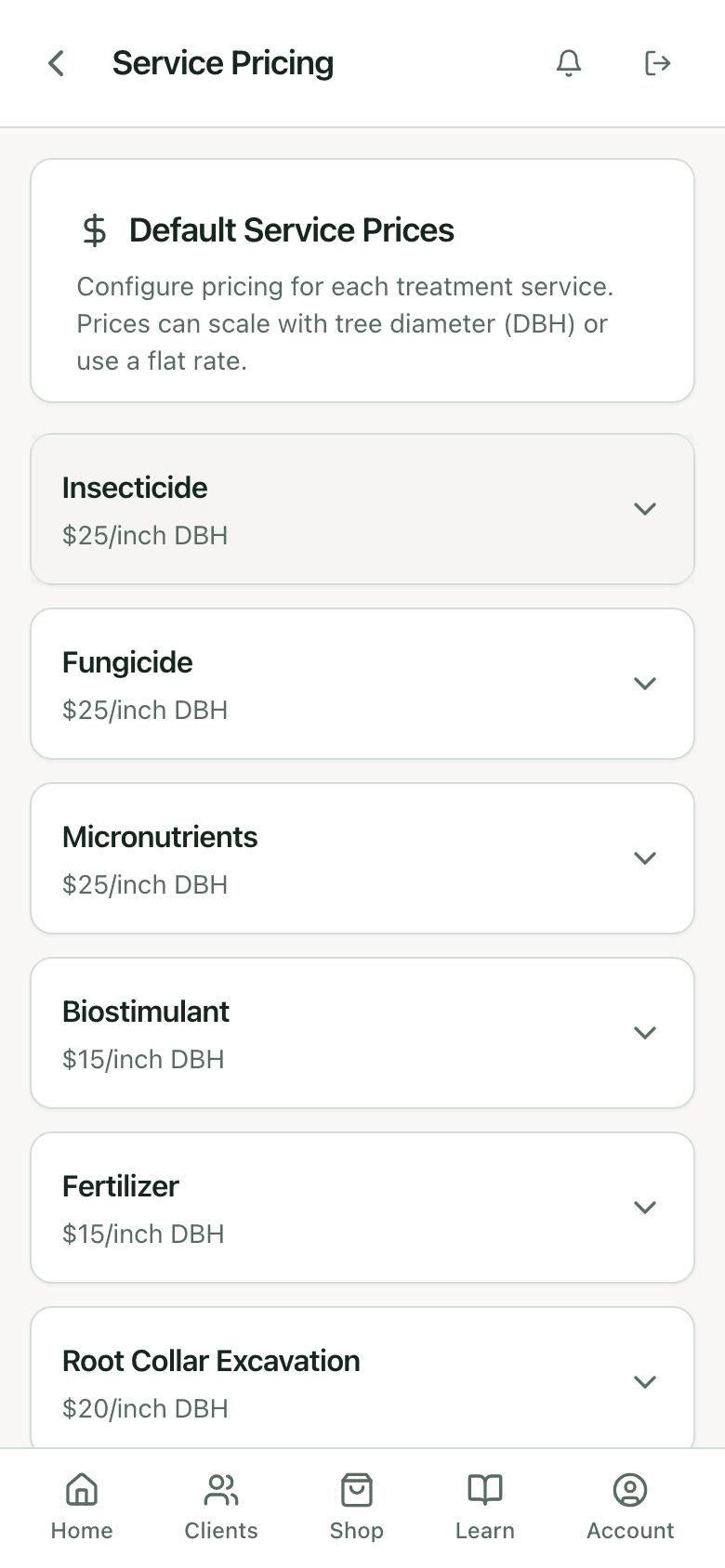
Trunk injections and soil applications price per inch of trunk diameter at breast height, with a minimum per visit. The working range across the industry is $10 to $25 per inch depending on product and market. A 22-inch ash on emamectin benzoate at $15 per inch is $330, and it comes back every two years. Product cost on that tree is well under $100.
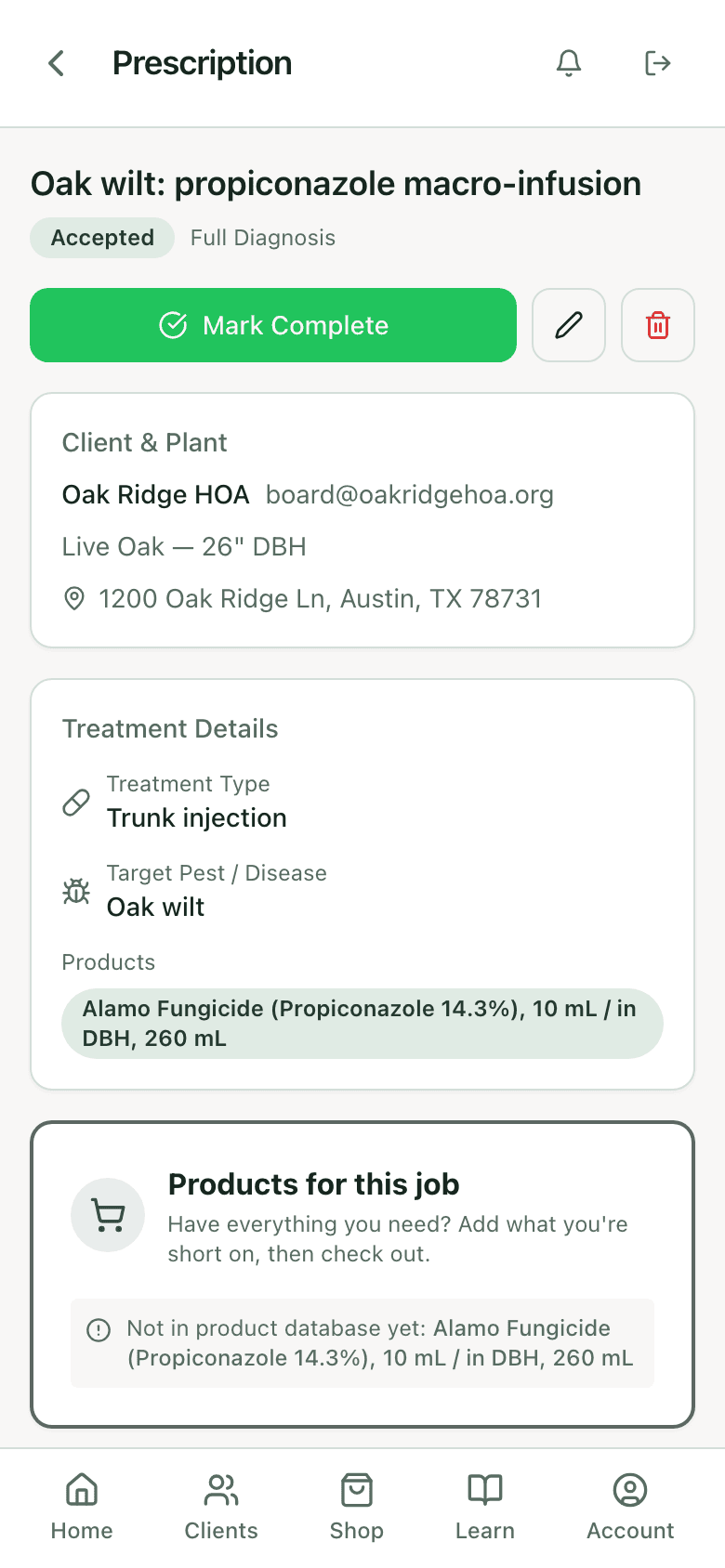
Foliar sprays and dormant oil price per tree or per property by size class. Deep root fertilization prices per inch or per tree. Whatever you pick, put it in writing before the first quote. In PHC Rx, each service type carries a flat price or a per-inch rate with a minimum, and the prescription does the math from the DBH on the plant record. The longer version is on the pricing guide and the injection pricing guide.
Step 4: One rig, one tech
A dedicated PHC truck comes later. For the first season most companies run a 100- to 200-gallon skid sprayer on an existing pickup, a trunk injection kit (Arborjet QUIK-jet or a Rainbow macro-infusion setup), a backpack sprayer, a soil injection probe, and the PPE the labels require. A purpose-built workstation like the [Mobile Tree Spa MTS-180](https://mobiletreespa.com) makes sense once the route fills a truck.
Pick the tech now. The person with the license, the patience for measuring DBH on every tree, and the habit of writing things down. The program is that person for the first year.
Step 5: Decide how a diagnosis gets made
This is the step most guides skip, and it is where programs go wrong. A pruning crew can eyeball a hazard. A PHC program has to say what is wrong with the tree, how sure it is, and what to apply, and then stand behind it when the client asks why the tree still looks bad in August.
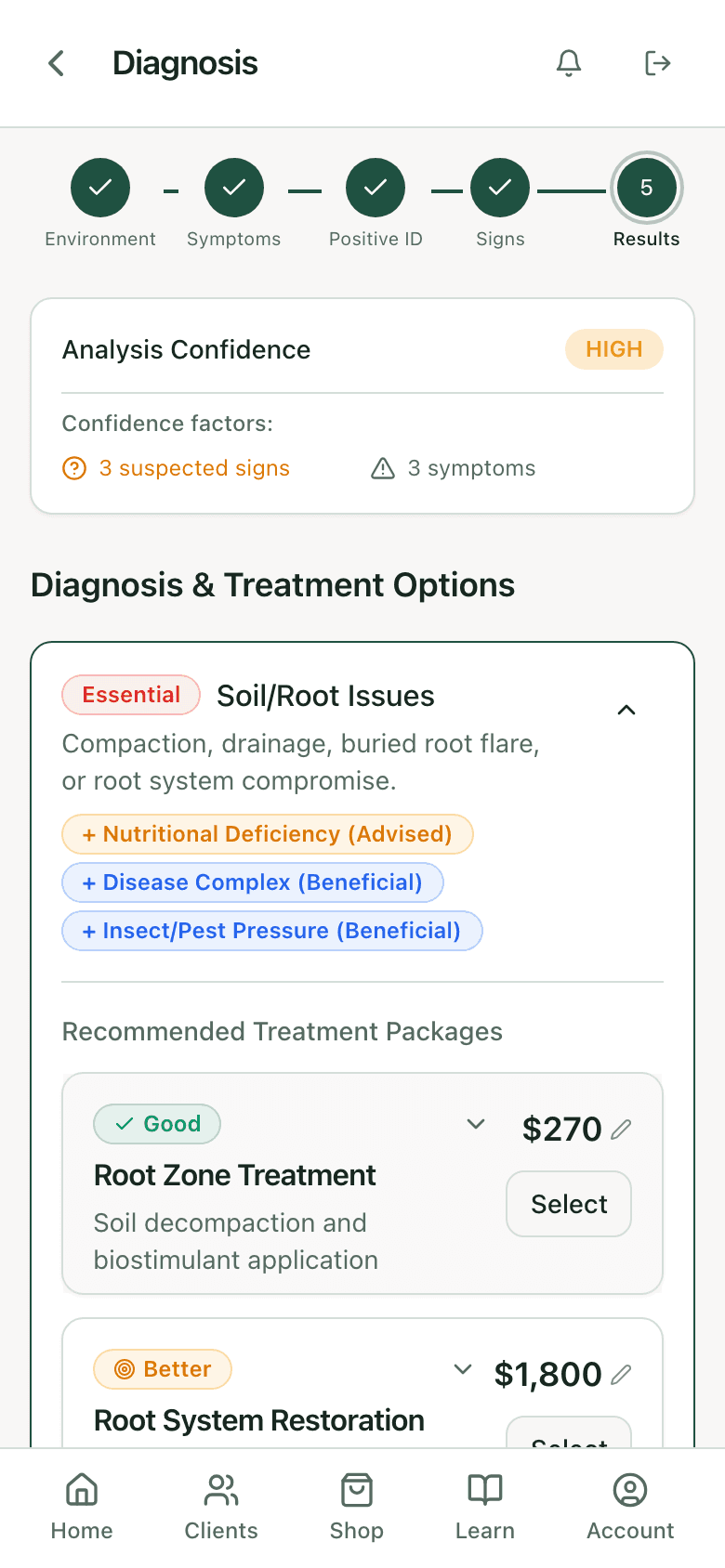
A workable process, on paper or in software: record species and DBH; note site conditions; separate symptoms (what the tree is doing) from signs (the organism itself); confirm with a positive ID when you can; then pick the treatment from a species-specific list, not from memory. The PHC Rx diagnosis runs those five steps and gives the finding a confidence rating. Whatever you use, the client should get the finding and the reasoning in writing, not just a price.
Step 6: The paperwork nobody warns you about
- The label is the law. Host on label, pest on label, rate, method, timing, reapplication interval, REI. Read it before the first job and check it on every job.
- Application records: date, site, product, EPA number, rate, amount, target, applicator, weather. Most states want them kept two to three years. What to record and how the app keeps it.
- Restricted entry intervals and posting requirements on commercial and school properties.
- Insurance: tell your carrier you are applying pesticides. Some general liability policies exclude it.
Step 7: Sell it to clients you already have
Every removal you have done in the last three years was at a property with other trees. Every pruning client has a tree they worry about. That list is the first season of PHC. The pitch is a diagnosis on the tree they already asked about, with a written plan and a price. Approval rates on a written prescription with a confidence rating and a reason run well ahead of a line item that says "treatment".
Municipal and HOA work comes later, usually after you have a season of records and a TRA credential on the team. Those clients ask for the paperwork first.
Step 8: The first-year calendar
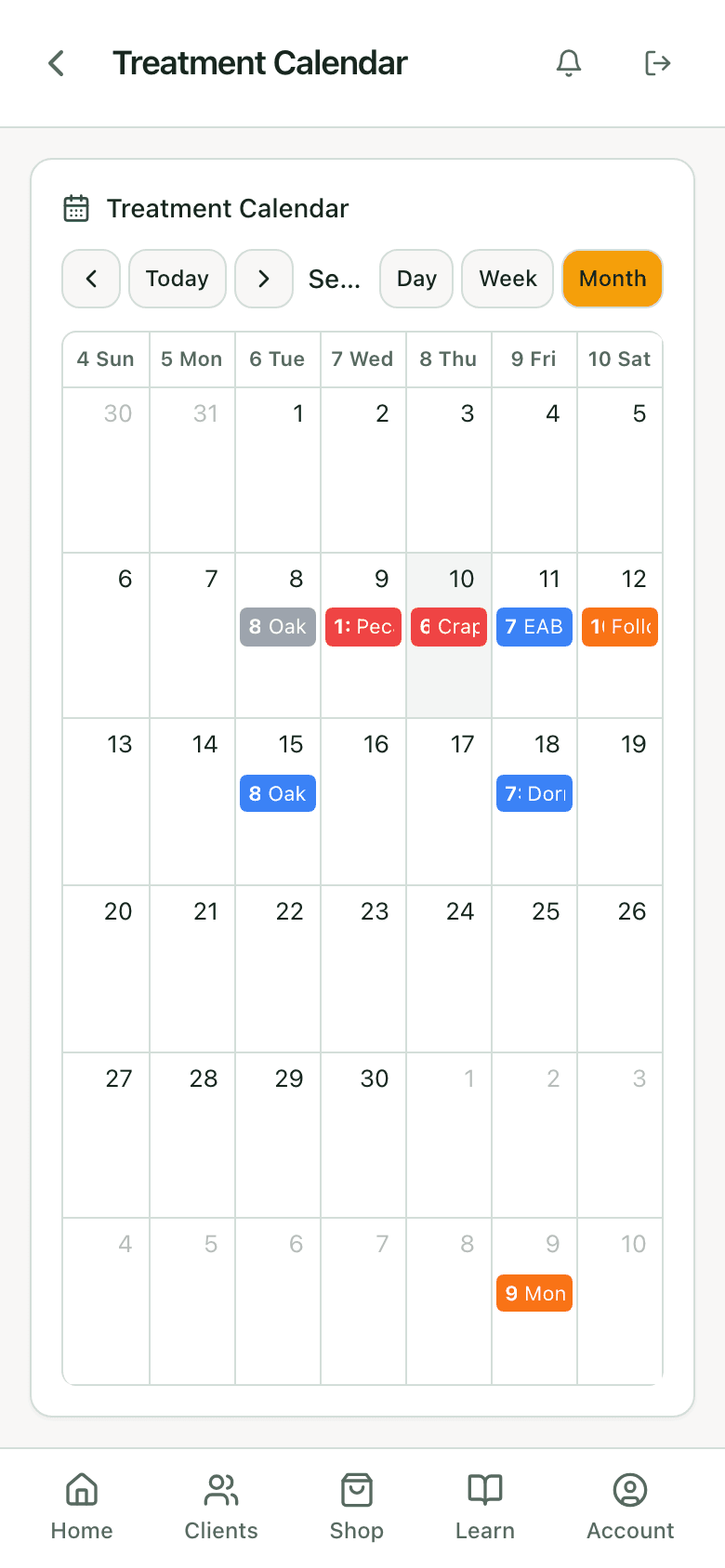
PHC is a calendar business. Product goes in when the organism and the tree say so, not when the truck is free.
Late winter
- What
- Dormant oil on scale and mite hosts
- Why
- Tree leafless, pest exposed, easiest application of the year
March to May
- What
- Trunk injections: EAB, oak wilt preventive, Dutch elm
- Why
- Tree moving water, before adult emergence or spore flight
April to May
- What
- Soil drenches for scale, adelgid, borers on smaller trees
- Why
- Needs 30 to 60 days to reach the canopy
May to July
- What
- Foliar sprays: bagworm, Japanese beetle, leaf diseases
- Why
- Timed to egg hatch and infection periods
August to September
- What
- Follow-up inspections, fall soil applications
- Why
- Check what worked, set up next spring
October to November
- What
- Deep root fertilization, second dormant oil window opens
- Why
- Root growth continues after leaf drop
What a good first year looks like
Thirty to sixty properties on a program. One tech with a full route April through June and a lighter one the rest of the year. A file for every treated tree with the diagnosis, the rate, and the label check. And a list of retreat dates for next spring that came from this year's applications, not from memory. That last item is the difference between a program and a series of jobs.
One open question worth sitting with before you start: do you want PHC to be a department, or the business? Companies that answer "the business" tend to buy the rig and the software in year one. Companies that answer "a department" tend to do better starting on the pickup.
Written and reviewed by
ISA Board Certified Master Arborist MA-5832B · ISA TRAQ · Maryland Licensed Tree Expert #2168
Alex Shy is an ISA Board Certified Master Arborist, TRAQ-qualified tree risk assessor, and Maryland Licensed Tree Expert. He holds a B.S. in Forest Resource Management from West Virginia University. Alex is the founder and president of Mobile Tree Spa LLC, founder and co-owner of the PHC Rx diagnostic app, and a member of the ATCP board, where he oversees the education committee. His work focuses on making science-based plant health care practical, profitable, and easy for tree care companies to adopt.
ISA Certified Arborist MA-7027A · VNLA Certified Horticulturist · Virginia Commercial Pesticide Applicator
Jordan Thompson is an ISA Certified Arborist, VNLA Certified Horticulturist, Virginia Commercial Pesticide Applicator, and co-owner of J.J. Mauget Co. and TIPCO. She holds an M.S. in Entomology and a B.S. in Environmental Horticulture from Virginia Tech. Her work bridges arboriculture, plant health care, and applied research, with a particular focus on tree injection, invasive species, tree disease management, and translating university research into practical tools for professional arborists.
FAQ
Questions arborists ask
How much does it cost to start a plant health care program?
Licensing runs a few hundred dollars per applicator. A skid sprayer, injection kit, backpack, probe, and PPE on an existing truck is roughly $5,000 to $15,000. A dedicated PHC workstation is a second-year purchase for most companies. Software is $99 to $199 a month.
Do I need to be an ISA Certified Arborist to offer PHC?
No. You need the state pesticide applicator license. The ISA credential and TRA help you sell municipal and HOA work and they make the diagnosis more credible, so most companies get them in the first two years.
What is the most profitable PHC service?
Trunk injection for emerald ash borer and oak wilt. High price per inch, low product cost, two-year interval, and the client understands the stakes. The EAB treatment guide has the rates.
How do I price plant health care?
Per inch of DBH for injections and soil applications with a per-visit minimum; per tree or per property by size for sprays. $10 to $25 per inch is the working range. Full breakdown on the pricing guide.
Can I run PHC with the scheduling software I already have?
Yes. Keep Jobber or whatever runs the office. PHC Rx handles the diagnosis, rate, label check, and prescription, and syncs with Jobber both ways.
Related