
Plant health care software
Plant health care software for the tree in front of you.
You walk the property, you look at the tree, you decide what to do about it. PHC Rx is the app for that part. Symptoms, signs, species, DBH in. A diagnosis, a product with a rate per inch, a label check, and a prescription the client can approve from a text out. Scheduling stays in Jobber.
220+
species, each with its vulnerabilities and rates
138
pests and diseases in the library
per inch
every rate is per inch of DBH, the unit you measure in
9 steps
Industry Standard Tree Risk Assessment wizard with the matrices built in
The gap
The rate is still coming off a PDF in the truck
Arborgold, SingleOps, ArborNote. Good tools. They will route the crew and send the invoice. Type "plant health care" into any of them and you get a service line you can schedule. What goes in the tree, and how much, is still on you. That is the part PHC Rx covers.
A 22-inch red oak at 4:30 on a Friday
Alamo runs 10 mL per inch preventive, 20 mL therapeutic. You do the math on the tailgate, round it, and hope the tech writes the same number on the work order. Next spring nobody remembers which end of the range you used.
The label is the law, and nobody checks it
Host on label. Pest on label. Right delivery method. Inside the timing window. Enough days since the last app. Five things, and the state inspector will ask about all five if a client complains. The record of each check is kept with the prescription.
Clients approve what they understand
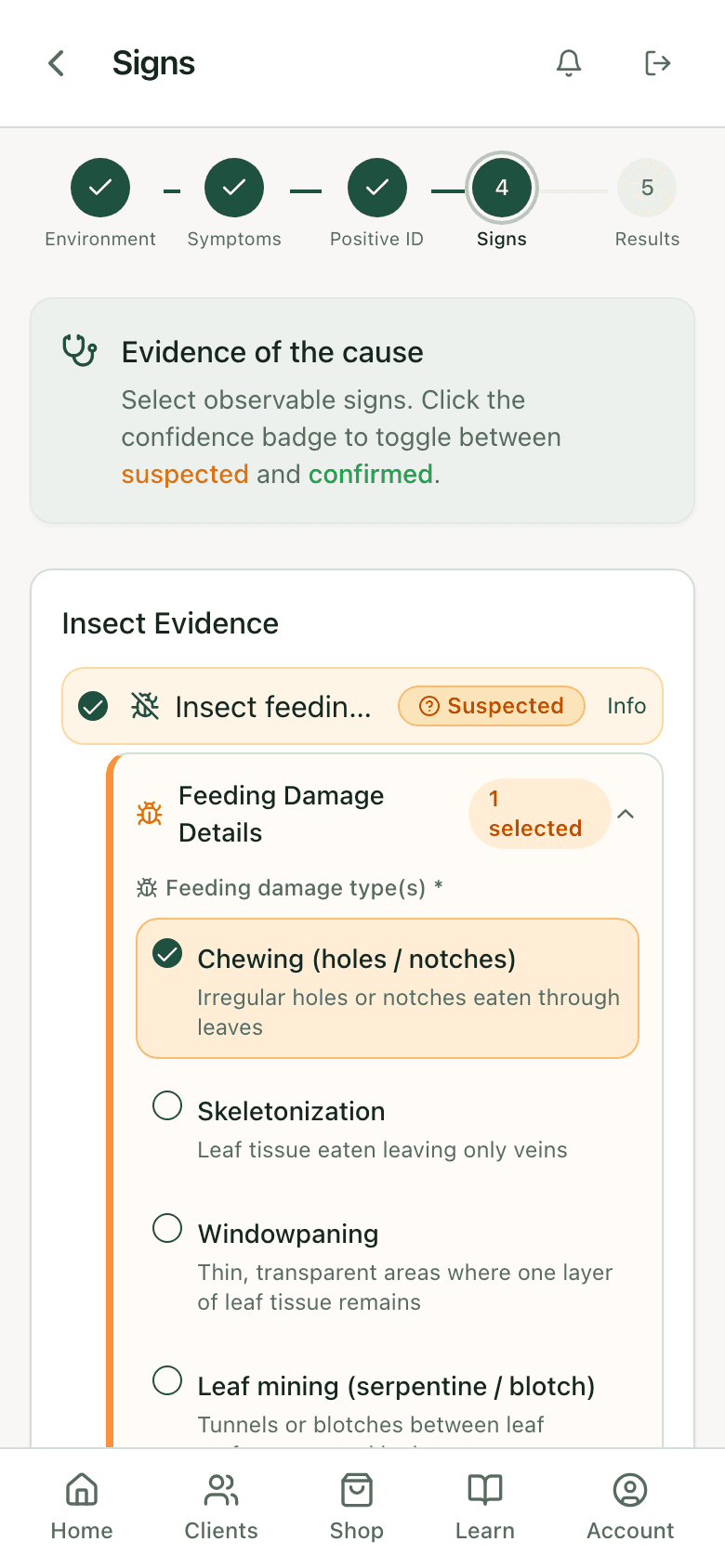
A line item that says "tree injection, $480" gets a phone call. A page that says oak wilt, confidence high, propiconazole macro-infusion before bud break, retreat in two years, gets a yes.
Diagnosis
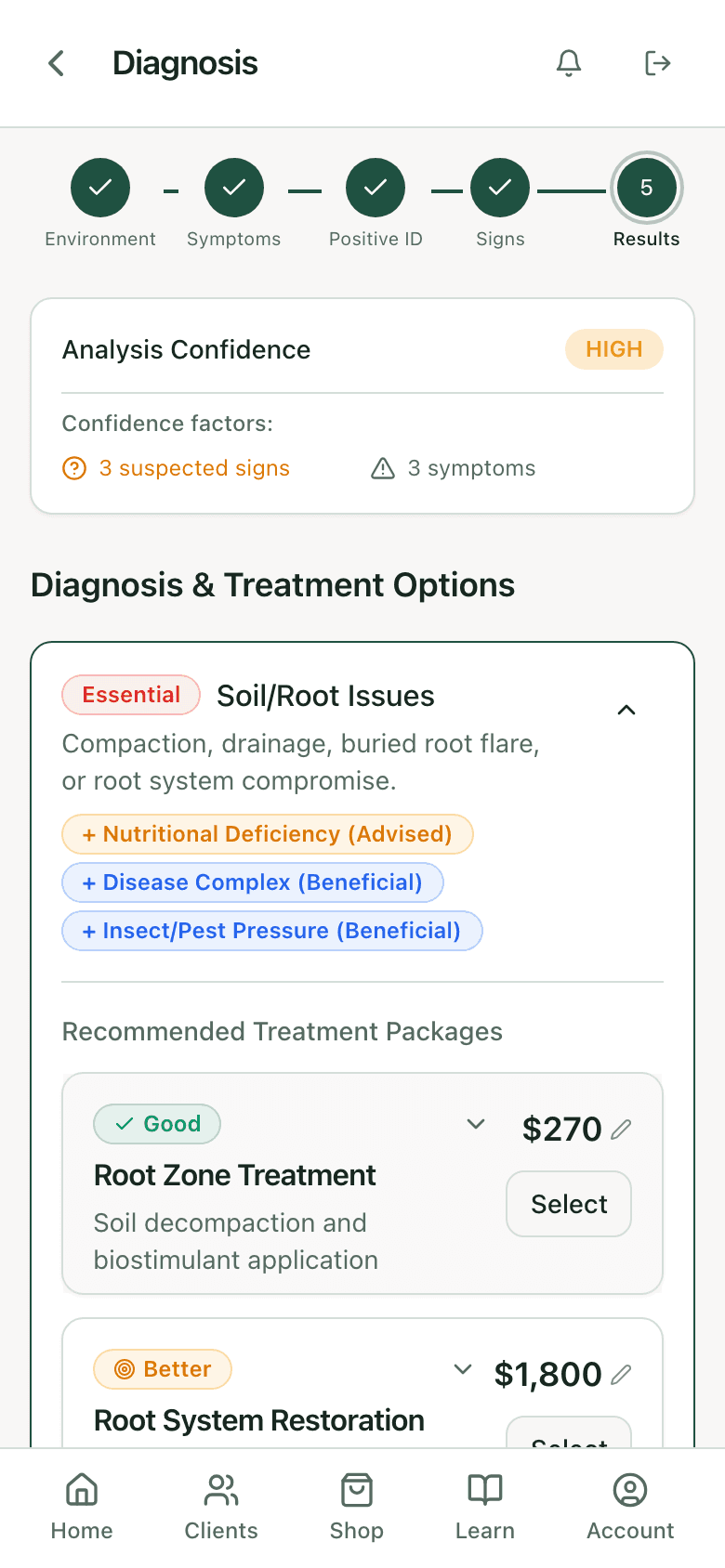
Symptoms and signs are not the same thing, and the app knows it.
Environment, symptoms, positive ID, signs, results. Chlorosis and dieback are symptoms; the tree could be telling you ten different things. D-shaped exit holes are a sign; that is the beetle. Each one carries its own weight, a lab-confirmed ID outweighs all of them, and the confidence rating on the results screen tells you how hard you can lean on the call.
- Flip any sign between suspected and confirmed
- Confidence factors shown right on the results screen
- Issues ranked essential, advised, beneficial, so the client sees what actually matters
Treatment library
Pick the species. The vulnerabilities and rates are already there.
Northern red oak: oak wilt, two-lined chestnut borer, anthracnose, and the rest, each with product, active ingredient, rate per inch, delivery method, timing, and retreat interval. Same for 220 other trees and shrubs. Includes the ones you treat twice a year and the ones you see once a decade.
Every module on the platform
Label compliance
Five label checks before the prescription goes out.
If the retreat interval is 21 days and the last application was 14 days ago, you get a warning. You can still proceed. You write the reason, and the reason stays in the record with a timestamp. That is the file you want when someone asks.
Label check
1 warningLast application was 14 days ago. Proceed with a documented override, or reschedule.
Prescriptions
The client gets a link. They tap approve.
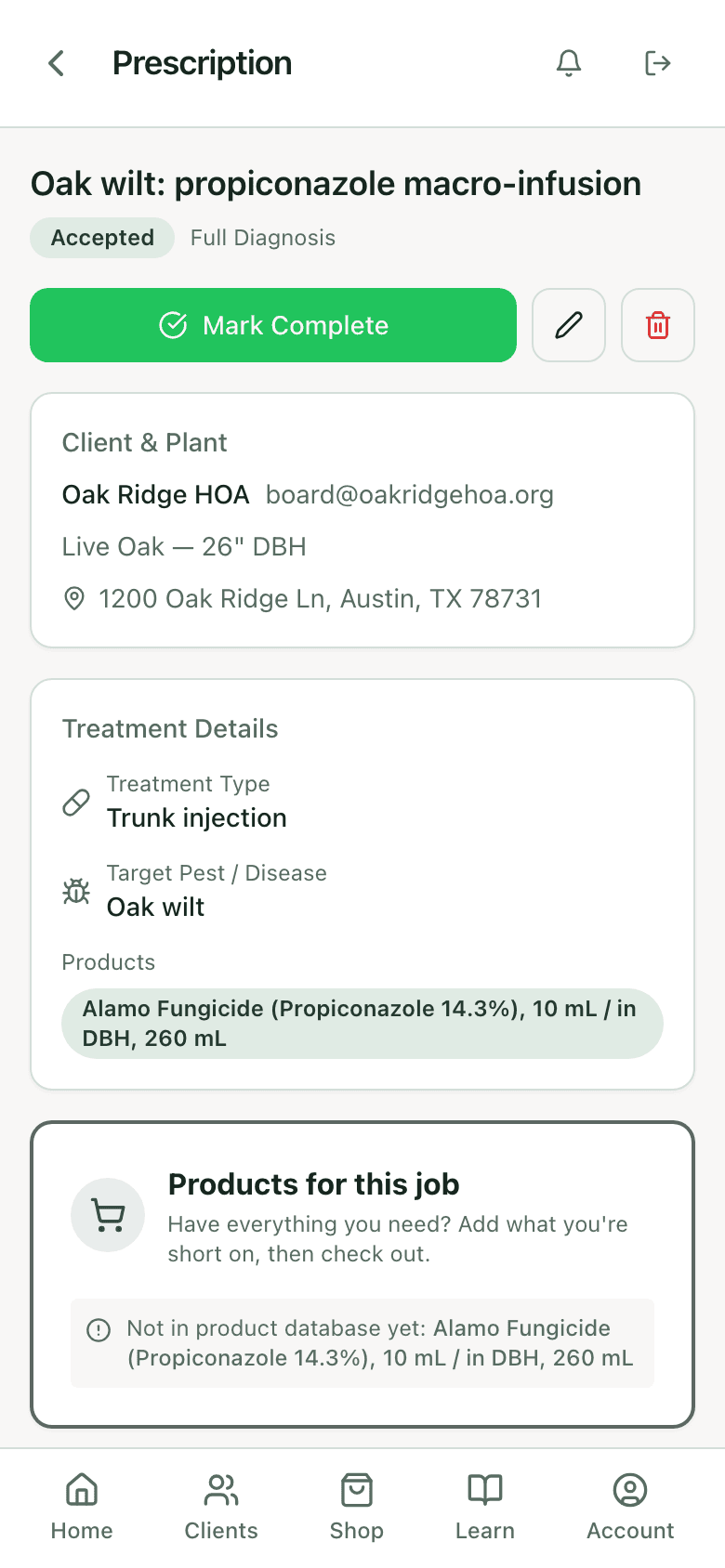
Finding, confidence, product, timing, price, your logo. No login on their end. No PDF to chase. Approvals push to Jobber as quotes if you run it.
Timing
Bud break is not a date on the calendar.
Every pest in the library has an active period and a preventive and curative window by month. Emamectin for EAB in April or May, not August. Dormant oil while the tree is dormant. The scheduler places follow-ups inside those windows so a treatment does not land when the organism is gone.

Rate calculator
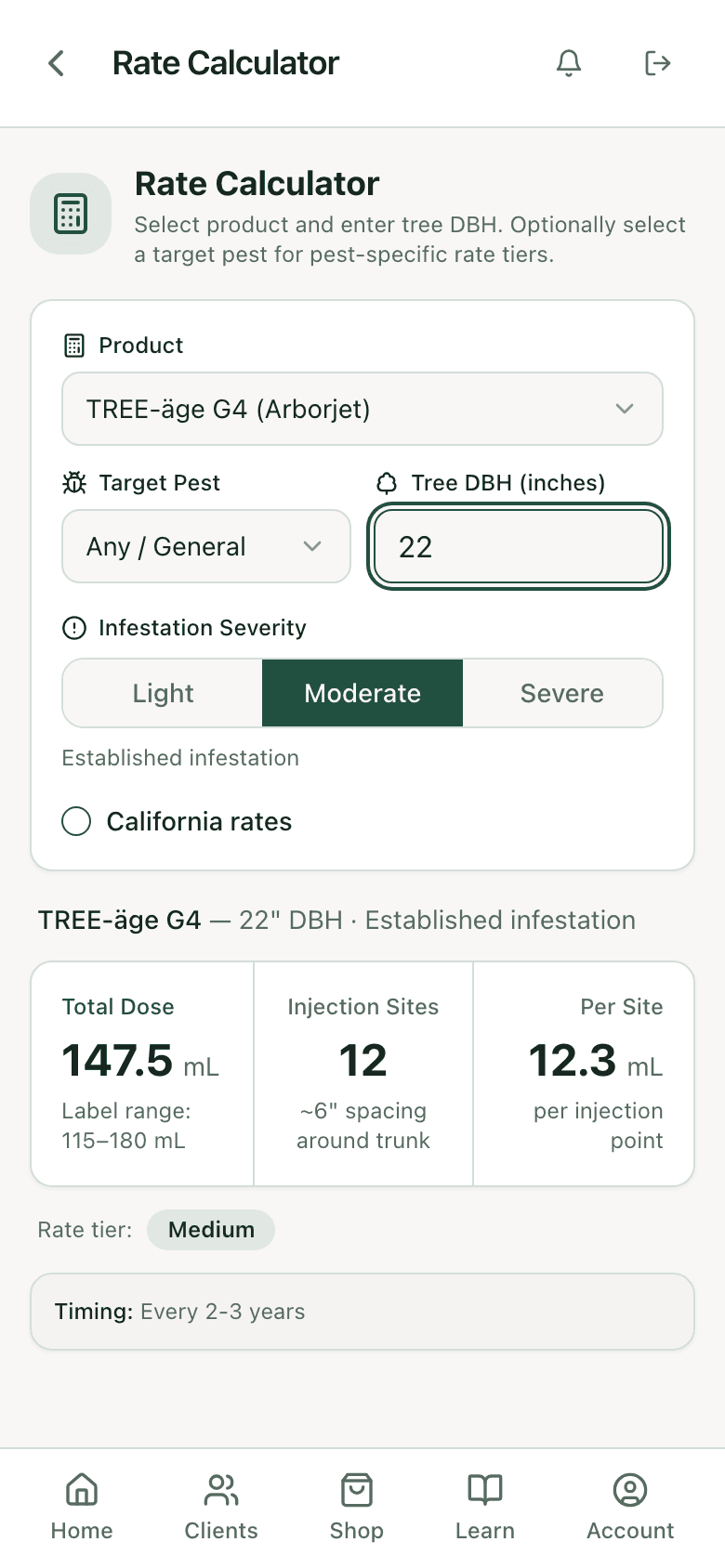
DBH in, dose and injection sites out.
Tape the trunk, enter the inches, pick the product. Built for tree work, so nothing is per acre. Works offline in the field, same as the rest of the app.
Risk assessment
The Industry Standard Tree Risk Assessment form, without the clipboard.
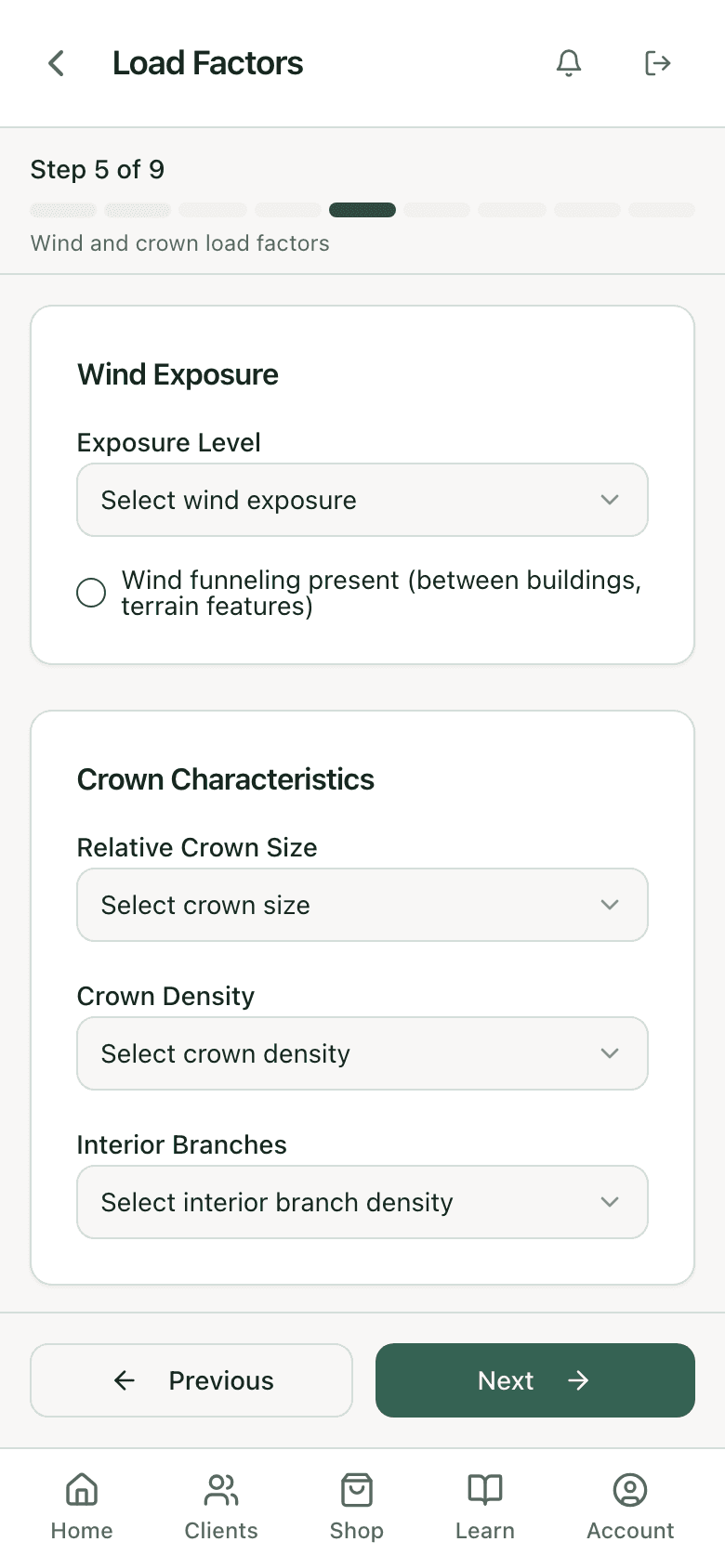
If you have filled out a TRA form on a tailgate in the rain you already know why this exists. Targets, site, load factors, defects, likelihood of failure, likelihood of impact, consequences. The two matrices run themselves. The report exports with the same branding as your prescriptions, and the client gets it the same way.
Scheduling
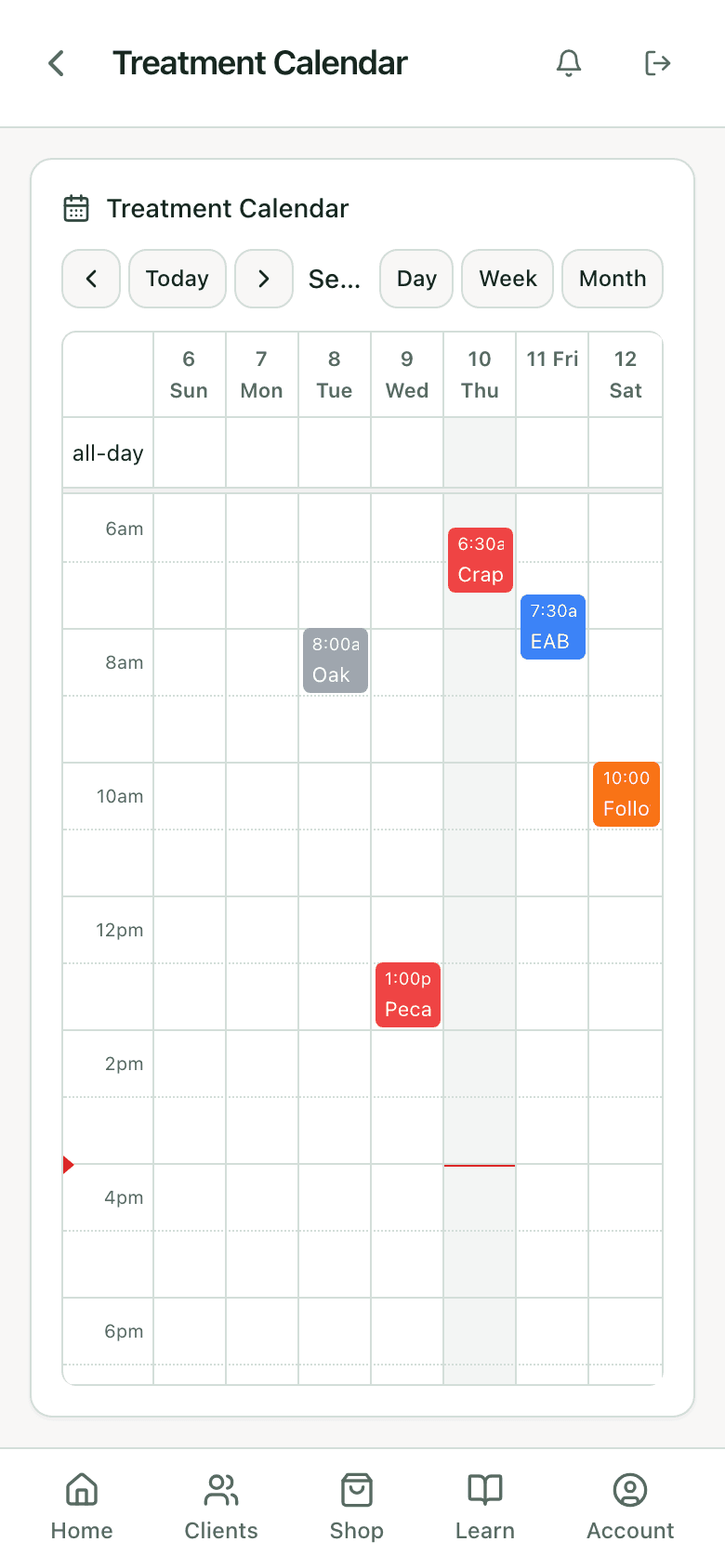
Apply a treatment, and the follow-ups put themselves on the calendar.
Inspection at 90 days. Retreat in 24 months. Reminders ahead of each, to you and to whichever tech on the team is assigned. The two-year retreat is the one everybody forgets, and it is the one that keeps the ash alive.
Works with Jobber
Keep Jobber.
Clients, properties, quotes, jobs, and visits sync both ways. An approved prescription in PHC Rx shows up as the quote in Jobber. Your office manager does not learn a new scheduler.
How the Jobber sync worksJobber sync
ConnectedTwelve Jobber event types are handled, and each one can be forwarded to your own webhook endpoint.
Straight from the app
Real screens, not mockups.
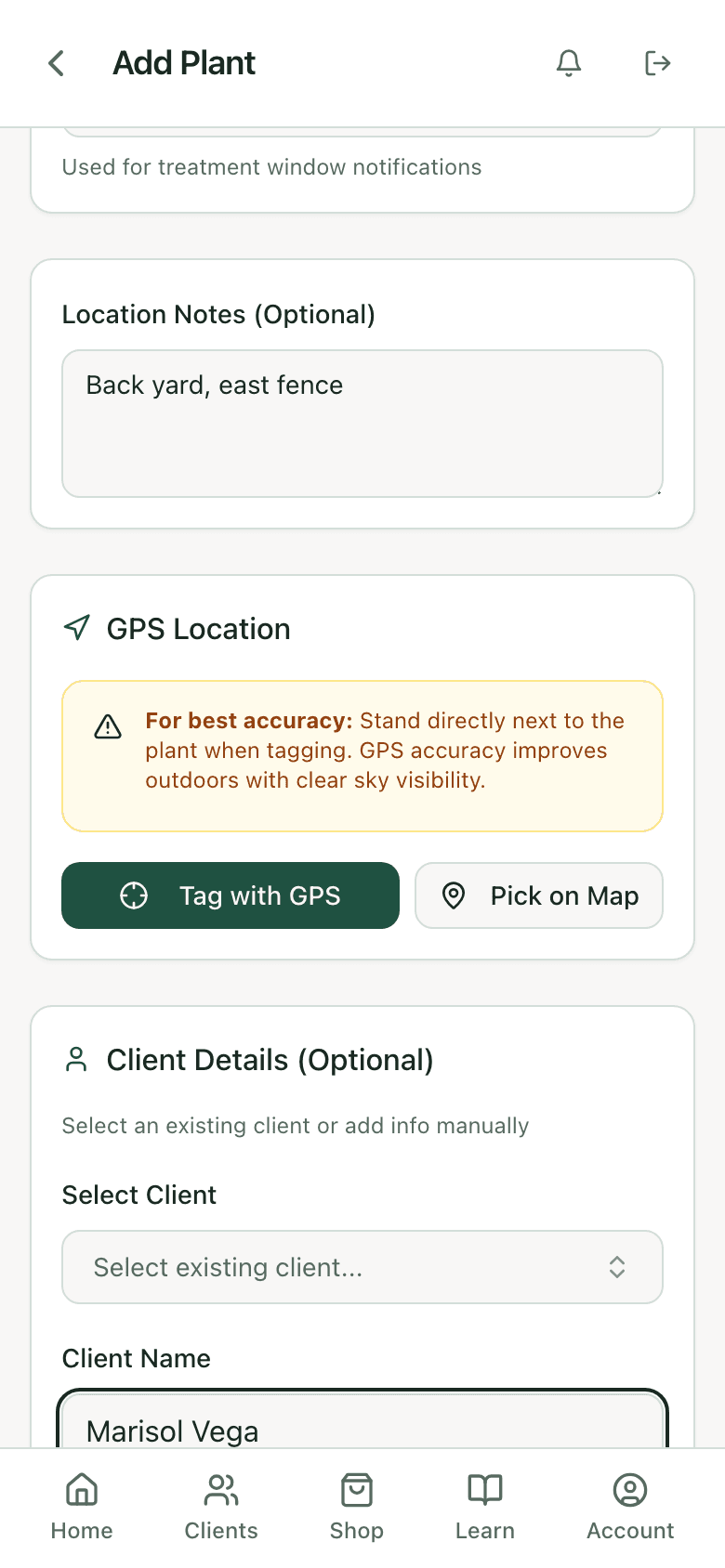
Species, DBH, where it stands
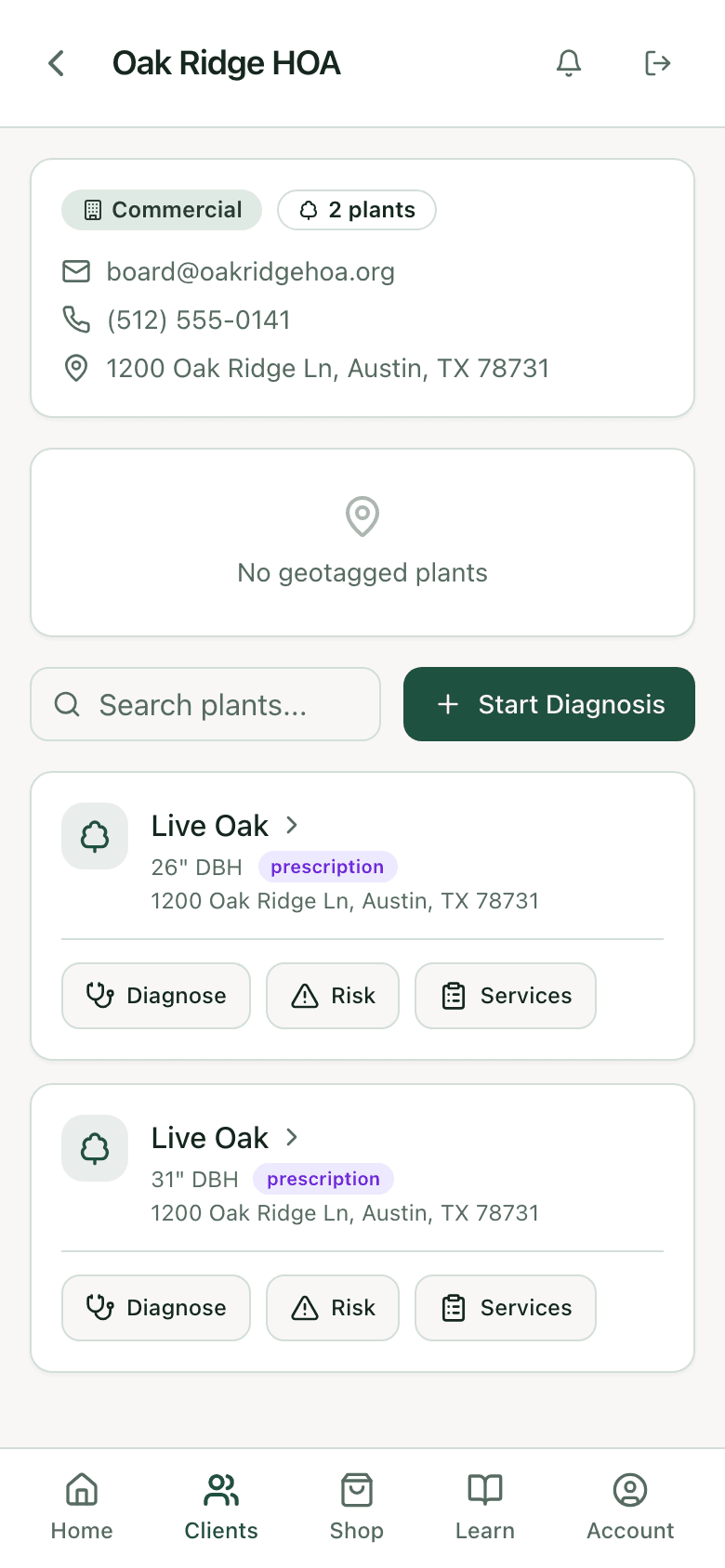
One client, every tree on the property
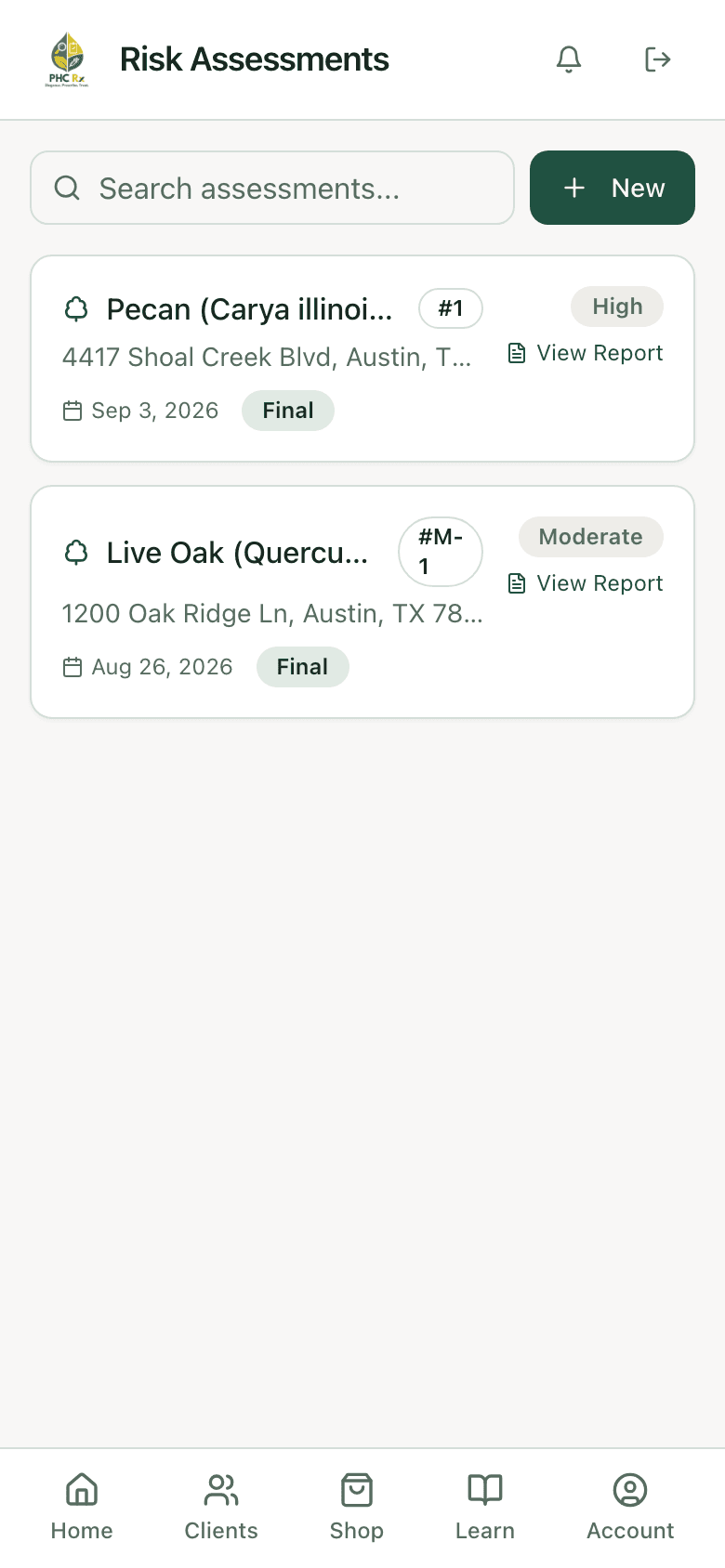
TRA assessments, rated and final
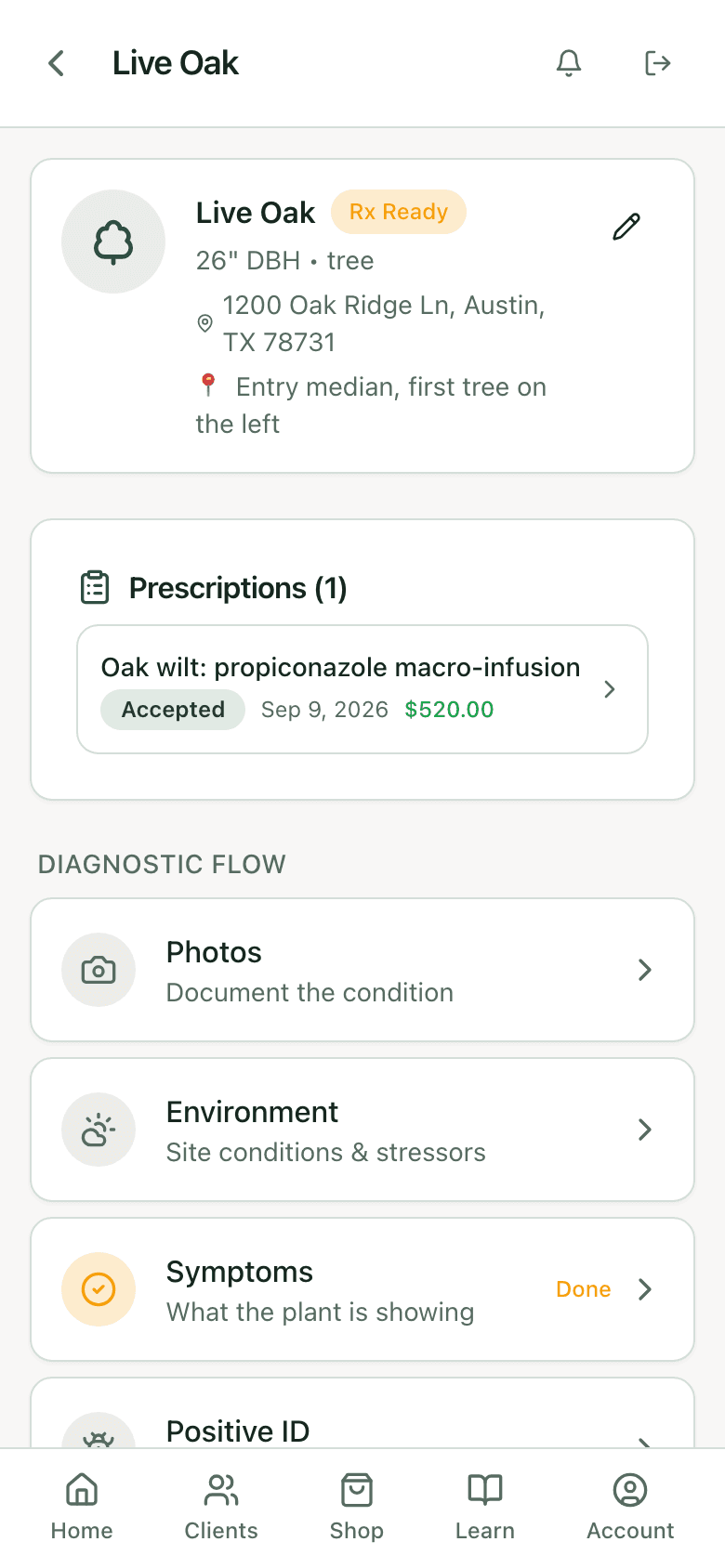
The tree, its prescription, its next visit
What plant health care software does that scheduling software does not
Scheduling software knows there is a PHC visit on Tuesday at 123 Oak Lane. It does not know the tree is a 22 inch red oak with two-lined chestnut borer, that emamectin benzoate is labeled for it at a rate per inch of DBH, that the last injection was 14 months ago on a two-year product, or that the client was told the tree may not recover. Plant health care software holds exactly that: the tree, the evidence, the diagnosis and how sure you are, the product and dose off the label, the label check, and the prescription the client approved. The office system keeps the Tuesday. The clinical record keeps the tree.
That is why the two are not competitors. Every tool in the best tree care software roundup schedules and invoices PHC; none of them diagnoses or doses. A spreadsheet can hold the record, until the second tech and the second season.
The three ways a PHC decision gets recorded today.
Diagnosis
- PHC Rx
- Five-step weighted diagnosis with a confidence rating
- Arborgold PHC module
- Service line and notes field
- Spreadsheet or notebook
- Whatever the tech wrote
Dose and label check
- PHC Rx
- From the label table by DBH, five checks before the prescription goes out
- Arborgold PHC module
- Chemical usage typed in after the fact, state report printed from it
- Spreadsheet or notebook
- Rate from memory, no check
Client-facing output
- PHC Rx
- Prescription with finding, confidence, product, timing, price; approve from a link
- Arborgold PHC module
- Estimate and invoice
- Spreadsheet or notebook
- Invoice
Who runs their PHC route on it
Solo certified arborists doing their own injections. PHC managers with two or three techs and a spray rig. Municipal foresters keeping a file on every street tree. Consulting arborists who get asked in a deposition how sure they were. Lawn and landscape outfits that just added tree and shrub care and do not want to guess on rates. Solo or a crew of 25, plans are priced by seat.
One thing it will not do
Route crews, run payroll, or send invoices. Keep whatever does that today. PHC Rx sits next to it, and syncs with Jobber if that is what you run.
Two techs treating the same species on the same route should be using the same rate. On paper they usually are not. In the app they cannot be.
Plans
Priced by crew size, one seat to unlimited. Every plan has a 7-day trial, unlimited diagnoses, PDF reports, the full library, and your own service pricing. Chemicals are separate, ordered from inside the app, Net 30 for verified companies. Full breakdown on the pricing page.
Plans
7-day trialAnnual billing is ten months for twelve on every plan.
FAQ
Questions arborists ask
What is plant health care software?
Software for the treatment side of tree and shrub care: figuring out what is wrong, picking a product and rate, checking the label, logging the application, and giving the client a written record. Most products sold under the name only schedule and estimate PHC jobs.
How is PHC Rx different from Arborgold or SingleOps?
Those run the business end: quotes, scheduling, invoicing, crews. PHC Rx runs the clinical end: diagnosis, treatment, label compliance, prescriptions, risk assessment. A lot of companies run both, with Jobber or Arborgold handling the calendar.
Does it work with Jobber?
Yes, both directions. Clients, properties, quotes, jobs, and visits stay in step, and Jobber events can be forwarded to your own webhook endpoints. Details on the integrations page.
Where do the rates come from?
The product labels. TREE-äge, Alamo, Xytect, Arbotect, and the rest. They get checked against the label again when you write the prescription, and the label is always the final word. If a label changes, the library changes.
Will it stop me from doing something off-label?
No. It warns you, you write the reason, and the record shows the warning was displayed and why you went ahead. Your license, your call. How that record is kept is on the security page.
Does it work without signal?
Yes. The iOS and Android apps keep the records you have opened available offline, queue new work on the phone, and sync when you get back to the truck. More on the job site page.
What does it cost?
PHC Solo is $99 a month for one seat. Teams 5 is $199. Team plans go up to $699 a month for unlimited seats. Annual is ten months for twelve. Every plan starts with a 7-day trial and no card up front. Compare plans.
Related