
Treatment guide
Fire blight treatment: bloom sprays, the injection, and the cut
The Bradford pear with black shepherd's crooks on every branch tip in June had fire blight walk in through the flowers in April. What works is protecting the bloom, injecting oxytetracycline before it on a tree that gets hit every year, and pruning the strikes out a foot below the visible damage in dry weather. Rates per inch, the window, and how to make the cut without spreading it.
disease
Fire blightErwinia amylovora
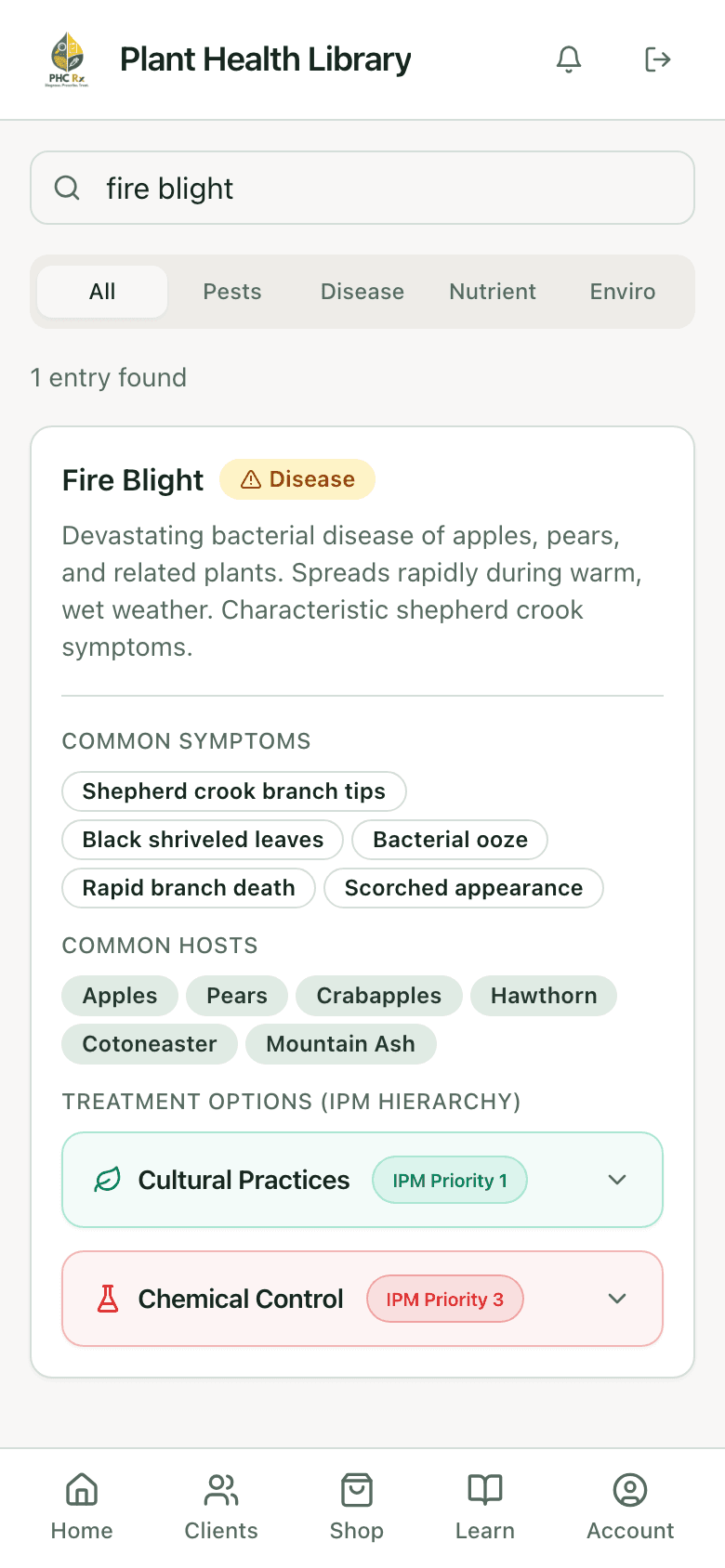
A bacterium that overwinters in cankers on the branches, oozes in spring, and gets carried by bees and rain to the open flowers, where it infects during warm wet weather. From the flower it moves down the shoot, killing it and bending the tip into a hook, and into the branch, where it forms a canker that starts next year's outbreak. On a susceptible pear or crabapple in a warm wet spring it can kill a third of the canopy in a month. It spreads on pruning tools, on hail-damaged shoots in summer, and through the succulent growth that heavy nitrogen produces.
Symptoms (the tree's response)
- Blossom clusters wilting and turning brown or black a week or two after bloom
- Shoot tips dying back and curling into a shepherd's crook
- Leaves on struck branches turning black and hanging on, scorched-looking
- Sunken, cracked cankers at the base of dead shoots and on limbs
- Whole branches dead by midsummer on a heavily infected tree
Signs (the organism itself)
- Amber to milky ooze from infected shoots and cankers in warm humid weather
- The scorched, blackened look that gives the disease its name
- Damage tracing back from a dead tip to a canker on the branch
- Warm wet weather during bloom and a susceptible host
Common hosts: Pear, including Bradford and other callery pears, Apple and crabapple, Hawthorn, Mountain ash, Serviceberry, Cotoneaster, pyracantha, and quince, Most of the rose family with pome fruit
Timing window
6 active monthsOrganism active
Preventive treatment
Curative treatment
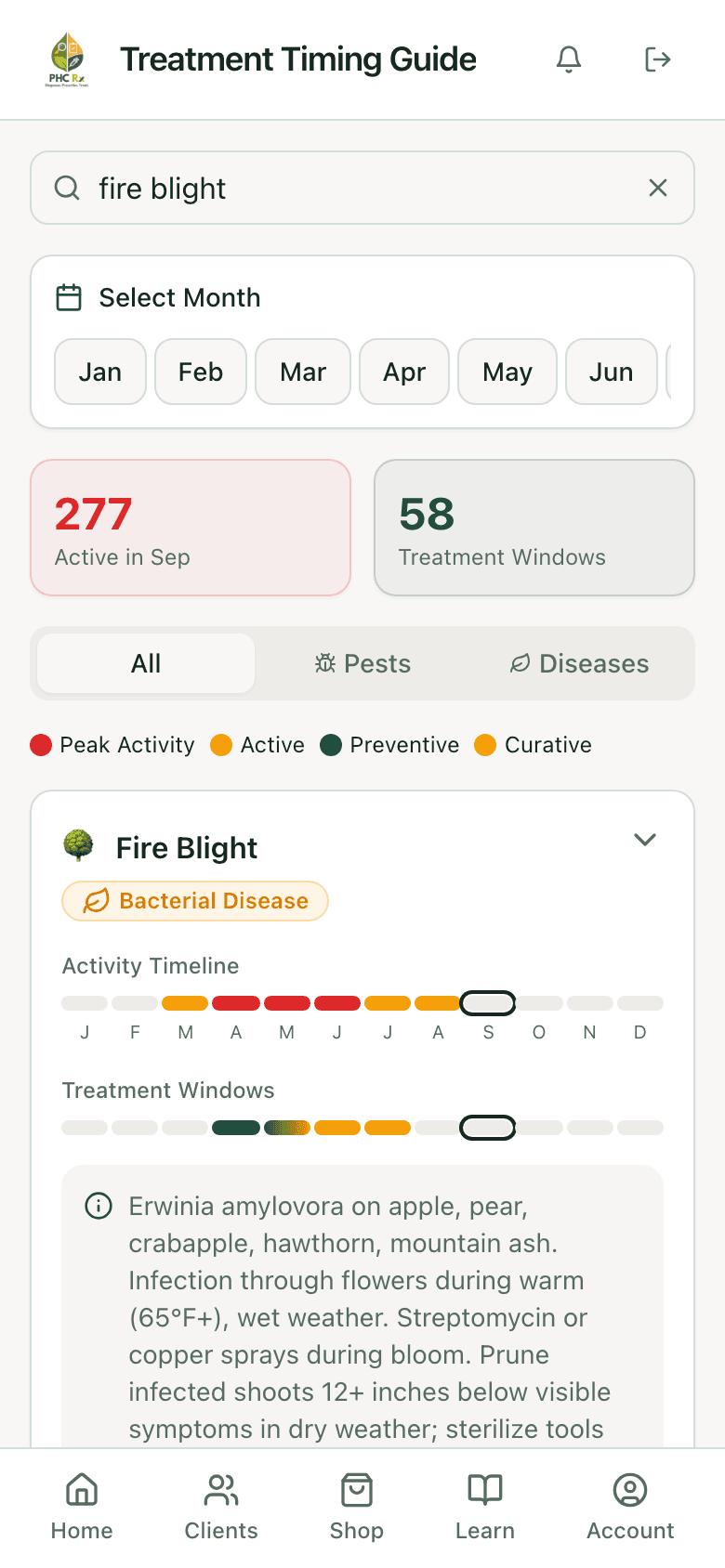
Infection happens through open flowers when it is above about 65 degrees and wet. Protectant sprays go on at early bloom and repeat through petal fall on the label interval, with more applications in a warm wet spring. An oxytetracycline trunk injection goes in at bud break or early bloom, before infection, on trees with a history. Prune strikes out in dry summer weather or in dormancy, never during wet weather in the growing season. Dormant copper in late winter reduces the inoculum on the cankers.
Treatment options
Product, rate, delivery, timing
Rates below are per inch of trunk diameter at breast height unless the row says otherwise. The registered label wins over anything on this page.
MYCOJECT® ULTRA (Mauget)
- Active ingredient
- Oxytetracycline Hydrochloride
- Rate
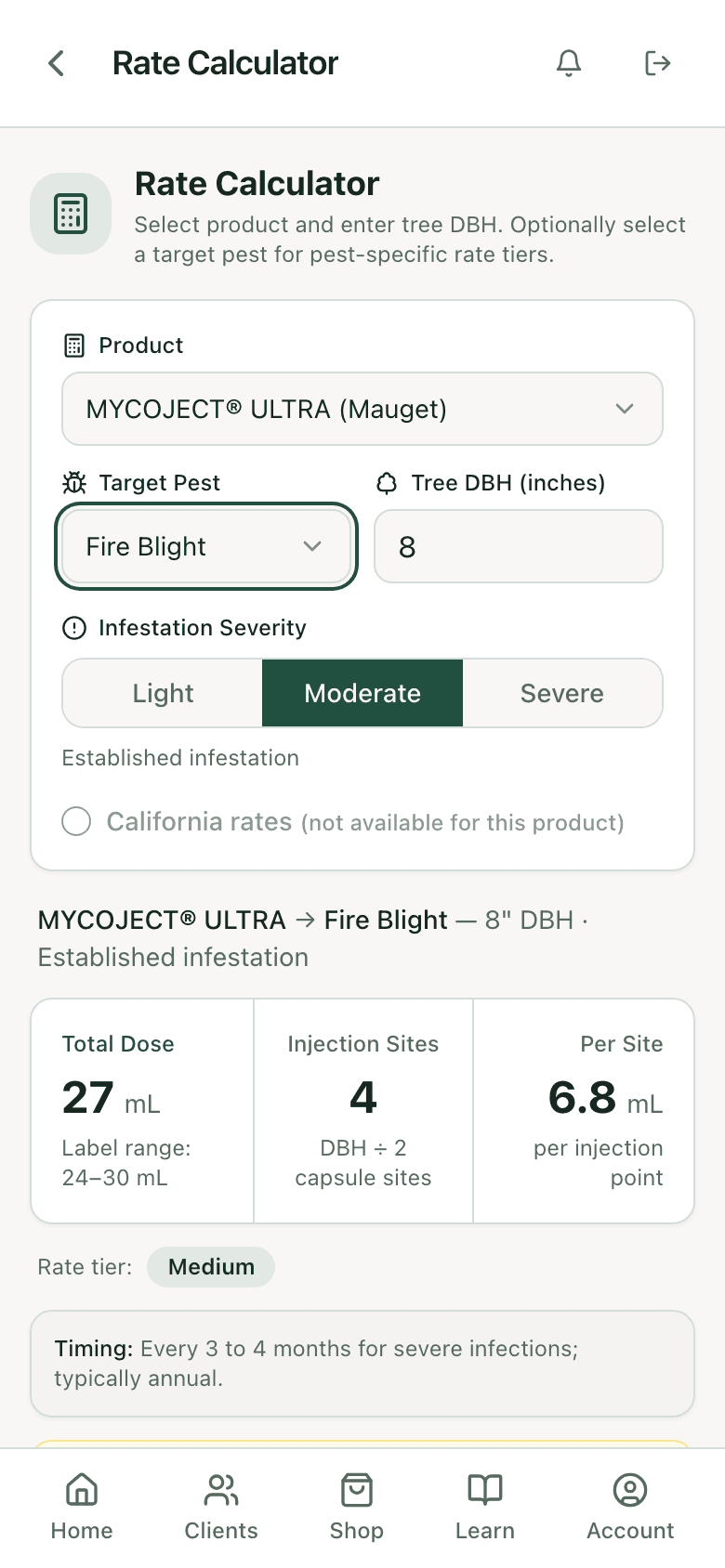
- Capsule micro-injection by DBH band. An 8 inch crabapple is 24 to 30 mL low, 24 to 30 mL medium, 24 to 30 mL high (label band 8 to 10 in); a 14 inch pear is 42 to 54 mL low, 42 to 54 mL medium, 42 to 54 mL high (label band 14 to 19 in)
- Delivery
- Mauget capsule micro-injection at the root flare, capsules spaced around the trunk
- Timing
- Bud break to early bloom, ahead of the infection window
- Frequency
- Every 3 to 4 months for severe infections; typically annual.
Arbor-OTC (Mauget)
- Active ingredient
- Oxytetracycline Hydrochloride
- Rate
- Capsule micro-injection by DBH band; a 10 inch tree is 24 to 30 mL low, 24 to 30 mL medium, 24 to 30 mL high (label band 8 to 10 in)
- Delivery
- Mauget capsule micro-injection
- Timing
- Bud break to early bloom
- Frequency
- Per label
ArborFos (Mauget)
- Active ingredient
- Phosphorous Acid
- Rate
- Capsule micro-injection by DBH band; a 10 inch tree is 25 to 30 mL low, 38 to 45 mL high (label band 10 to 12 in)
- Delivery
- Mauget capsule micro-injection
- Timing
- Spring, at or before bloom
- Frequency
- As needed, typically not more than once every 30 days.
Phospho-jet (Arborjet)
- Active ingredient
- Phosphorous acid
- Rate
- Label table by DBH band; a 10 inch tree is 35 to 42 mL low, 45 to 60 mL medium, 63 to 84 mL high (label band 9 to 12 in)
- Delivery
- Trunk injection, or foliar and bark spray per label
- Timing
- Spring, at or before bloom
- Frequency
- annual
Streptomycin or kasugamycin (several brands)
- Active ingredient
- streptomycin or kasugamycin
- Rate
- Per label, sprayed to wet all open flowers
- Delivery
- Foliar spray during bloom
- Timing
- Early bloom, then every 3 to 5 days through petal fall in warm wet weather
- Frequency
- Two to four applications per bloom period
Copper fungicide (several brands), dormant
- Active ingredient
- copper
- Rate
- Per label, dormant rate, sprayed to cover all bark and cankers
- Delivery
- Dormant spray
- Timing
- Late winter before bud swell
- Frequency
- Annually on trees with cankers
- MYCOJECT® ULTRA (Mauget): Oxytetracycline, systemic, the injectable antibiotic for fire blight. It does not cure a canker; it suppresses the bacterium in the tree during bloom so fewer flowers turn into strikes. The choice on a specimen crabapple or a row of ornamental pears that get hit every spring and cannot be sprayed four times in April.
- Arbor-OTC (Mauget): Oxytetracycline, the same chemistry in the standard-concentration capsule. Annual.
- ArborFos (Mauget): Phosphorous acid, a systemic that boosts the tree's own defenses and is labeled for fire blight suppression. Lower cost than the antibiotic and a rotation option; on a tree with a heavy history, pair it with the oxytetracycline rather than replace it.
- Phospho-jet (Arborjet): Phosphorous acid for crews on an Arborjet rig. Same role as ArborFos.
- Streptomycin or kasugamycin (several brands): The bloom-time antibiotic sprays the orchard guides are built on. They protect the flowers that are open when they go on and nothing else, so the interval matters. Resistance to streptomycin exists in some regions; rotate with kasugamycin. Not in the PHC Rx catalog as specific products; write the brand you use and its rate.
- Copper fungicide (several brands), dormant: Reduces the bacteria oozing from cankers in spring. Copper on green tissue russets fruit and burns leaves, so it is a dormant application only. Not in the PHC Rx catalog as a specific product; write the brand you use and its rate.
Worked examples
Dose per tree
MYCOJECT ULTRA, capsule micro-injection
8″ DBH
24 to 30 mL low, 24 to 30 mL medium, 24 to 30 mL high (label band 8 to 10 in)
MYCOJECT ULTRA, capsule micro-injection
14″ DBH
42 to 54 mL low, 42 to 54 mL medium, 42 to 54 mL high (label band 14 to 19 in)
Arbor-OTC, capsule micro-injection
10″ DBH
24 to 30 mL low, 24 to 30 mL medium, 24 to 30 mL high (label band 8 to 10 in)
ArborFos, capsule micro-injection
10″ DBH
25 to 30 mL low, 38 to 45 mL high (label band 10 to 12 in)
Want the number for the tree in front of you? Use the tree injection rate calculator.
The cut
A strike that is left on the tree becomes a canker, and the canker is next year's outbreak. Prune each strike out 12 inches below the last visible discoloration on a small branch and 18 inches on a large one, because the bacterium is ahead of the symptoms. Do it in dry weather, and in summer sterilize the blade between every cut or the loppers spread it faster than the bees did. Dormant-season pruning does not need the sterilizing but it does need the margin. Bag the prunings.
A tree with strikes in the main scaffolds or a canker in the trunk is a removal conversation. On a Bradford pear it is usually an easy one, because the client has been thinking about it since the last storm split it. On a specimen crabapple the client planted for their mother, the conversation is about a two- or three-year program and the odds, and it goes on the prescription in writing.
Spray or inject
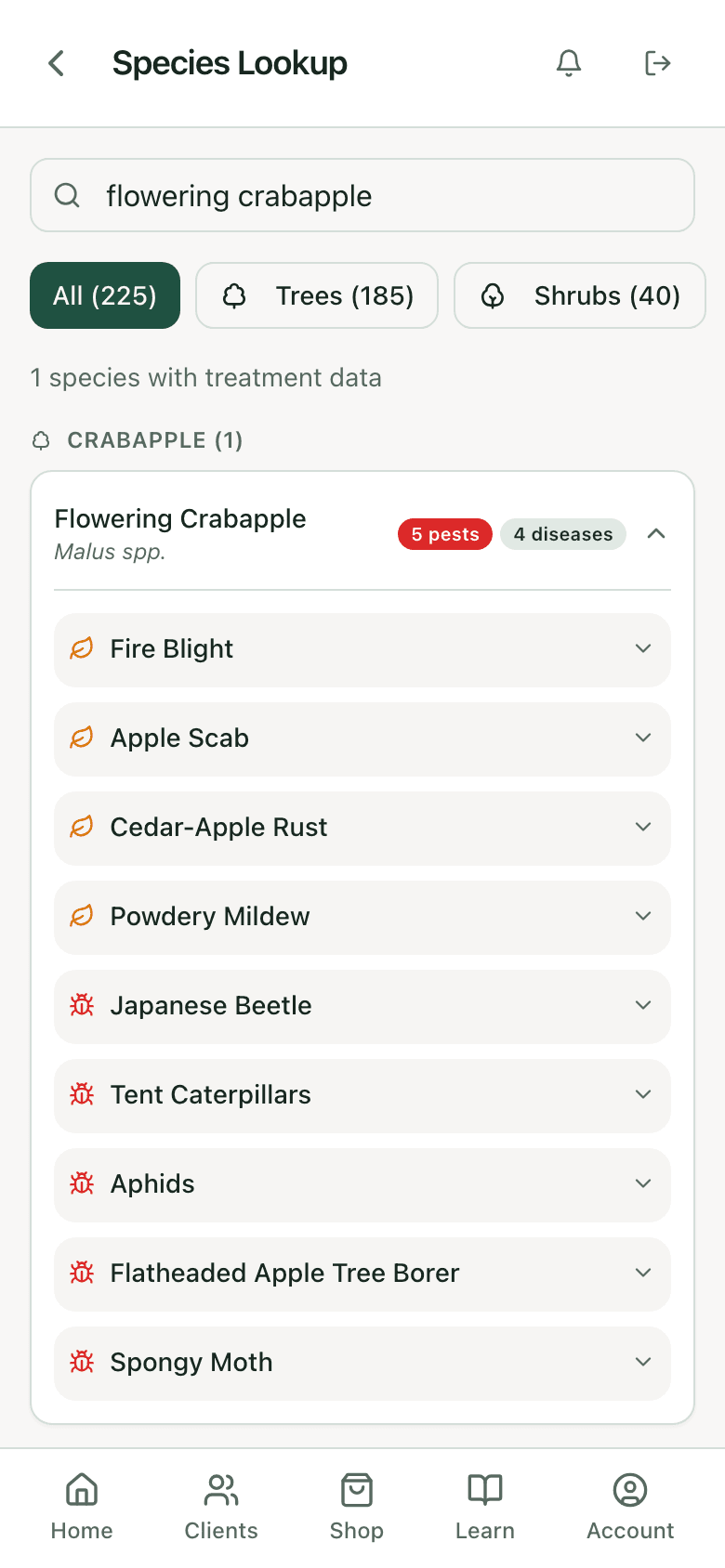
A hedge of cotoneaster or a young crabapple gets the bloom sprays; the coverage is easy and the antibiotic goes on the flowers where the infection happens. A 14 inch ornamental pear over a driveway or a crabapple with three years of strikes gets injected at bud break, so the season is covered in one visit without a sprayer on the cars during bloom. On a tree with a bad history, do both. Cut back the nitrogen either way; the lush growth a spring fertilizer pushes is exactly what the bacterium wants, and the diagnosis notes should say so.
What the label check will catch
Fire blight is on the oxytetracycline and phosphorous acid labels the app carries, so the disease check passes. The label check flags an injection scheduled in June after bloom, a second oxytetracycline inside the label interval, a DBH below the table minimum on a young crabapple that should be sprayed, and a copper spray scheduled on green tissue. On an edible apple or pear it flags the pre-harvest interval on the bloom sprays.
Label check
1 warningLast application was 14 days ago. Proceed with a documented override, or reschedule.
Pricing the job
Injection is per inch of DBH: an 8 inch crabapple at $18 per inch is $144 for the season; a 14 inch pear is $252. Bloom sprays are per visit and sold as a set of three. Strike pruning is hourly and often the biggest line. All of it lands on the calendar with the product and rate on each event, and next spring's bud-break injection is scheduled before this summer's pruning is invoiced.
FAQ
Questions arborists ask
How do you treat fire blight on a crabapple or pear?
Protect the flowers with streptomycin or kasugamycin sprays from early bloom through petal fall, or inject oxytetracycline at bud break on a tree with a history, then prune every strike out 12 to 18 inches below the visible damage in dry weather with a sterilized blade. Dormant copper in late winter reduces the inoculum on the cankers.
Can fire blight be cured?
A tree can be cleaned up and protected, but the bacterium stays in the cankers. Expect an annual program: dormant copper, bud-break injection or bloom sprays, and a summer pruning pass. A tree with cankers in the trunk or main scaffolds is a removal.
Does tree injection work for fire blight?
Yes, as prevention. Oxytetracycline injected at bud break suppresses the bacterium through bloom so fewer flowers become strikes. An 8 inch crabapple takes 24 to 30 mL low, 24 to 30 mL medium, 24 to 30 mL high (label band 8 to 10 in) from the MYCOJECT ULTRA rate table. It does not heal existing cankers.
When should you prune fire blight?
In dry weather, either in dormancy or in summer once the strikes have stopped advancing. Never in wet weather during the growing season. Cut 12 inches below visible damage on small branches and 18 on large ones, and sterilize the blade between cuts in summer.
Why does my pear get fire blight every year?
Callery pears such as Bradford are among the most susceptible trees planted, the cankers on the branches reinfect the flowers every spring, and a lawn fertilizer program pushes the soft growth the bacterium prefers. Cut the nitrogen, prune the cankers, protect the bloom, and consider replacing the tree.
Where do these rates come from?
The PHC Rx product catalog, built from the MYCOJECT ULTRA, Arbor-OTC, ArborFos, and Phospho-jet labels, and the app's timing guide for the bloom window.
Related