
Treatment guide
Oak wilt treatment: propiconazole injection rates
Propiconazole by trunk injection, dosed per inch of DBH from the label table, in the window before beetle flight or after leaf drop. What it protects, what it will not save, when to trench instead, and the pruning rule that matters more than any product.
disease
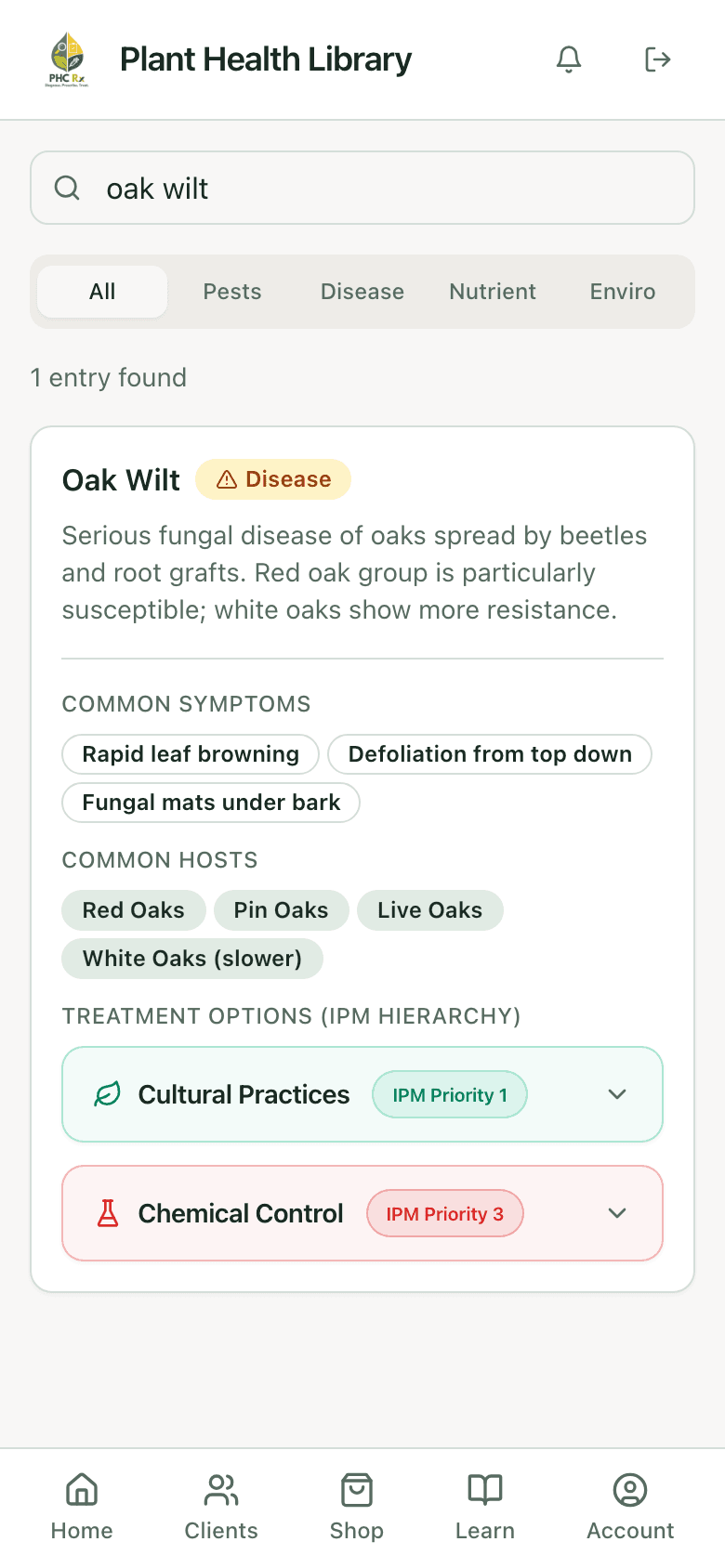
Oak wiltBretziella fagacearum
A vascular fungus that plugs the water-conducting wood. It moves tree to tree through grafted roots and, over longer distances, on sap beetles that carry spores from fungal mats to fresh wounds. Red oak group trees usually die within weeks of symptoms. White oak group trees lose limbs over years. Live oaks in Texas sit in between and spread it fast through root grafts.
Symptoms (the tree's response)
- Rapid leaf browning from the margin inward, often with a green midrib
- Defoliation from the top of the crown down
- Wilting on one limb, then the whole tree, within weeks on red oaks
- Brown streaking in the outer sapwood
Signs (the organism itself)
- Fungal mats under bark that has split and lifted, sweet smelling, on red oaks the year after death
- Nitidulid beetles at the mats
- A lab culture from a symptomatic branch, which is the only certain ID
Common hosts: Northern red oak, Pin oak, Scarlet oak, Black oak, Willow oak, Laurel oak, Live oak, White oak, bur oak, swamp white oak, chestnut oak (slower)
Timing window
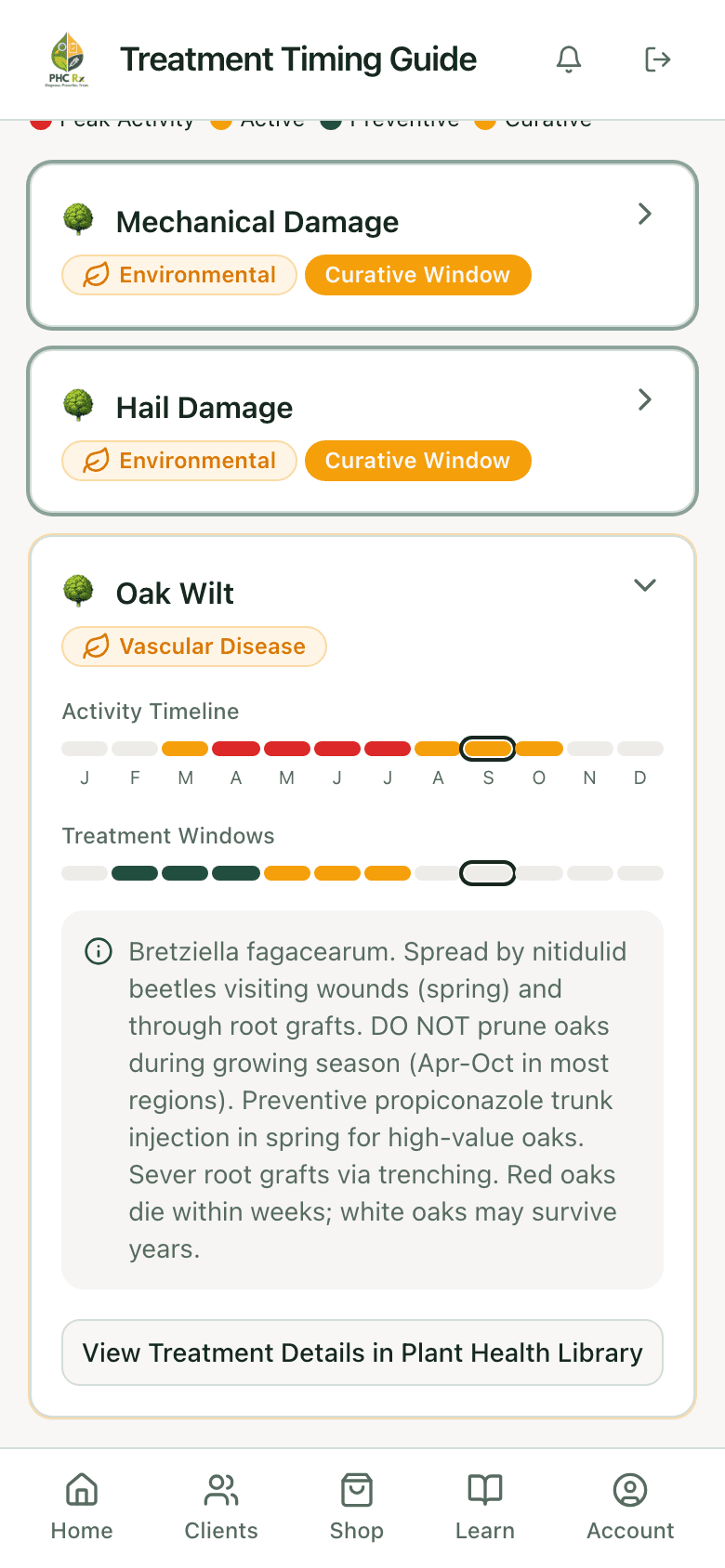
5 active monthsOrganism active
Preventive treatment
Curative treatment
Inject in March and April before beetle flight, or October and November after it. Do not prune oaks from April through July; fresh wounds and flying beetles are how new centers start. Injection is preventive on red oaks. On live oaks it can be therapeutic if less than about 30 percent of the canopy is affected.
Treatment options
Product, rate, delivery, timing
Rates below are per inch of trunk diameter at breast height unless the row says otherwise. The registered label wins over anything on this page.
Propizol (Arborjet)
- Active ingredient
- Propiconazole
- Rate
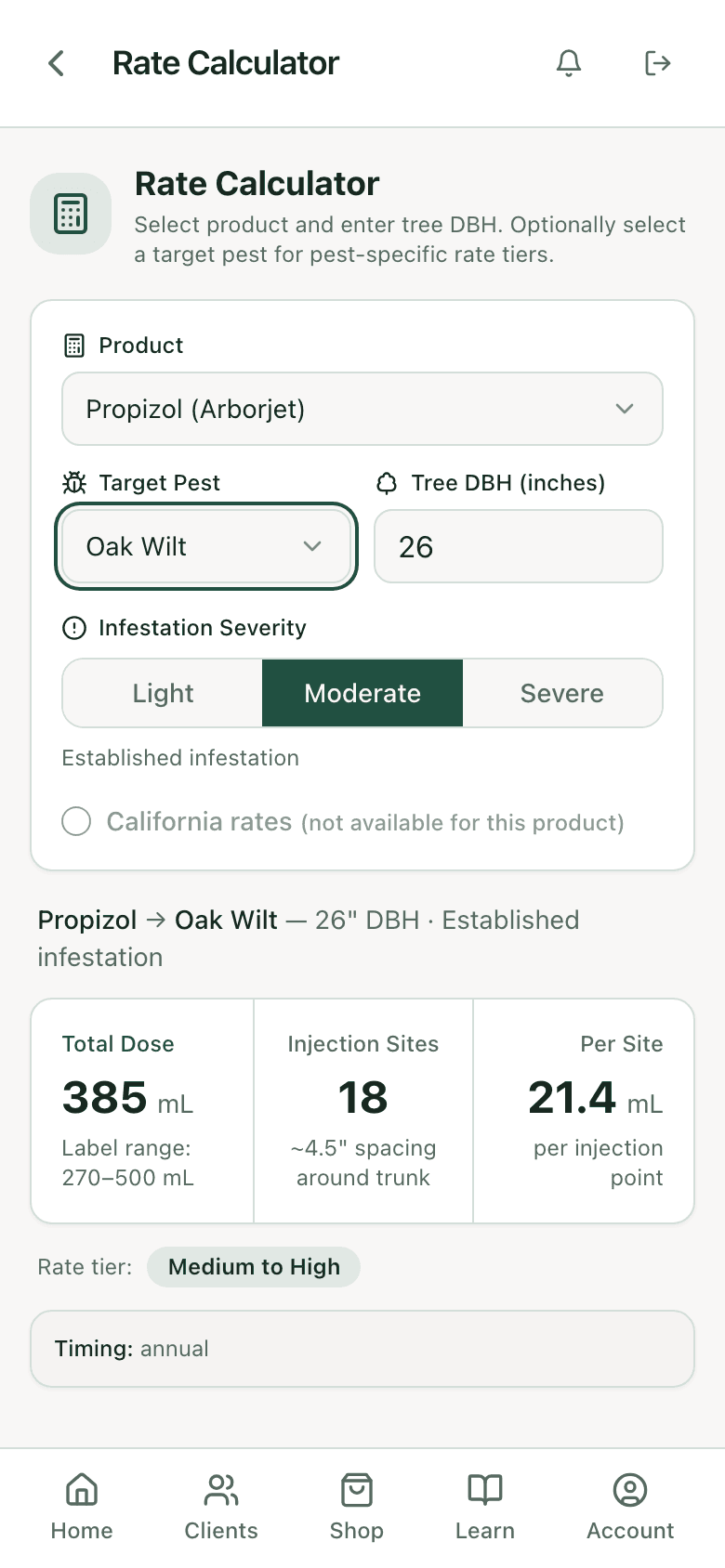
- Label table by DBH band, low and high tiers. A 26 inch oak is 250 to 270 mL low, 500 to 540 mL high (label band 25 to 27 in); a 14 inch oak is 130 to 150 mL low, 260 to 300 mL high (label band 13 to 15 in). That is roughly 10 mL per inch at the low tier and 20 at the high
- Delivery
- Trunk injection at the root flare, ports at DBH divided by 2 spaced around the trunk
- Timing
- Early spring before bud break, or fall after leaf drop
- Frequency
- Label allows annual retreatment; most preventive programs run red oaks every two years and white oaks less often
Alamo (Syngenta)
- Active ingredient
- Propiconazole
- Rate
- Per label by DBH; the macro-infusion protocols run 10 to 20 mL of product per inch, diluted, with the higher end for therapeutic work on live oaks
- Delivery
- Macro-infusion, low pressure, high volume, through a ring of ports at the flare
- Timing
- Early spring, February through April, or fall
- Frequency
- Every 2 to 3 years
Tebuject 16 (Mauget)
- Active ingredient
- Tebuconazole
- Rate
- Capsule micro-injection by DBH band. A 22 inch oak is 60 to 72 mL low, 60 to 72 mL high (label band 20 to 24 in), which works out to about one capsule per inch of DBH
- Delivery
- Mauget capsule micro-injection
- Timing
- Early spring, March to April
- Frequency
- Annually, or every 2 years on a preventive program
FUNGISOL® (Mauget)
- Active ingredient
- Debacarb, Carbendazim
- Rate
- Capsule micro-injection by DBH band; a 22 inch oak is 60 to 72 mL low, 60 to 72 mL medium, 60 to 72 mL high (label band 20 to 24 in)
- Delivery
- Mauget capsule micro-injection
- Timing
- Spring
- Frequency
- Per label; the app carries a 90 day minimum interval
- Propizol (Arborjet): Arborjet's propiconazole. The trunk-injection formulation in the PHC Rx library, so the calculator carries its table. Preventive on red and white oaks. Not for a red oak already showing symptoms.
- Alamo (Syngenta): The original oak wilt product and the one most of the Texas live oak research was done with. Not in the PHC Rx catalog yet, so the app cannot check its label or run its dose; use the label in hand.
- Tebuject 16 (Mauget): Tebuconazole, a triazole like propiconazole. The capsule system suits crews without an injection rig. Labeled for preventive protection and suppression of existing infection.
- FUNGISOL® (Mauget): Debacarb and carbendazim, a broad-spectrum vascular wilt fungicide labeled on oak, elm, maple, ash, sycamore, and linden. A second option where a triazole has already been used.
Worked examples
Dose per tree
Propizol, from the label table
26″ DBH
250 to 270 mL low, 500 to 540 mL high (label band 25 to 27 in)
Propizol, from the label table
14″ DBH
130 to 150 mL low, 260 to 300 mL high (label band 13 to 15 in)
Tebuject 16, capsule micro-injection
22″ DBH
60 to 72 mL low, 60 to 72 mL high (label band 20 to 24 in)
Propizol, high tier for a live oak near an active center
30″ DBH
280 to 300 mL low, 560 to 600 mL high (label band 28 to 30 in)
Want the number for the tree in front of you? Use the tree injection rate calculator.
Red oaks, white oaks, live oaks
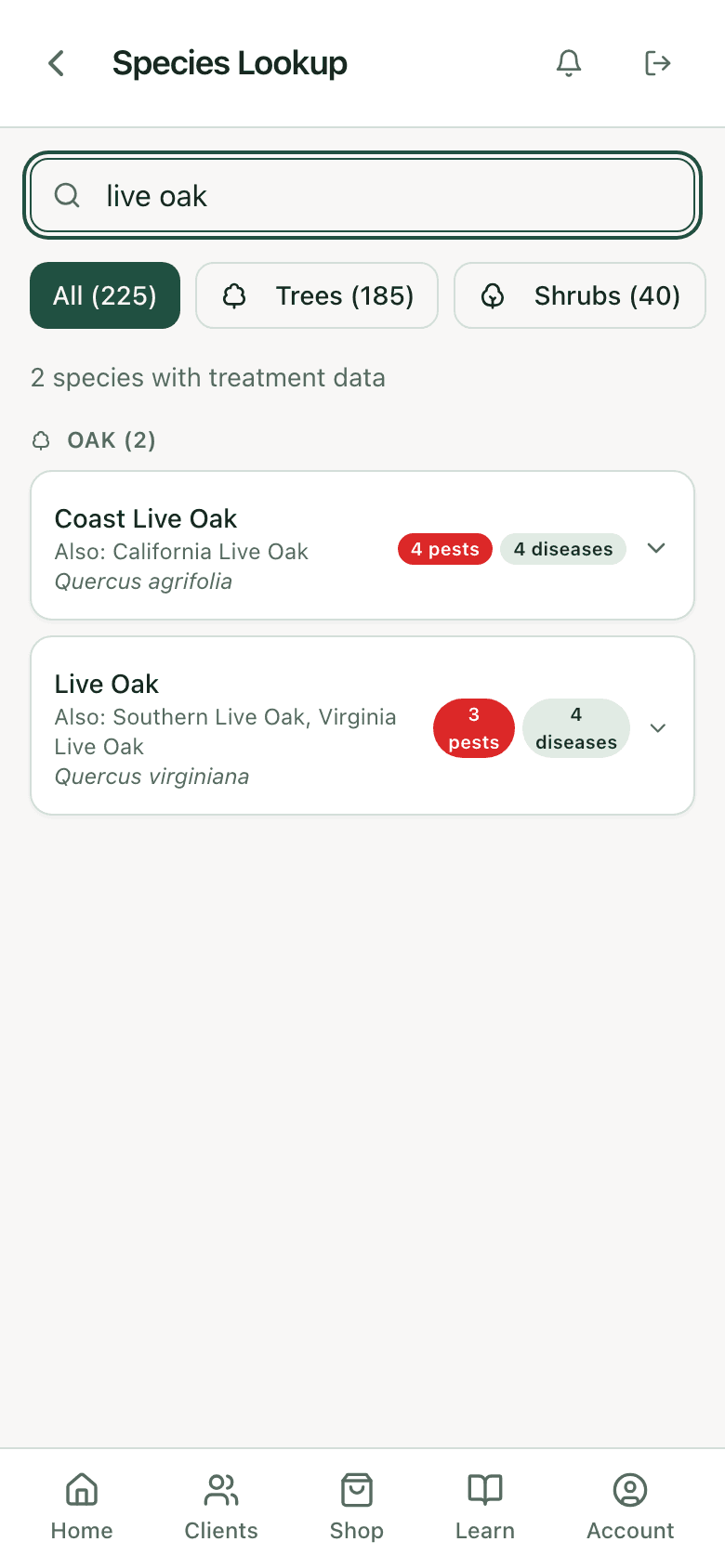
The species decides the strategy. A red oak (northern red, pin, scarlet, black, willow, laurel) with symptoms is not a treatment candidate; it will be dead in weeks, and the fungicide cannot reach wood that is already plugged. Red oaks get injected preventively when they are within root-graft distance of a known infection, and the infected tree comes out with its root grafts trenched before it produces mats the following spring.
White oak group trees (white, bur, swamp white, chestnut) resist the fungus and lose it limb by limb. They are the best therapeutic candidates: inject, prune out the dead wood in the dormant season, and expect to keep the tree. Live oaks are the Texas problem. They share root systems across whole neighborhoods, so the disease moves as a front, and the injection program is for every live oak in the path of that front, with trenching to cut the front off.
Which product
Propizol is the propiconazole in the PHC Rx library, so the calculator runs its table and the label check knows its targets. Alamo is the product behind most of the published live oak work and the one the macro-infusion protocols were written for; it is not in the app catalog yet, so if you use it the label in hand is the reference. Tebuject 16 and Fungisol are the Mauget capsule routes for crews that do not run a pressurized rig.
Every one of these is a preventive on red oaks. The therapeutic claim, on live oaks and white oaks with early symptoms, depends on how much of the canopy is still moving water. The app's species notes put the cutoff around 30 percent canopy affected, and that number belongs on the diagnosis record before the client pays for an injection.
What the label check will catch
Oak wilt is on the propiconazole and tebuconazole labels, so the pest check passes. Where a prescription gets flagged in PHC Rx is timing (an injection scheduled for June on a tree that should have been done in March), delivery (a foliar propiconazole formulation written up as an injection), or the reapplication interval when a tree was injected last year and the client wants it again in eight months. Each flag shows before the client sees the prescription, with the label one tap away.
Label check
1 warningLast application was 14 days ago. Proceed with a documented override, or reschedule.
The pruning rule and the trench
- No pruning on oaks April through July anywhere oak wilt is active, and paint any unavoidable wound the same hour. This prevents more oak wilt than any injection.
- Trenching to sever root grafts, 4 feet deep or more, placed by the pattern of symptomatic trees, stops the underground spread. Injection without trenching on a live oak front is a holding action.
- Infected red oaks come out before the next spring. A dead red oak left standing produces the mats that start the next center. Firewood from it stays covered or off site.
- Record the canopy percentage and the date on every tree you decline to treat. That is the number the client will ask about later.
Pricing the job
Trunk injection is priced per inch of DBH in most PHC programs, with a minimum per visit; the PHC Rx default range is set per company in service pricing. A 26 inch red oak at $18 per inch is $468 every two years. Product cost at the low tier is a few dollars per inch, so the margin carries the trenching conversation, which is where the real money and the real protection are.
FAQ
Questions arborists ask
What is the propiconazole injection rate for oak wilt?
It is a label table by DBH band, with a low and a high tier. In the PHC Rx calculator a 26 inch oak on Propizol comes out at 250 to 270 mL low, 500 to 540 mL high (label band 25 to 27 in), which is about 10 mL per inch at the low tier and 20 at the high. Alamo macro-infusion protocols run 10 to 20 mL of product per inch diluted. The label in hand is the reference.
Can oak wilt be cured with fungicide?
On a red oak with symptoms, no. On a white oak or a live oak with early symptoms and most of the canopy still working, propiconazole can suppress it and the tree can be kept, with dead wood pruned out in the dormant season. Prevention on trees in the path of an active center is where the product does its best work.
When should oaks be injected for oak wilt?
Early spring before beetle flight, March into April, or fall after leaf drop. Not during April through July if it involves any wounding, and not on a tree under drought stress.
How often is the injection repeated?
Propizol's label allows annual retreatment and the PHC Rx calendar schedules from that. Most preventive programs inject red oaks every two years and white oaks every two to three, based on the Alamo research. Record which interval you chose and why.
Does injection stop root graft spread?
No. It protects the injected tree's vascular system for the interval. Cutting the graft with a trench is what stops the spread. Programs on live oak fronts do both.
Where do these rates come from?
The PHC Rx product catalog, built from the Propizol, Tebuject 16, and Fungisol labels, and the app's species library for hosts and timing. When a prescription is written in the app, the rate is checked against the label again.
Related