
Treatment guide
Dutch elm disease treatment: injection rates and the three-year program
The elms still standing on Main Street are standing because somebody injects them. Thiabendazole by macro-infusion every three years is the program the survivors are on; propiconazole and tebuconazole are the annual alternatives and the therapeutic tools when a flag shows up. Rates per inch, the spring window before beetle flight, and the pruning and root-graft work that decide whether the injection was worth it.
disease
Dutch elm diseaseOphiostoma novo-ulmi
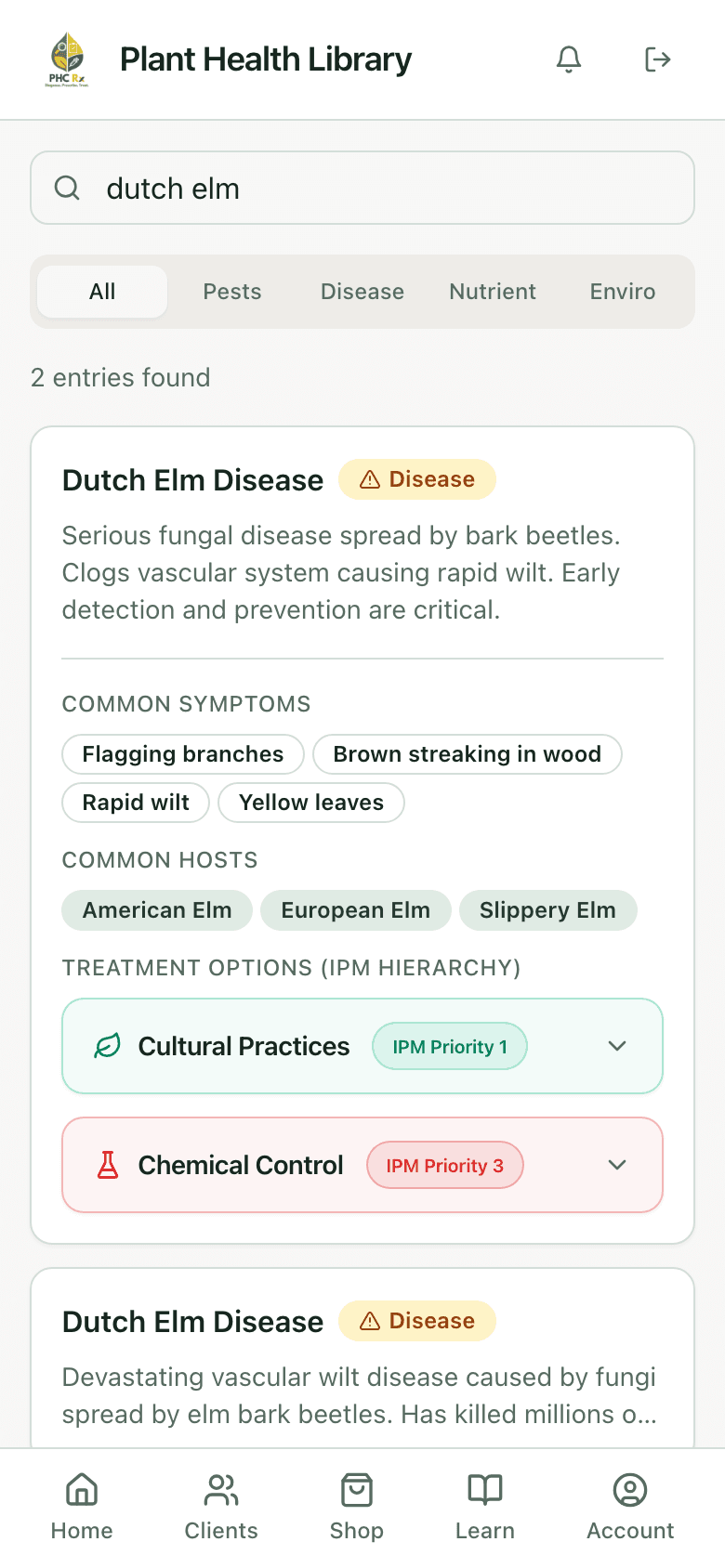
A vascular wilt fungus carried by elm bark beetles that feed in twig crotches in spring, and passed tree to tree through grafted roots along a street. The fungus plugs the current year's xylem and the tree wilts limb by limb, or all at once when it comes in through the roots. It killed most of the American elms in North America between the 1930s and the 1980s. The survivors are either isolated, resistant, or on an injection program.
Symptoms (the tree's response)
- Flagging: a single limb wilting and yellowing in early summer with the rest of the crown green
- Leaves curling, yellowing, and browning but staying on the branch
- Progression down the limb and into the crown over weeks or a season
- Rapid whole-tree wilt when infection comes through root grafts
Signs (the organism itself)
- Brown streaking in the outer sapwood of a symptomatic branch, seen in a cross section or under peeled bark
- Bark beetle galleries under the bark of dying limbs
- Lab culture from a streaked branch sample, the definitive ID
Common hosts: American elm (Ulmus americana), highly susceptible, Red or slippery elm, Siberian and Chinese elm, less susceptible but not immune, Resistant cultivars (Princeton, Valley Forge, and others) still get it under heavy pressure
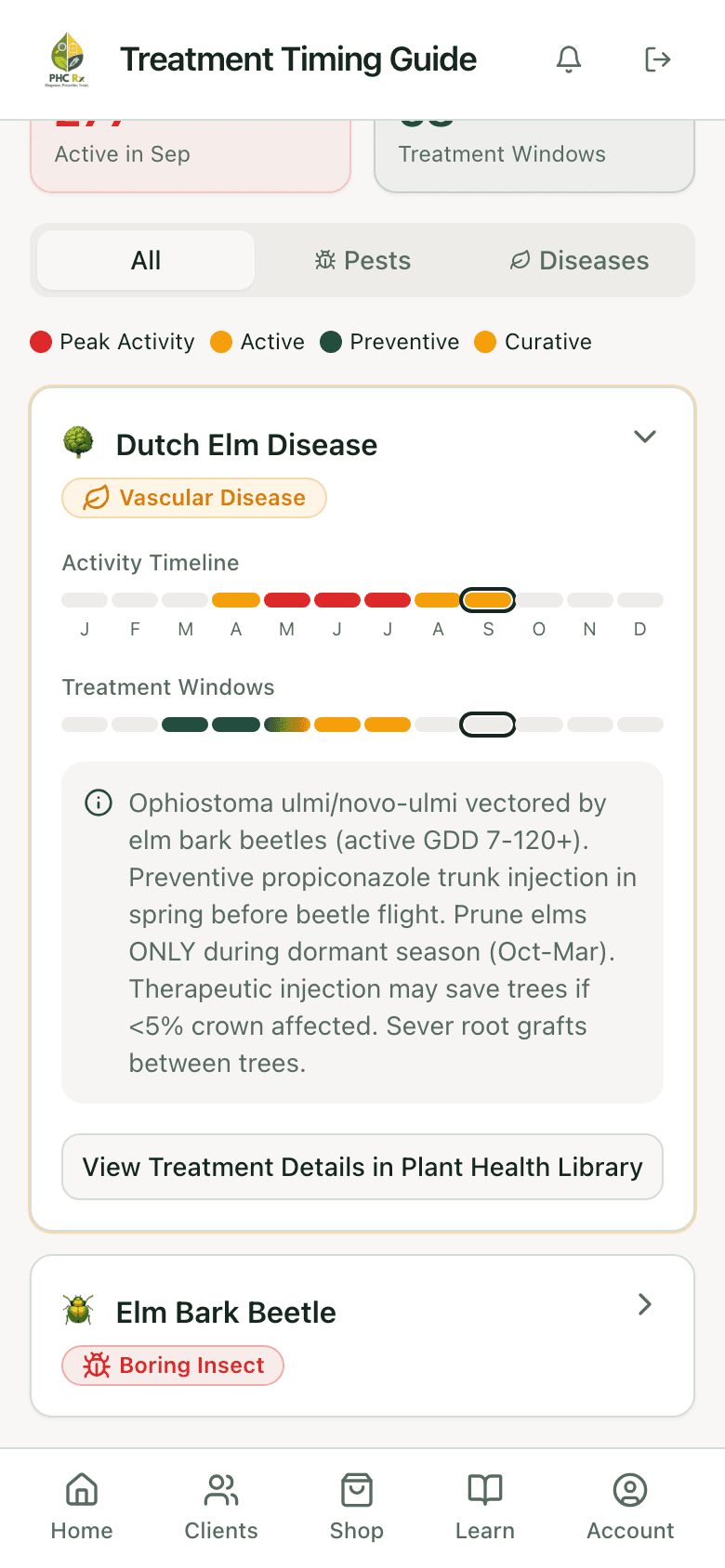
Timing window
5 active monthsOrganism active
Preventive treatment
Curative treatment
Preventive injections go in during April and May, after leaf-out so the tree is moving water and before the beetles fly in force. Therapeutic injection on a freshly flagging tree happens as soon as the flag is confirmed, with the infected limb pruned out at least 10 feet below the last streaking. Root-graft severing between an infected elm and its neighbors happens before the infected tree is removed, or the removal pulls the fungus into the neighbors.
Treatment options
Product, rate, delivery, timing
Rates below are per inch of trunk diameter at breast height unless the row says otherwise. The registered label wins over anything on this page.
Arbotect 20-S (Syngenta)
- Active ingredient
- Thiabendazole
- Rate
- Per the macro-infusion protocol by DBH, diluted in a large volume of water and infused at low pressure through a ring of ports at the root flare
- Delivery
- Macro-infusion
- Timing
- Spring after full leaf-out through early summer
- Frequency
- Every 3 years
Propizol (Arborjet)
- Active ingredient
- Propiconazole
- Rate
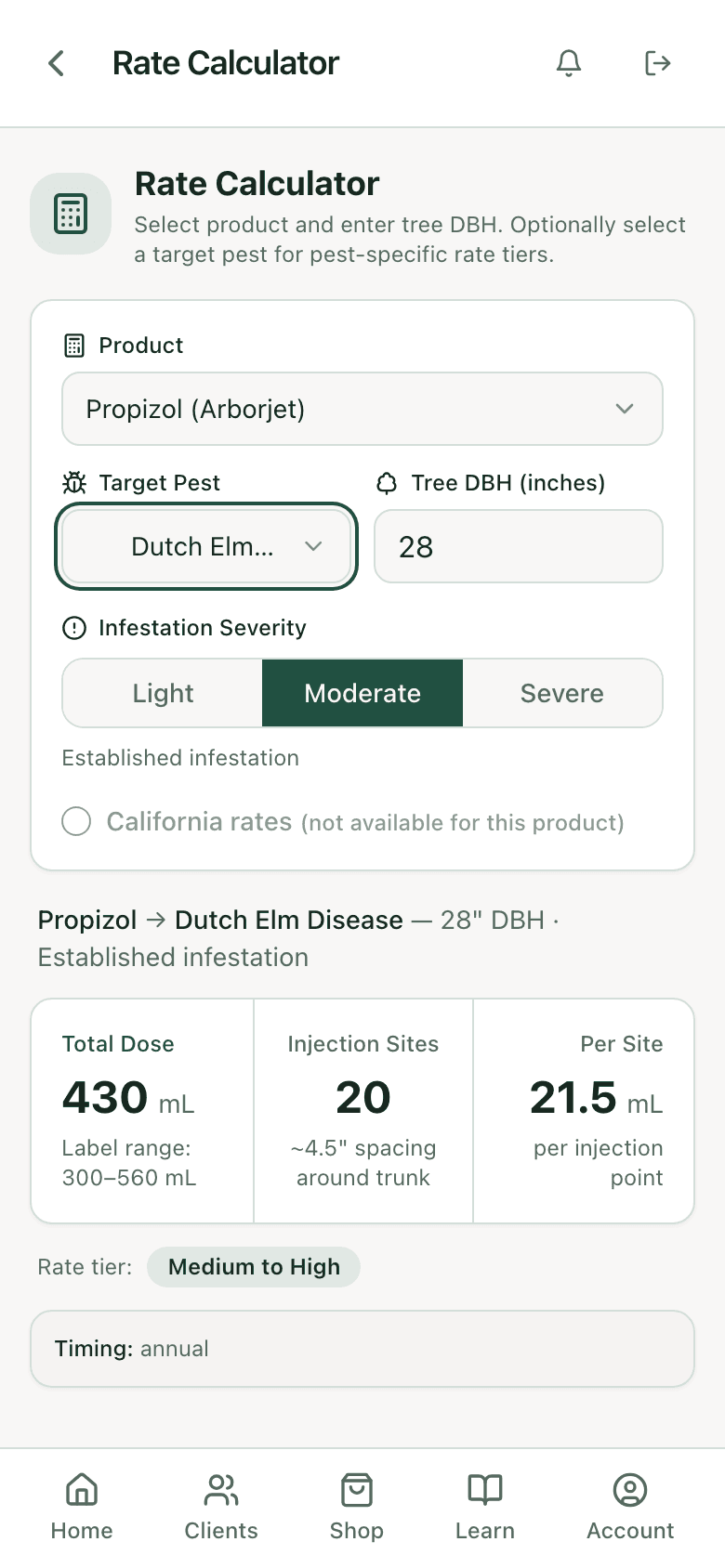
- Label table by DBH band with low and high tiers. A 28 inch elm is 280 to 300 mL low, 560 to 600 mL high (label band 28 to 30 in); a 20 inch elm is 190 to 210 mL low, 380 to 420 mL high (label band 19 to 21 in)
- Delivery
- Trunk injection at the flare, ports at DBH divided by 2
- Timing
- Spring after leaf-out
- Frequency
- Annually per label; many programs run it in the off years of a thiabendazole cycle or as the therapeutic injection when a flag appears
Tebuject 16 (Mauget)
- Active ingredient
- Tebuconazole
- Rate
- Capsule micro-injection by DBH band; a 24 inch elm is 60 to 72 mL low, 60 to 72 mL high (label band 20 to 24 in)
- Delivery
- Mauget capsule micro-injection
- Timing
- Spring before beetle flight
- Frequency
- Annually
FUNGISOL® (Mauget)
- Active ingredient
- Debacarb, Carbendazim
- Rate
- Capsule micro-injection by DBH band; a 24 inch elm is 60 to 72 mL low, 60 to 72 mL medium, 60 to 72 mL high (label band 20 to 24 in)
- Delivery
- Mauget capsule micro-injection
- Timing
- Spring
- Frequency
- Per label; the app carries a 90 day minimum interval
- Arbotect 20-S (Syngenta): The product the long-term elm programs run on, with published preventive success in the high 90s percent over the three-year interval. Protects against beetle-vectored infection, not root-graft infection, and will not save a tree that is not pruned. Not in the PHC Rx catalog yet, so the app cannot check its label or run its dose; use the protocol in hand.
- Propizol (Arborjet): Propiconazole. The propiconazole products are also used for the tracing technique on a freshly infected elm: inject, trace the streaking, prune, and follow with thiabendazole the next year.
- Tebuject 16 (Mauget): Tebuconazole, labeled for prevention and for suppression of existing infection. The capsule route for a crew without a macro-infusion setup.
- FUNGISOL® (Mauget): Debacarb and carbendazim, a broad-spectrum vascular wilt fungicide labeled on elm. A rotation option where the triazoles have been used.
Worked examples
Dose per tree
Propizol, from the label table
28″ DBH
280 to 300 mL low, 560 to 600 mL high (label band 28 to 30 in)
Propizol, from the label table
20″ DBH
190 to 210 mL low, 380 to 420 mL high (label band 19 to 21 in)
Tebuject 16, capsule micro-injection
24″ DBH
60 to 72 mL low, 60 to 72 mL high (label band 20 to 24 in)
Arbotect 20-S, macro-infusion
36″ DBH
Per the protocol by DBH; a large elm takes several gallons of dilute solution through 20 or more ports over a few hours
Want the number for the tree in front of you? Use the tree injection rate calculator.
Prevention is a program, not a visit
The elms that survive are on a schedule: thiabendazole every third year, an annual inspection for flags every June, and a pruning crew that can be on a flagging limb within days. One injection on a tree in a street full of untreated elms buys the interval and nothing after it. The client is signing up for a decade, and the prescription should say that in the description so it is on the record.
Root grafts are the part the injection does not cover. Elms planted in a row graft roots within a few years, and an infected tree pushes the fungus into its neighbors through those grafts faster than any beetle. Severing the grafts with a trench or a vibratory plow between the infected tree and the next one, before the infected tree is removed, is the step that saves the row. Injection protects the vascular system from beetle-borne spores; it does not stop a root-graft flood.
When a flag shows up
A single wilting limb in June on a treated or untreated elm gets a same-week response: confirm streaking by cutting into the limb, prune the limb out at least 10 feet below the last streak (further is better), and inject with a triazole as a therapeutic. The tracing technique uses the injection to slow the fungus while the pruning removes it; if the streaking has reached the trunk, the tree is usually lost and the job becomes protecting the neighbors. Record the date, the limb, and how far the streaking went on the diagnosis; the next arborist will need it.
What the label check will catch
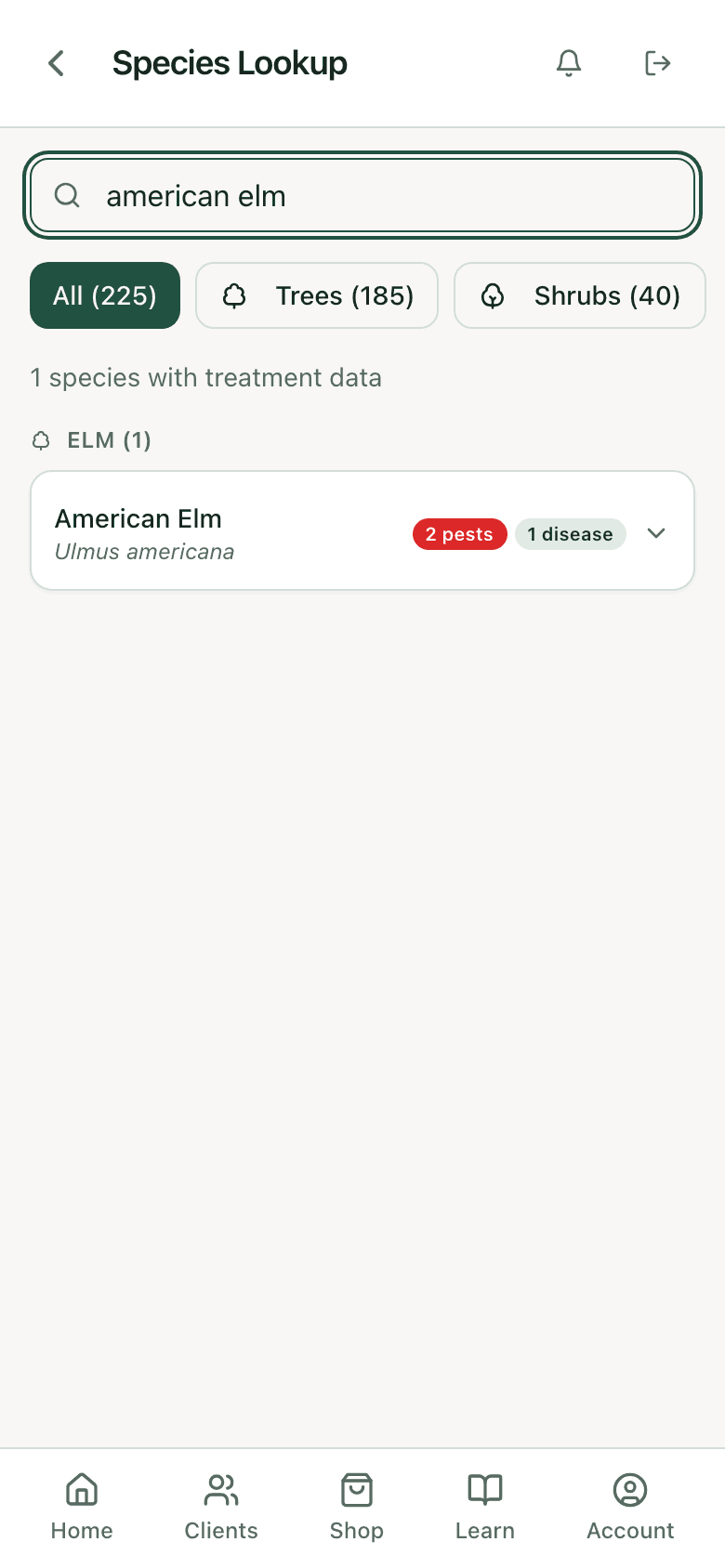
Dutch elm disease is on the propiconazole, tebuconazole, and carbendazim labels in the PHC Rx catalog. Where the label check flags a plan is timing, an injection scheduled before leaf-out when the tree is not moving water, and the reapplication interval when a triazole is written for a tree that got one nine months ago. Thiabendazole is not in the catalog yet, so a plan built on Arbotect is checked against the protocol in hand rather than the app.
Label check
1 warningLast application was 14 days ago. Proceed with a documented override, or reschedule.
Pricing the job
A mature American elm is 30 to 50 inches through, and a macro-infusion on it is a half-day with a rig. Programs price it per inch with a substantial minimum, and the three-year interval makes the number easier for the client than an annual charge. The annual triazole in the off years, the June inspection, and the pruning response are separate lines. Put all of them on the calendar the day the program starts.
FAQ
Questions arborists ask
What is the injection rate for Dutch elm disease?
Thiabendazole is dosed per the macro-infusion protocol by DBH, diluted, on a three-year interval. Propiconazole by trunk injection is a label table by DBH band: in the PHC Rx calculator a 28 inch elm on Propizol is 280 to 300 mL low, 560 to 600 mL high (label band 28 to 30 in). Tebuject 16 doses by capsule per DBH band. The label or protocol in hand is the reference.
Can an elm with Dutch elm disease be saved?
Sometimes, if it is caught as a single flagging limb, the limb is pruned well below the streaking within days, and a therapeutic triazole injection follows. Once the streaking reaches the trunk or the infection came through root grafts, the tree is usually lost and the work is protecting the neighbors.
When should elms be injected?
Spring after full leaf-out, April into May, before elm bark beetles fly in force. The tree has to be moving water for the product to distribute.
How often is the treatment repeated?
Thiabendazole macro-infusion every three years. Propiconazole and tebuconazole annually per label. The PHC Rx calendar schedules the retreat from the interval when the application is recorded.
Does injection protect against root graft spread?
No. It protects against beetle-vectored infection. Severing root grafts between an infected elm and its neighbors before removal is what stops the underground spread.
Where do these rates come from?
The PHC Rx product catalog, built from the Propizol, Tebuject 16, and Fungisol labels, and the app's species library for hosts and timing. Arbotect is cited from its protocol until it is added to the catalog.
Related