
Arborist compliance software
Arborist compliance software: the label check runs before the prescription goes out.
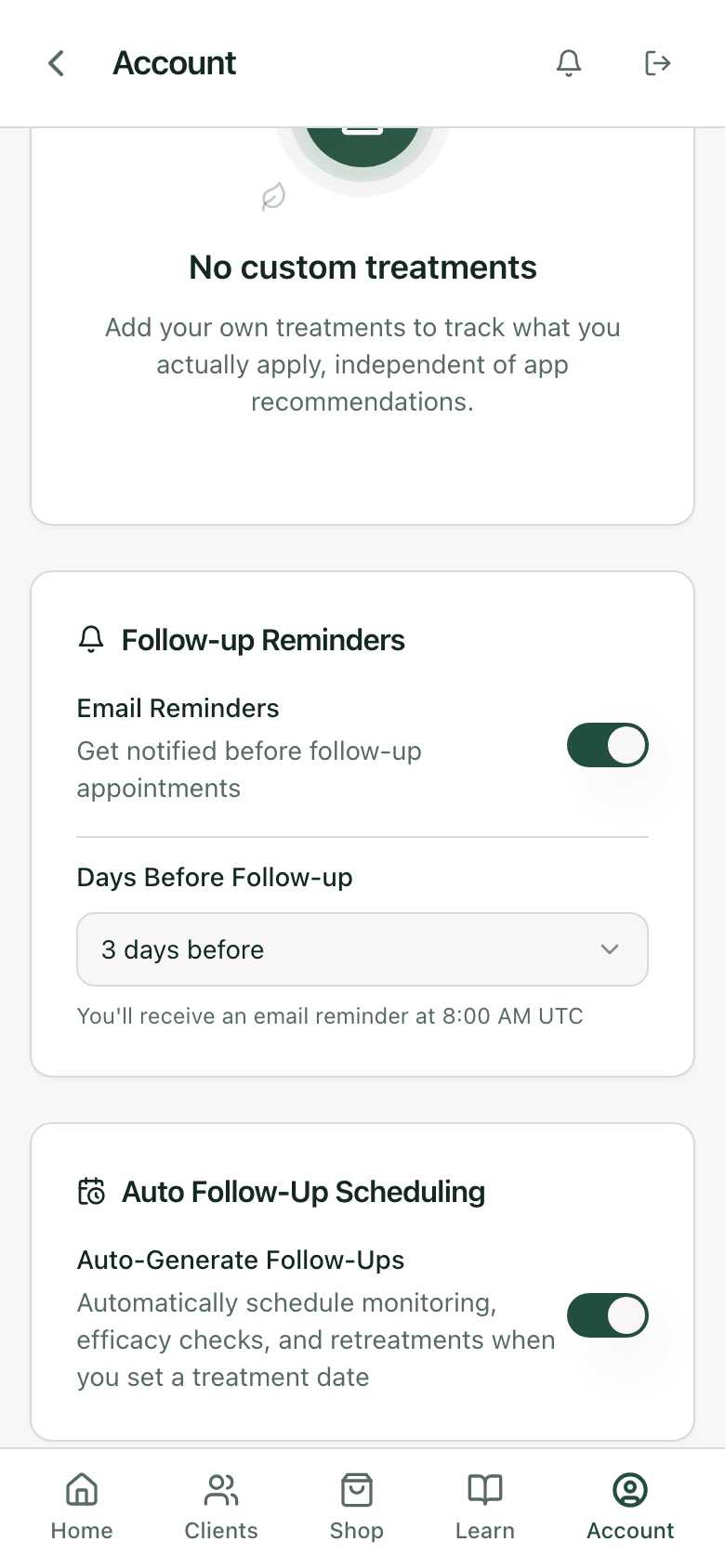
Five checks against the registered label on every treatment: is the pest on it, is the host on it, is the delivery method on it, is this the right window, and has enough time passed since the last application. Then the application itself gets recorded with the product, rate, volume, and conditions, so the record exists the day the state asks for it. Applicator licenses, re-entry intervals, and retention rules ride along with it.
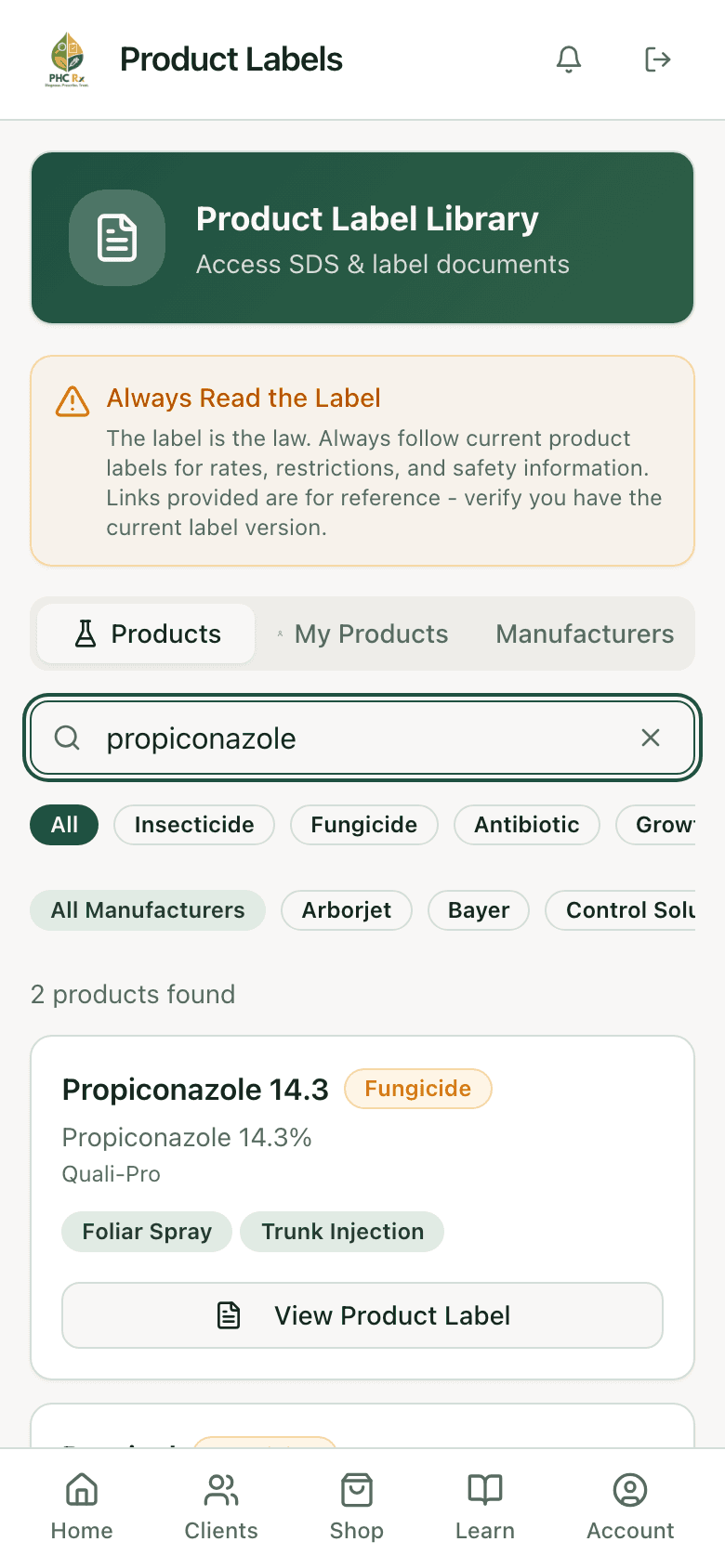
62
products in the label library, each with its active, methods, and target list
5
checks per treatment: pest, host, delivery, timing, reapplication interval
9
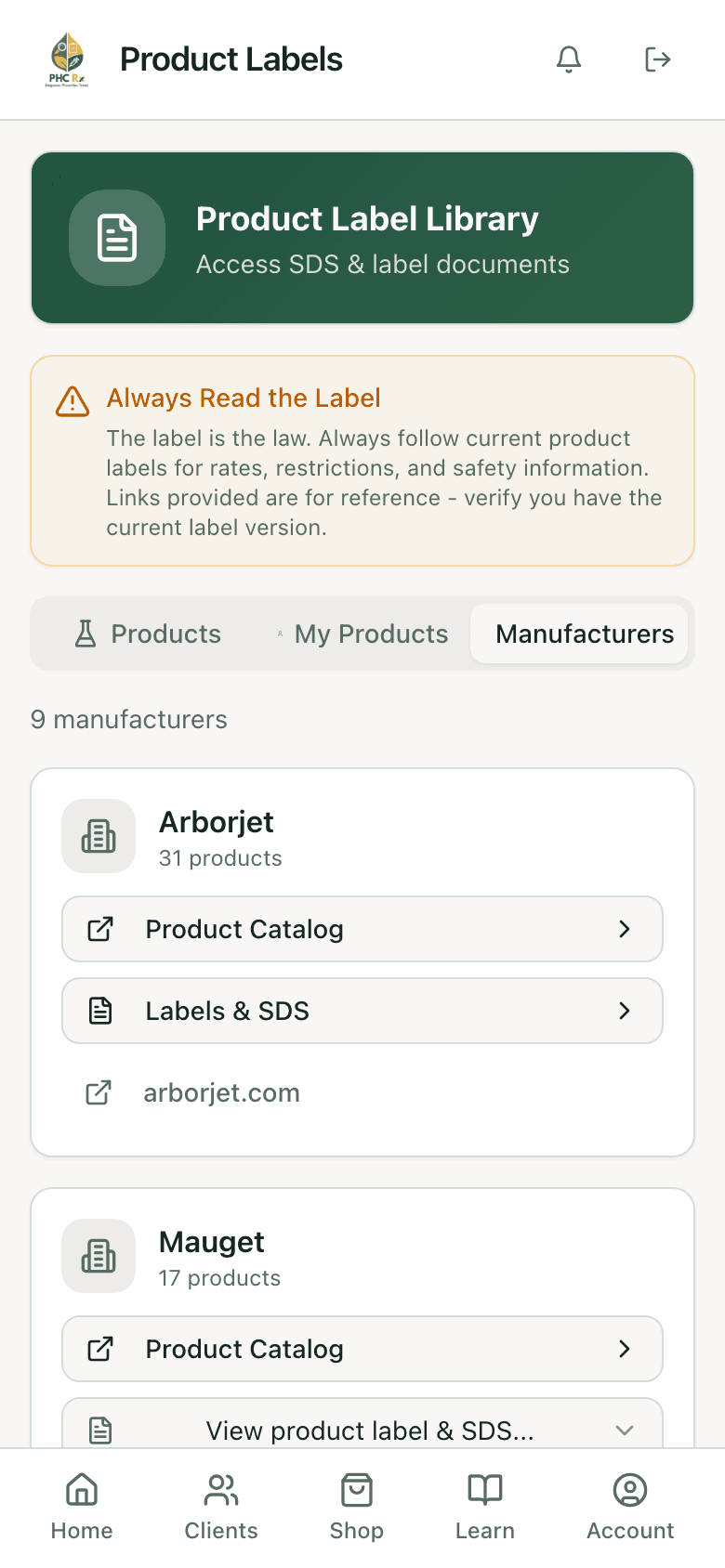
manufacturers with catalog, label, and SDS links in one place
1
record per application: product, rate, volume, date, method, notes
The gap
Off-label is usually an accident
Nobody sets out to put a borer product on a fungus. It happens because the tech remembers the product from the last job, the label is a PDF on a laptop in the office, and the prescription was written from the diagnosis, not from the label. A compliance problem is a workflow problem, and the fix is putting the label in the workflow.
The label is in a different room
The rate is on the bottle, the target list is on page 4 of the PDF, and the reapplication interval is in a footnote. The person choosing the product on site has none of it open.
Records are written after the fact
A spray log filled in Friday for Tuesday's work has the date right and the wind speed wrong. Most state rules want the record within a day or two, and the inspector reads it as if it were written on site.
Retreatment math is done from memory
A two-year emamectin product treated 14 months ago is not due. A one-year imidacloprid treated 14 months ago is overdue. Nobody remembers which tree got which.
The library
Every product, its label, its SDS, its target list.
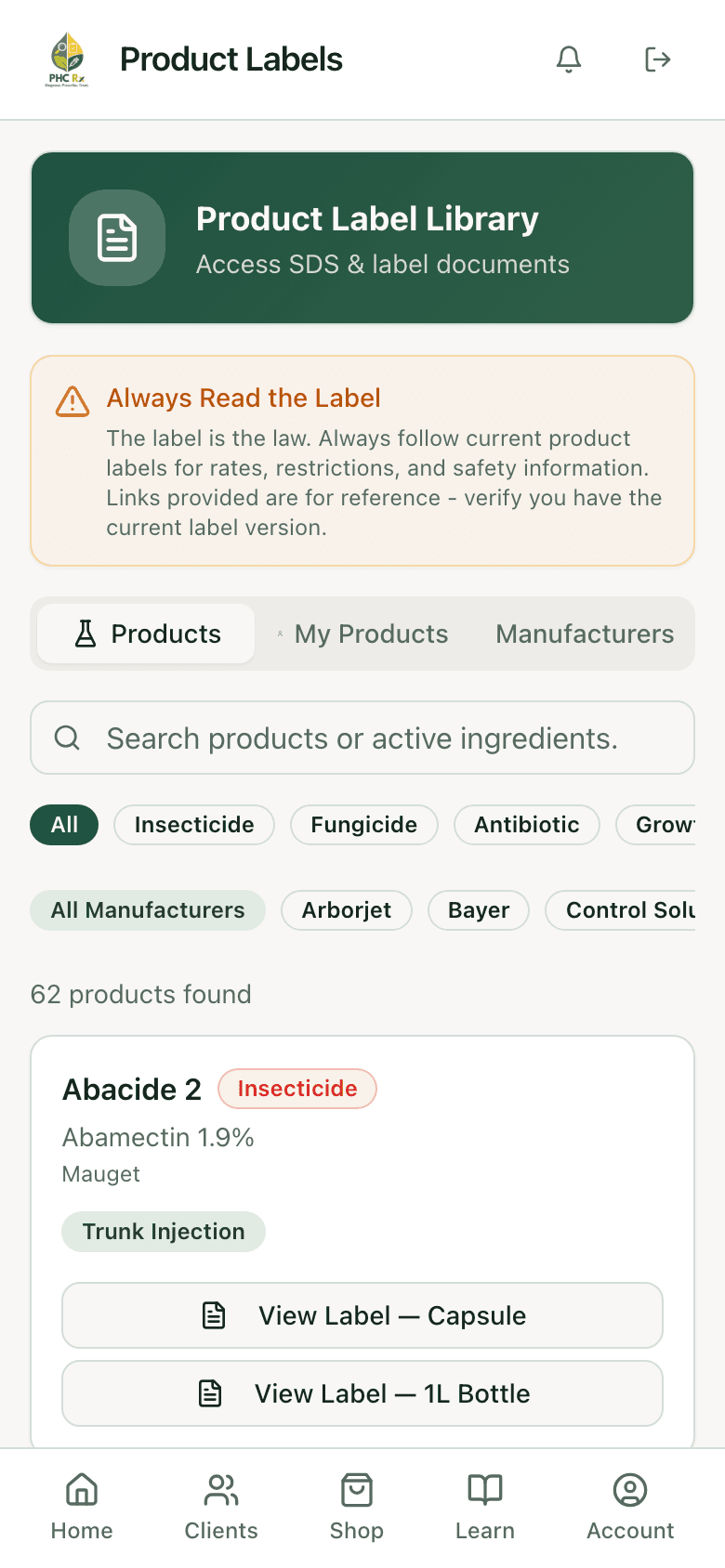
The library holds the products arborists actually use for trunk injection, soil injection, drench, basal bark, and foliar work, filtered by category and manufacturer. Each card carries the active ingredient and concentration, the application methods the label allows, and links to the current label and SDS. Search by product or by active, so "propiconazole" finds every option, not just the one you remember.
- Insecticide, fungicide, antibiotic, growth regulator, nutrient categories
- Label and SDS links per product and per manufacturer
- Your own products can be added when the library does not have one
Check 1 and 2
Is the pest on the label? Is the host?
A product carries the list of pests and diseases it is registered for and, where the label restricts it, the hosts. When a treatment is chosen for a diagnosis, the app compares the target and the species against that list. A match passes. A product labeled for oak wilt going onto black knot gets flagged before it reaches the prescription, with the label link one tap away so you can read the section yourself.
Where the diagnosis comes from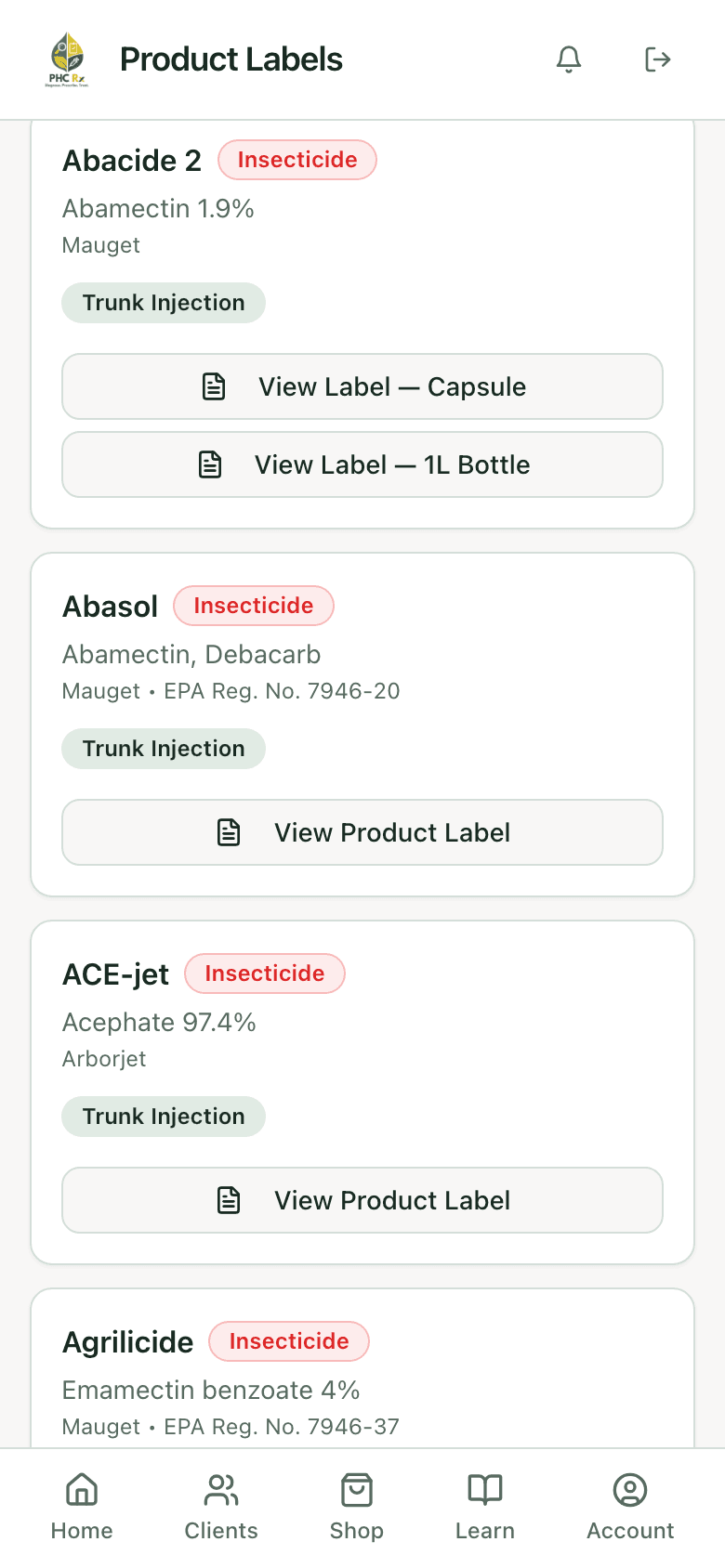
Check 3 and 4
Is the delivery method labeled? Is it the right month?
Trunk injection, soil injection, soil drench, basal bark, and foliar are not interchangeable, and a label that allows one does not allow the others. The delivery check compares the chosen method to the label's list. The timing check compares the scheduled month to the application window for that product and that pest, so a spring-only injection scheduled for October is flagged, not silently booked.
Check 5
Has enough time passed since the last one?
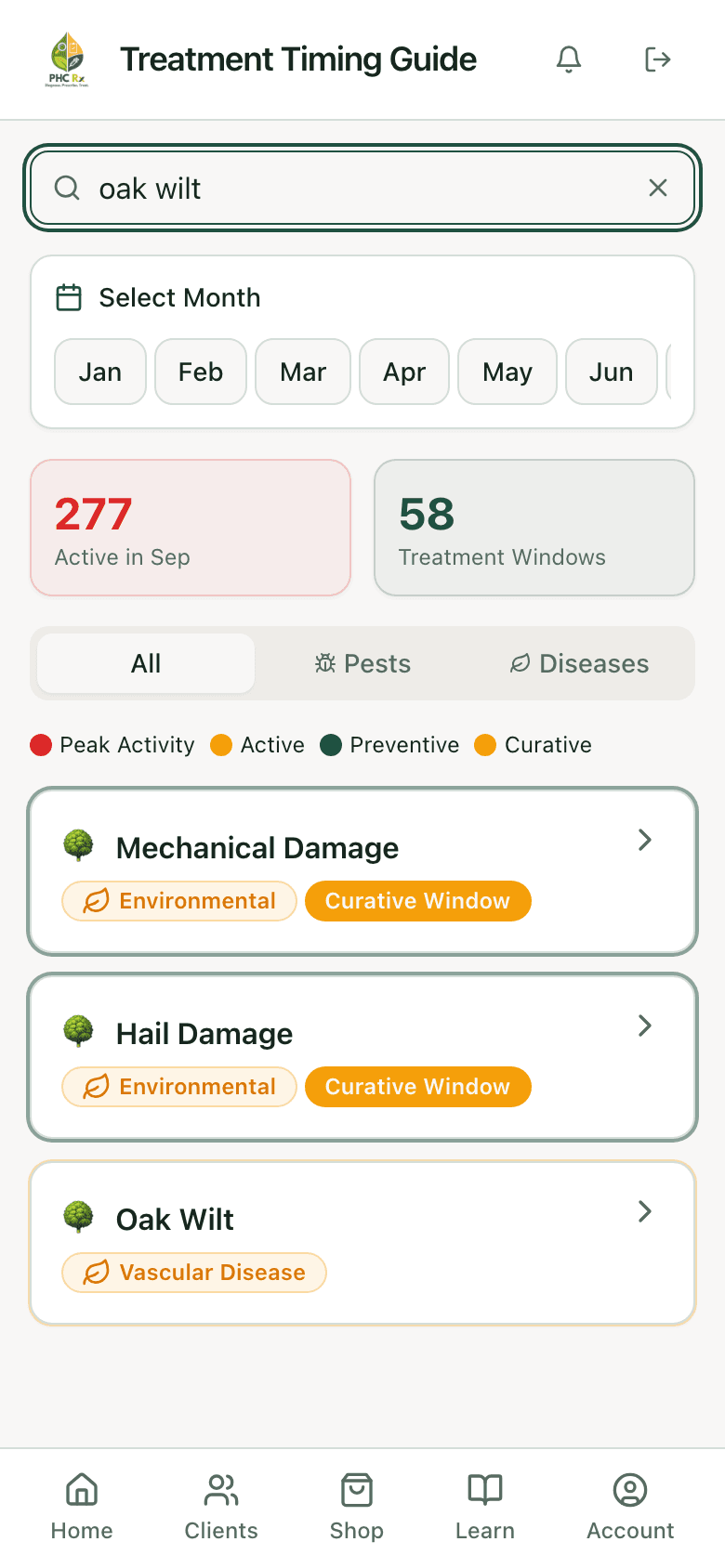
Each product carries its retreatment interval: 730 days for the two-year emamectin benzoate products, 365 for most imidacloprid and propiconazole. When a tree already has a recorded application of that product, the app checks the interval against today and warns if the tree is not due. Annual systemic recommendations also get a note asking for pest pressure to be documented first, so routine yearly applications are a decision, not a default.
The record
Record the application when you mark it complete.
Marking a treatment complete opens the record: the product actually used, the rate applied, the total volume, and notes for conditions. That row is the application record, tied to the tree, the client, the prescription, and the date. It is the same record the tracking view reads and the same one you export when the state asks.
Record keeping by state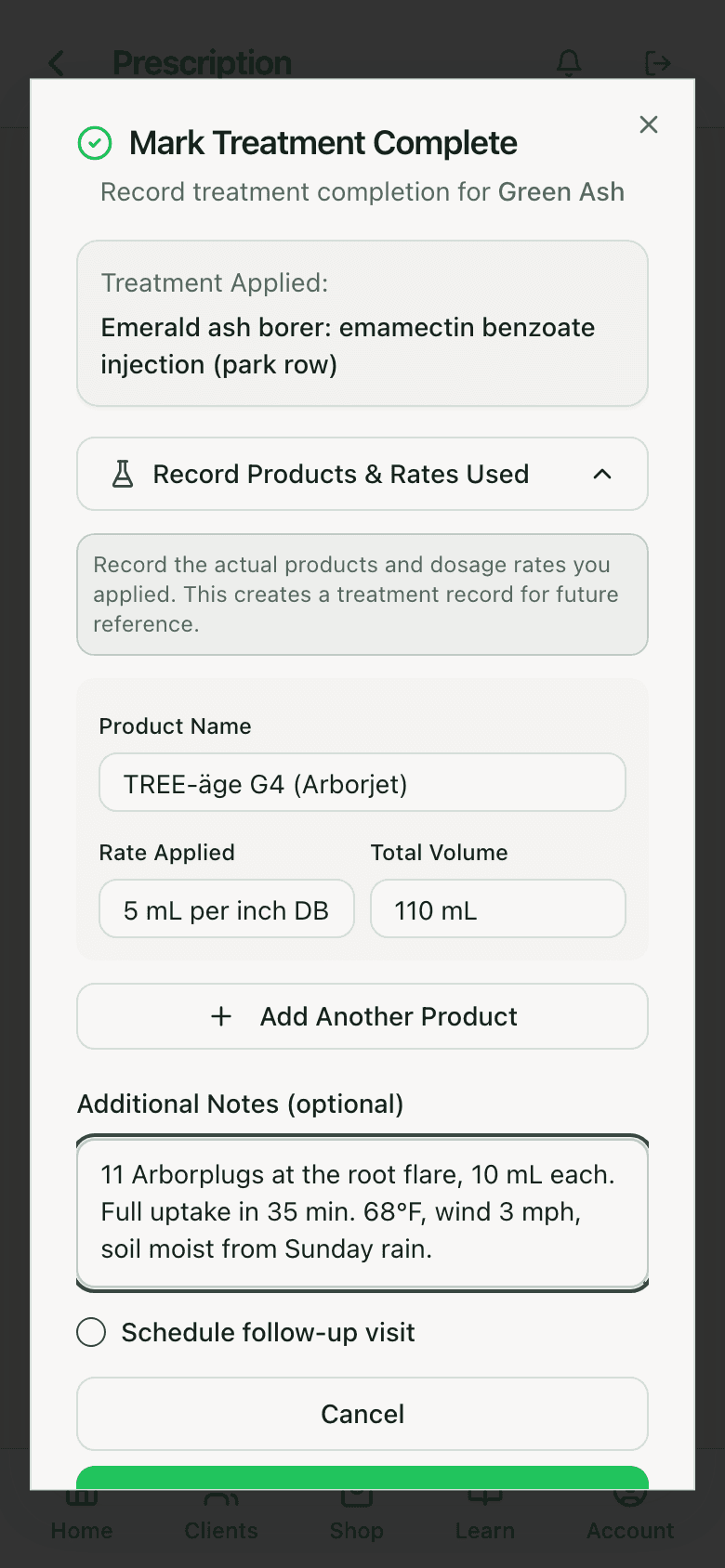
Manufacturers
Catalog, labels, and SDS by manufacturer.
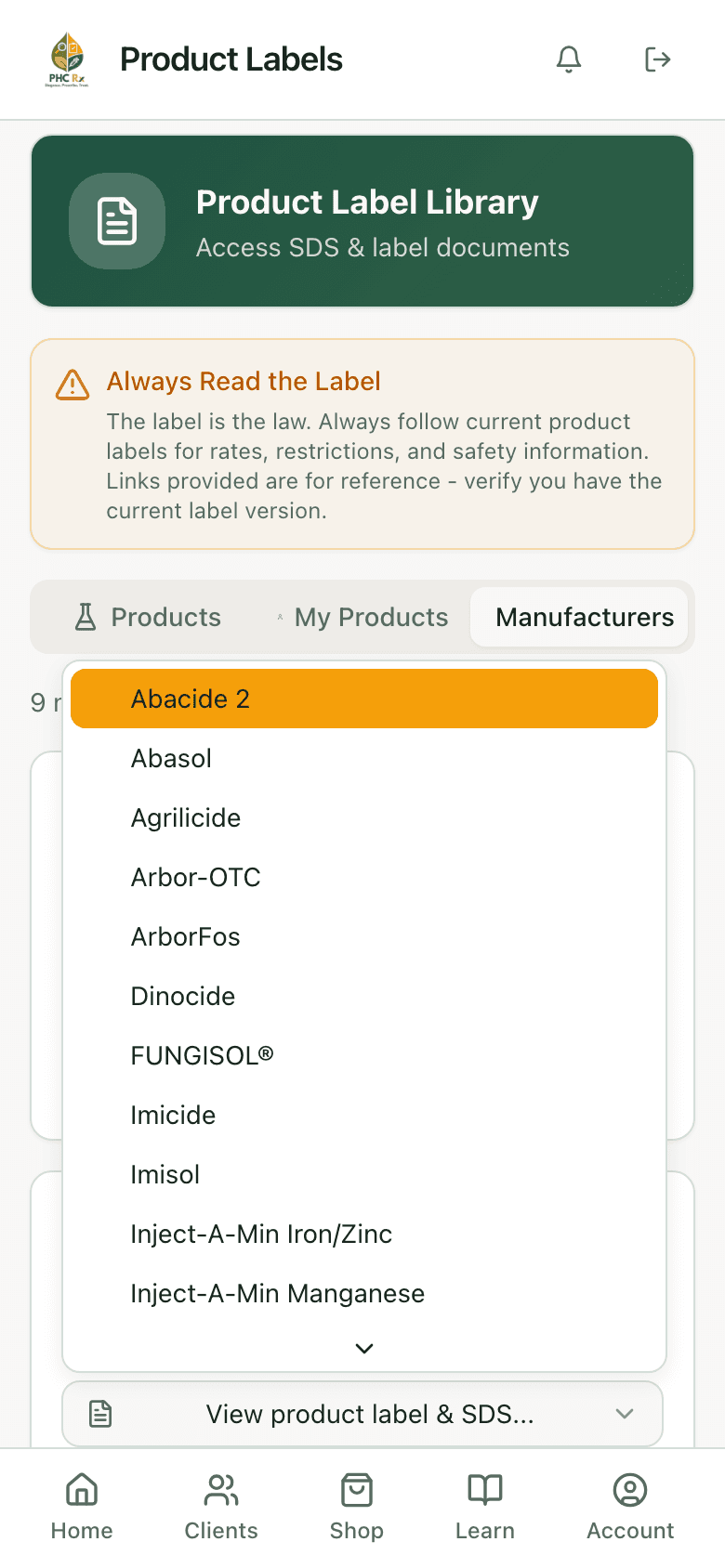
Arborjet, Mauget, Quali-Pro, Bayer, Control Solutions, and the rest, each with a product catalog link, a labels and SDS link, and a per-product label selector. When a label changes, the link points at the manufacturer's current version. The library is the reference; the label is the law, and the app says so on every screen.
Straight from the app
The label, inside the workflow.
Nine manufacturers, one place
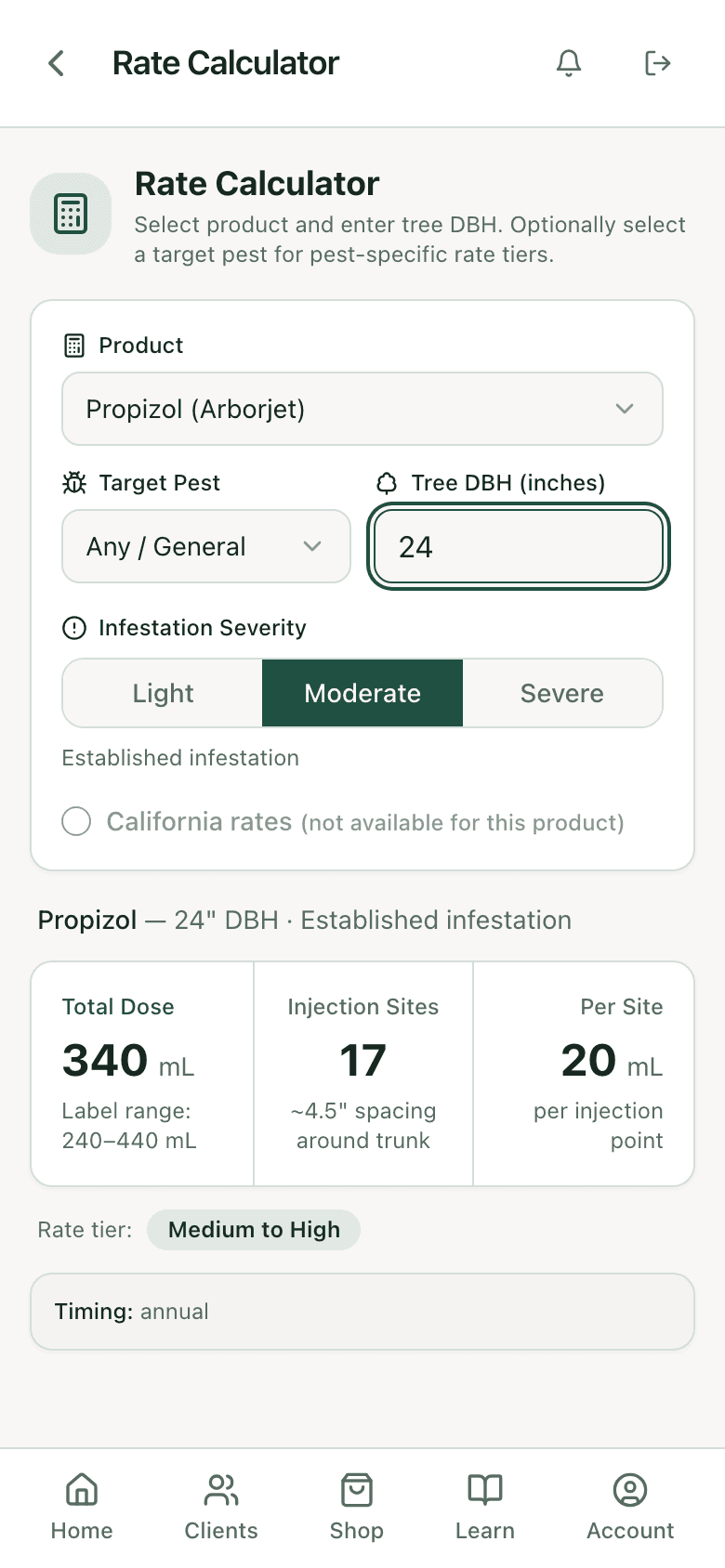
The dose stays inside the label range
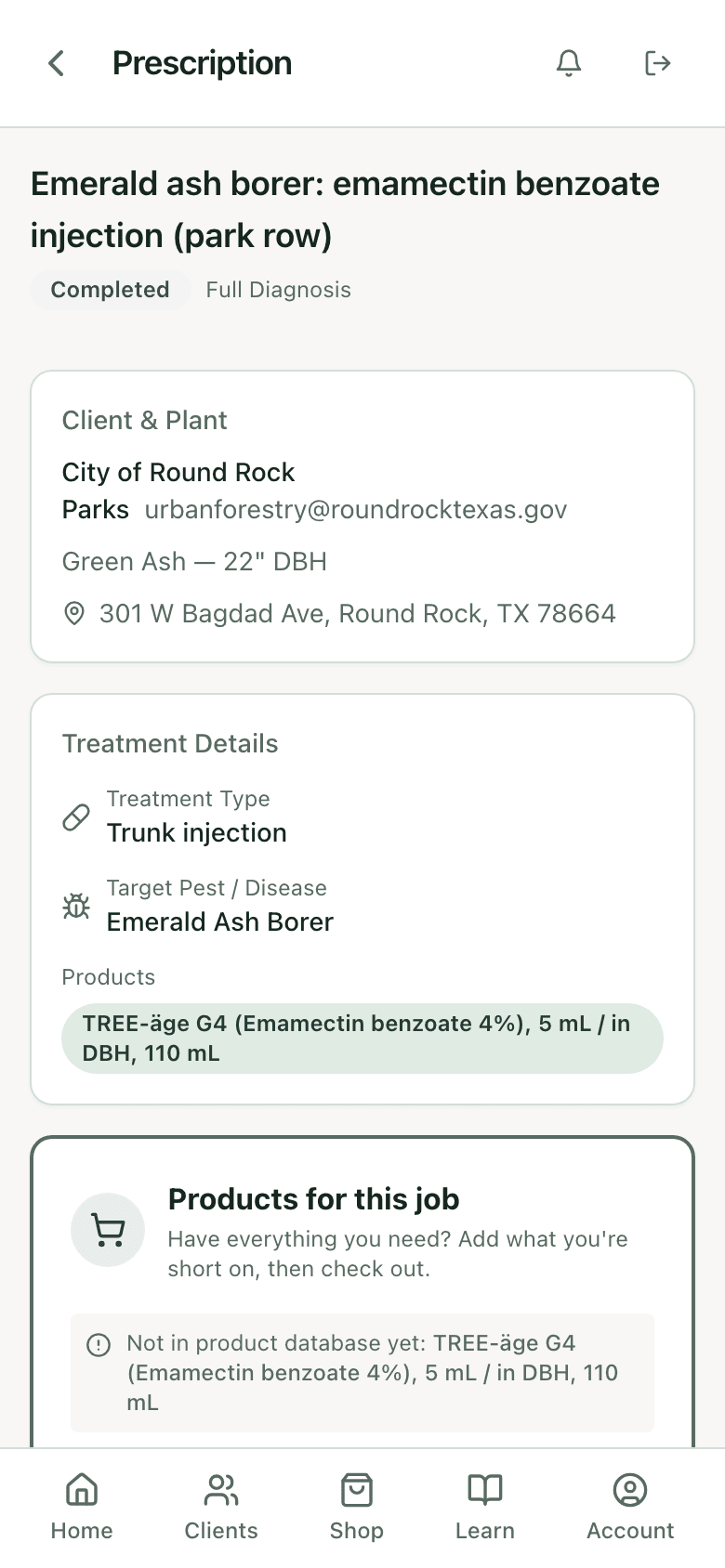
The completed treatment
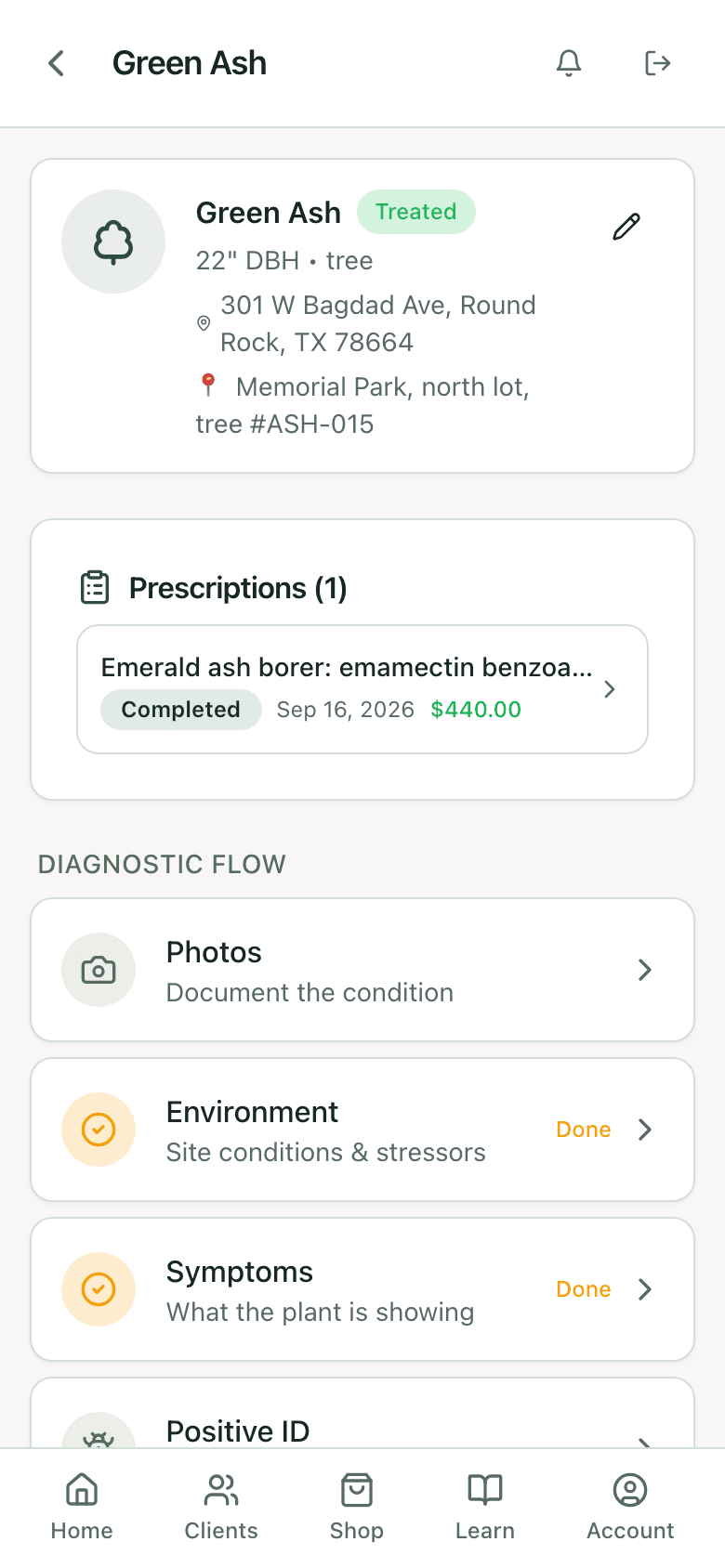
The tree carries its history
What "compliant" means in the app
A treatment gets one of four results from the label check: compliant, warning, violation, or unknown. Compliant means every check passed against the label data on file. Warning means something needs a look, usually timing or an interval that is close. Violation means the pest, host, or delivery method is not on the label. Unknown means the app does not have the label data for that product, which is common for a custom product you added yourself, and it says so rather than guessing.
The check is a decision aid. The label on the container is the legal document, and the app links to it from every product card so you can read the actual language before you sign anything. If the app and the label disagree, the label wins, and the app has a place to report the discrepancy so the library gets corrected.
One thing is not settled: whether an unknown result should block a send or only warn. Today it warns. Some applicators want it to block. We are still arguing about it.
What the application record holds
That covers what the common state record-keeping rules ask for. The states that want more, such as a wind direction or an EPA registration number on the record, get it from the notes field and the product's catalog entry. Exports are JSON or CSV from settings, so the record leaves the app in a shape the inspector can open.
Fields written when a treatment is marked complete
Tree, client, address
- Where it comes from
- The plant record the prescription is attached to
Product name
- Where it comes from
- Chosen from the library or typed for a custom product
Rate applied
- Where it comes from
- As entered, for example 5 mL per inch DBH
Total volume
- Where it comes from
- As entered, checked against the calculator
Application date and method
- Where it comes from
- The completion date and the treatment type on the prescription
Notes
- Where it comes from
- Conditions: temperature, wind, soil moisture, port count, uptake time
Applicator
- Where it comes from
- The account that completed it, with the license from company branding
Who it is for
- Licensed applicators who sign the record and want the check done before the truck rolls.
- Owners adding a PHC line to a pruning company, where the tech is new to the labels. How to start that program.
- Crews running more than one product line, where the two-year and one-year intervals get mixed up.
Applicator licenses by state
Every commercial application has to be made by or under a licensed applicator in the ornamental and shade tree category, and every state names the category, the exam, the fee, and the renewal cycle differently. The company branding profile holds the license numbers that print on every report and prescription, so the number is on the record without anyone typing it twice. Which agency issues the license, what the category is called in your state, and what the CEU cycle looks like is in the pesticide applicator license by state guide.
REI, PHI, and reapplication intervals
The restricted-entry interval is on the label and it is what tells the client when the kids and the dog can go back under the tree; the pre-harvest interval matters on the fruit and nut trees arborists treat more often than they expect. The reapplication interval is the fifth check on this page: a product treated inside its interval is a violation even when the pest is back. The app keeps all three with the product record and surfaces them on the prescription the client approves.
How long to keep pesticide application records
Two years is the federal floor for restricted-use products; most states require two to three years for every commercial application, and a few go longer. Records in PHC Rx stay with the plant record indefinitely, exportable by date range for an inspection. The pesticide application record keeping guide lists the fields each state wants, and the free record template covers them on paper.
FAQ
Questions arborists ask
Does it replace reading the label?
No. It puts the label one tap away and runs five checks against the label data on file so the obvious mistakes get caught before the prescription is written. The container label is the legal document and the app says so on every product screen.
What happens when a treatment fails the check?
You see the failed check, which label section it relates to, and a link to the label. You can change the product, change the method or date, or go ahead with a note if the label language supports it. The record keeps what you decided.
Can I add products the library does not have?
Yes, under My Products. A custom product will not have label data for the check until it is added to the library, and the app marks its check result as unknown rather than passing it.
Is the spray record exportable?
Yes. Plant and treatment data export as JSON or CSV from settings, and each application record carries the product, rate, volume, date, method, and notes.
Does it handle the reapplication interval?
Each product carries its interval. When a tree has a recorded application of the same product, the app compares the interval to today before it lets the next one through without a warning.
Does it track the REI?
The rate calculator shows the re-entry interval and any pre-harvest interval for the selected product where the label has one, so it is visible while you are planning the job. The calculator.
What does it cost?
It is part of every PHC Rx plan, from $99 a month for one seat, with the diagnosis, prescription, and risk assessment tools included. Plans and trial.
Related