
Tree injection rate calculator
DBH in, dose and port count out.
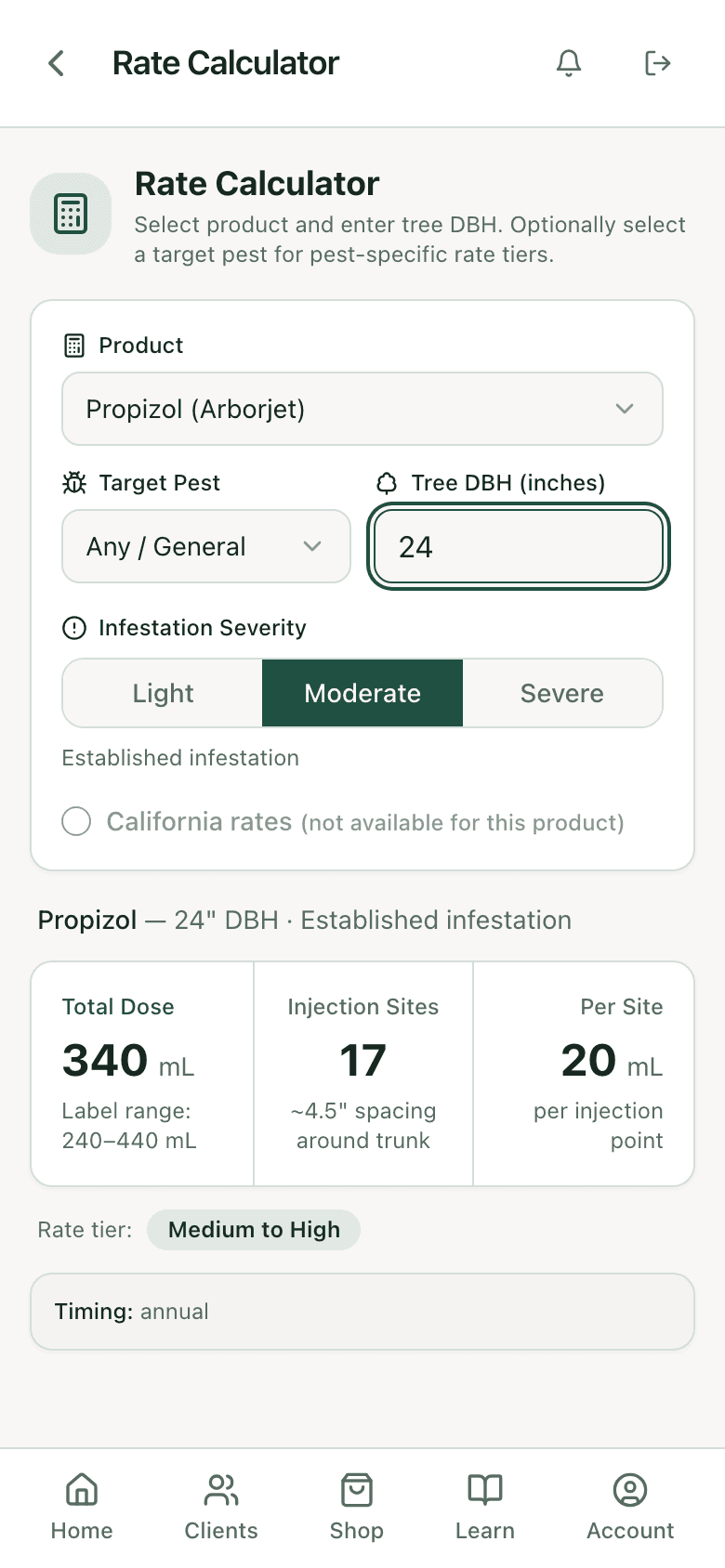
Pick the product, enter the trunk diameter, choose the target pest and how bad the infestation is. The calculator returns the total dose in mL, the number of injection sites, the volume per site, and the label range it has to stay inside. No arithmetic on a tailgate, and no dose outside the label.
62
products with label rate tables in the calculator
3
pressure tiers: light, moderate, severe
4
outputs: total dose, sites, per-site volume, label range
CA
California label rates as a toggle where the product has them
The gap
Why per-inch math goes wrong
The label gives a rate per inch of DBH, sometimes a table by DBH band, sometimes a low and high rate by pest pressure, sometimes a different table for California. The tech has one number in their head from the last product they used, and the bottle has a different one. The tree does not care which one you remembered.
Rates change by pest
The same product carries a lower rate for a leaf feeder and a higher one for a borer. Picking the pest is part of picking the dose, and most people skip it.
Rates change by pressure
Preventive on a clean tree, curative on a tree that is already flagging. The label says medium to high for remedial work, and the difference on a 24 inch tree is a hundred millilitres or more.
Port count is a second calculation
Dose divided by the volume the tree will take per site, spaced around the flare so the product spreads. Get it wrong and half the dose sits in a bottle at the end of the day.
Input 1
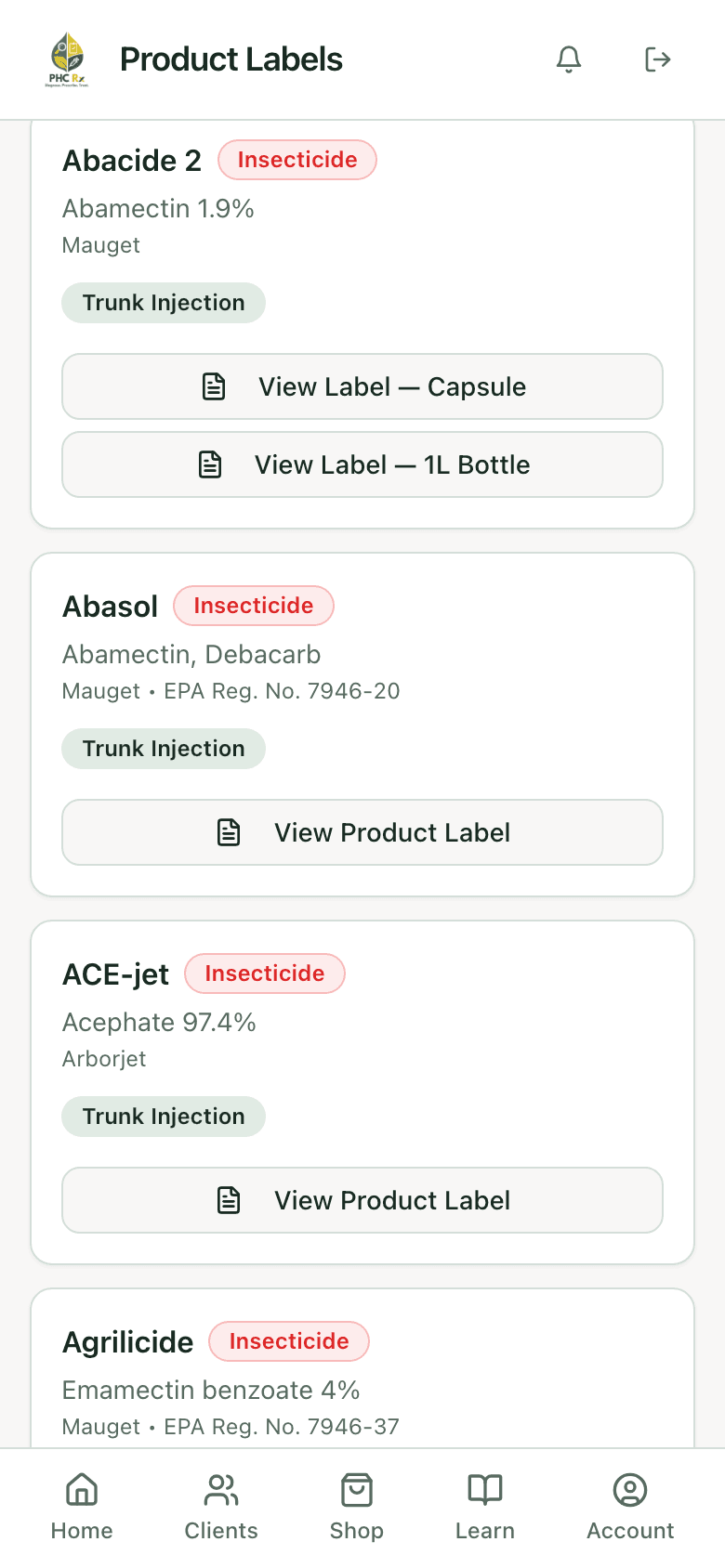
The product, from the label library.
Every product in the label library carries its rate table, and the calculator reads that table rather than a number someone typed in. Propizol, TREE-äge G4 and R10, Agrilicide, IMA-jet, Tebuject, the Mauget capsules, all with the manufacturer's own per-inch or per-band rates. Change the product and the whole output changes with it.
Input 2
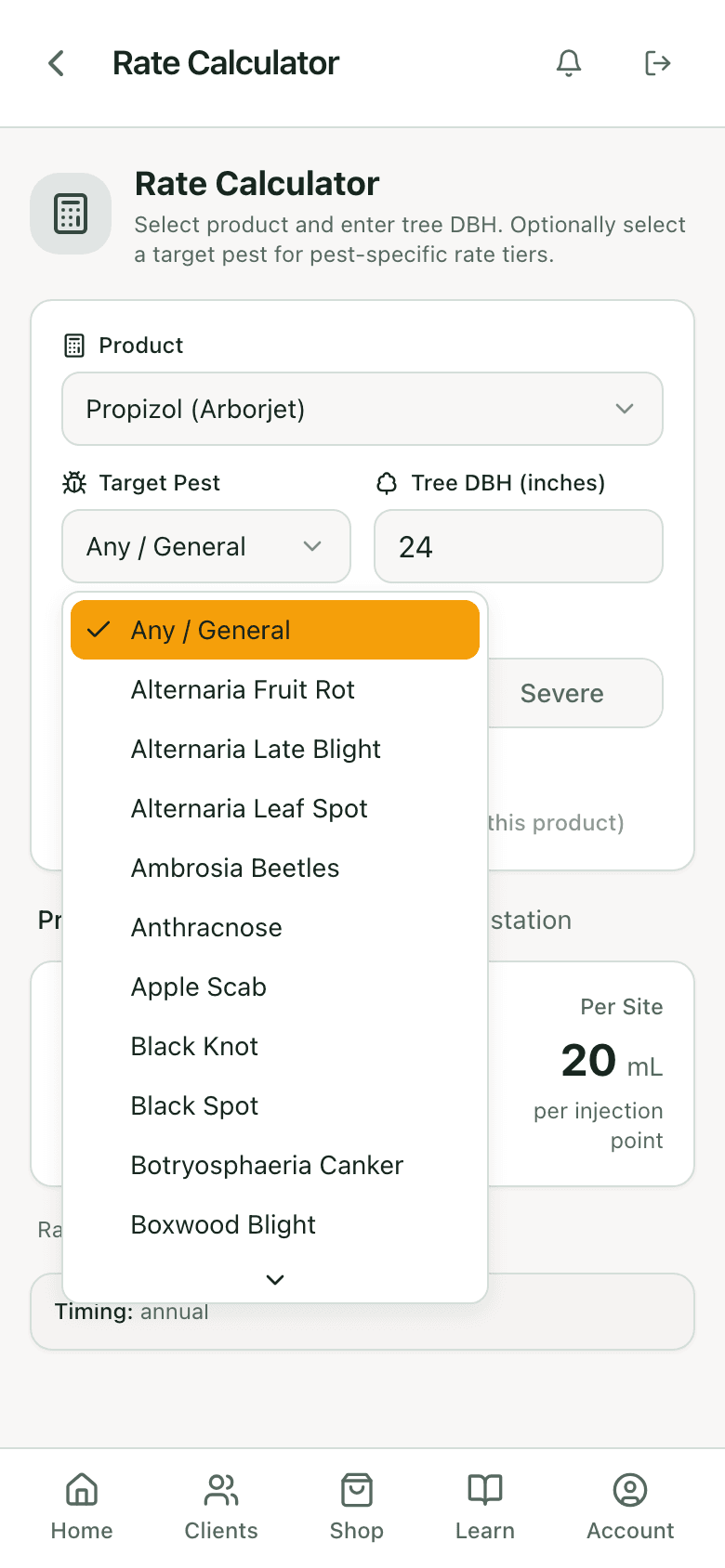
The target pest, because the rate depends on it.
Any or general gives the base rate. Choosing the pest pulls the pest-specific tier where the label has one: borers and vascular diseases usually sit higher than leaf feeders and scale. The list is the product's own target list, so you cannot pick a pest the product is not labeled for.
Input 3
DBH and infestation severity.
Diameter at 4.5 feet in inches. Then light, moderate, or severe. Light sits at the low end of the label range for preventive work on a tree with no symptoms. Moderate is an established infestation. Severe is the top of the range for a tree that is already declining and needs the full remedial dose. The tier you chose shows under the result so the record says why the dose was what it was.
- Multi-stem trees: enter the combined DBH the label method gives you
- California toggle where the product has a separate table
- Rate tier and timing shown with the result
Output
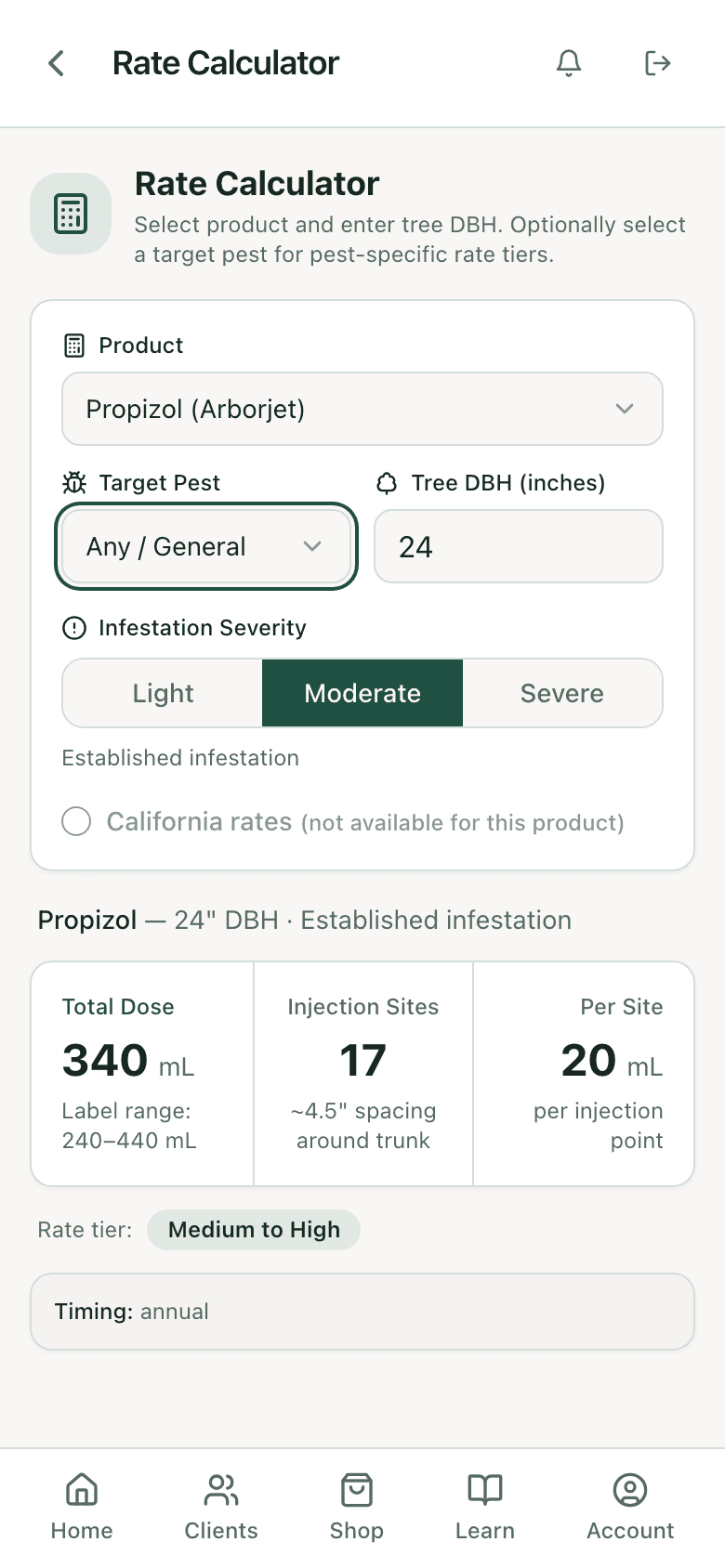
Dose, sites, volume per site, label range.
Total dose in mL for the whole tree. Injection sites at roughly four and a half inch spacing around the trunk at the flare, which for a 24 inch tree is 17. Volume per site, so you know what to load into each port. And the label range for that DBH, so if you adjust the dose by hand you can see when you have left it. The result is the number that goes on the prescription.
After the job
Record what actually went in.
Uptake is never exactly what the calculator said. When the treatment is marked complete, the record takes the product, the rate you applied, and the total volume that actually went into the tree, with a notes field for port count, uptake time, and conditions. The planned dose and the applied dose both stay on the record.
Where the record lives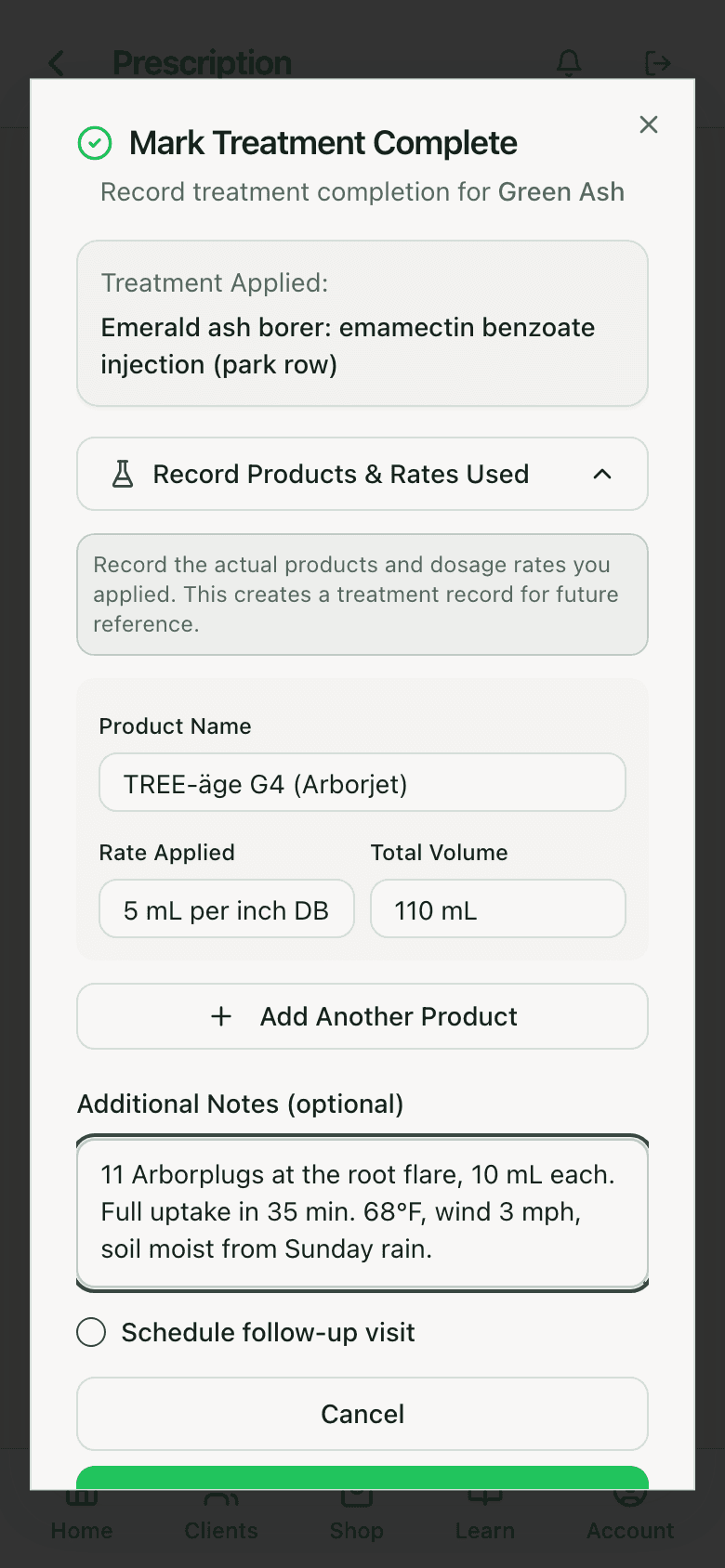
Straight from the app
From the calculator to the tree.
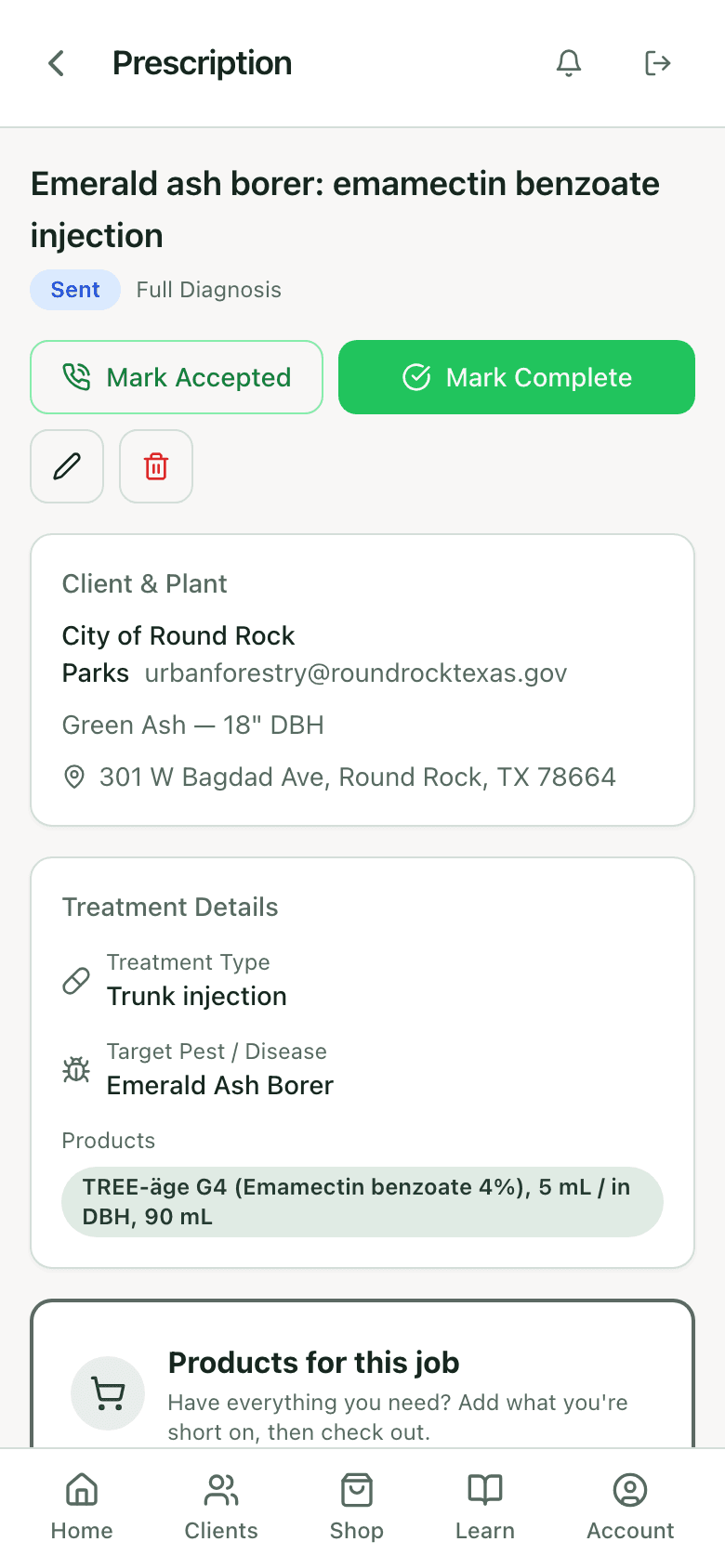
The dose on the prescription
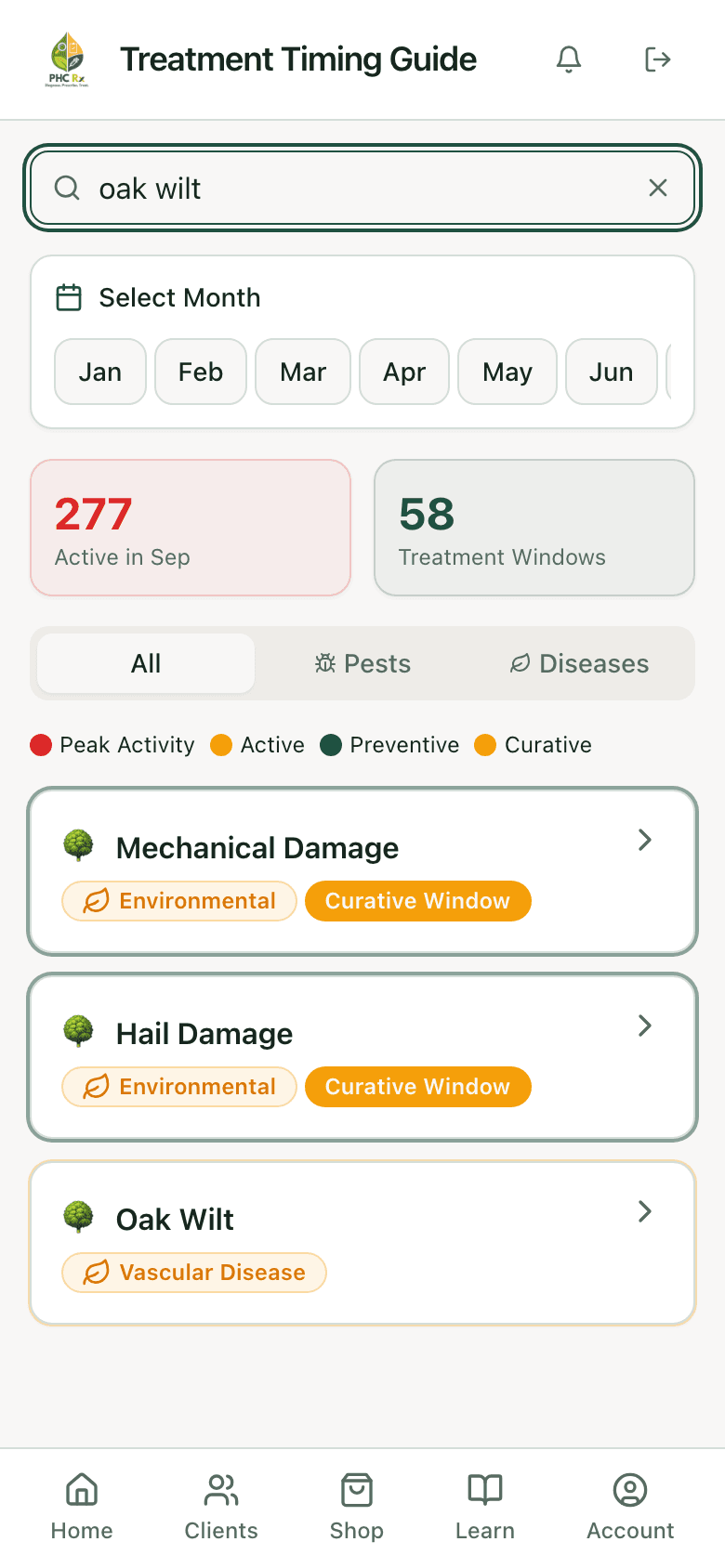
The window it has to land in
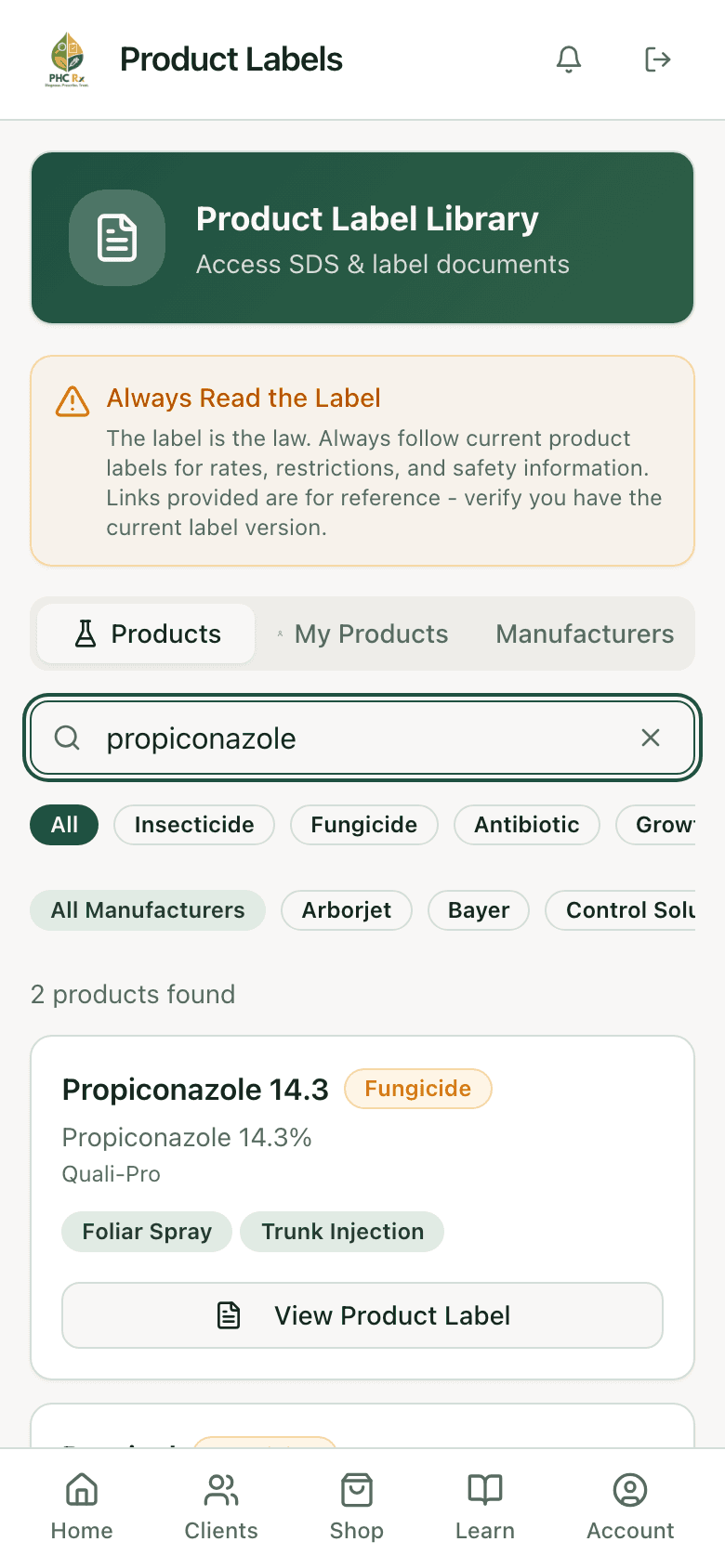
The label behind the rate
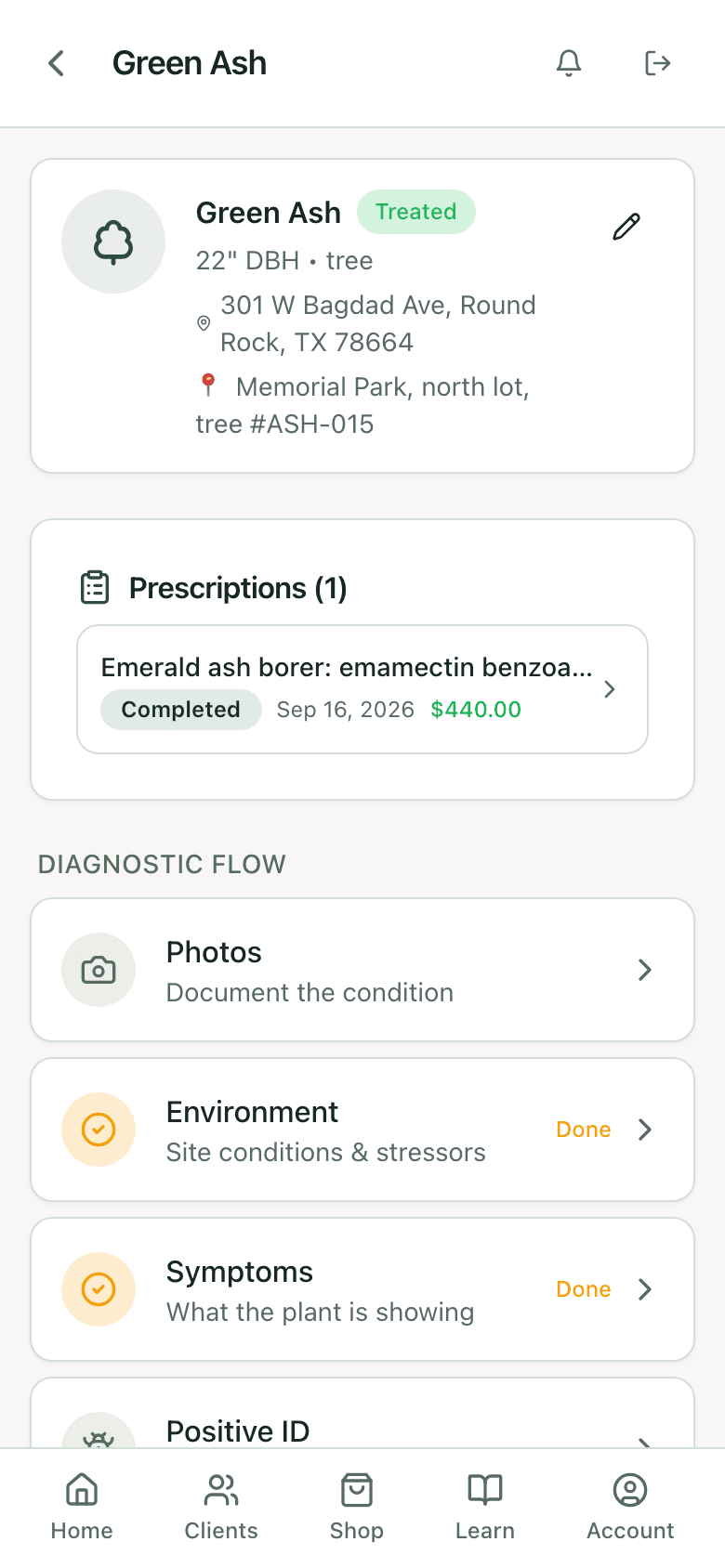
The tree afterward
A worked example
Propizol on a 24 inch oak for oak wilt, moderate infestation. The app returns 340 mL total, inside a label range of 240 to 440 mL for that diameter. That is 17 injection sites around the flare at about 4.5 inch spacing, 20 mL per site. The rate tier shows as medium to high and the timing as annual, so the record explains itself when someone reads it in two years.
Change the severity to light and the dose drops toward the 240 mL end. Change the product to a different propiconazole and the range changes with the label. Change the DBH to 30 and the site count and total both move. None of that requires remembering a rate.
Propizol, 24 inch DBH, moderate infestation (from the app)
Total dose
- Value
- 340 mL
Label range at this DBH
- Value
- 240 to 440 mL
Injection sites
- Value
- 17, about 4.5 inches apart
Per site
- Value
- 20 mL
Rate tier
- Value
- Medium to high
Timing
- Value
- Annual
Where the rates come from
Each product's rate table is entered from the manufacturer's current label and stored with the product in the library, with the label linked from the same card. The calculator reads that table. It does not average across products, it does not extrapolate past the label's DBH range, and when a product has a separate California table the toggle swaps to it. If a label is revised, the table is revised with it and the change is logged.
For the pests where the rate varies most, the treatment guides on this site show the same numbers worked for common tree sizes, so you can sanity-check the calculator against the guide and both against the label.
REI and PHI
Where the label carries a re-entry interval or a pre-harvest interval, the calculator shows it under the result for the selected product. Trunk injection products typically have a short REI, and fruit and nut hosts carry PHI restrictions that matter if the client eats what the tree produces. Seeing it while planning the dose is easier than finding it after the truck has left.
FAQ
Questions arborists ask
Is this a free tree injection calculator?
The calculator is part of the PHC Rx app, which has a 7-day trial with no card. The numbers it uses come from each product's label and are kept current with the label library.
Which products does it cover?
The 62 products in the label library: emamectin benzoate, imidacloprid, dinotefuran, abamectin, propiconazole, tebuconazole, thiabendazole, phosphites, and the Mauget capsule line, among others. Custom products you add get a calculator entry once a rate is entered for them.
How does it count injection sites?
Circumference divided by roughly 4.5 inches, rounded, which is the spacing most injection systems specify around the root flare. Per-site volume is the total dose divided by that count.
What about soil injection and drench?
Products labeled for soil application carry their per-inch or per-foot-of-height rate, and the calculator returns the total volume of product; you add the water per the label. The delivery method is checked against the label as part of the compliance check.
Does it handle multi-stem trees?
Enter the combined DBH as the label directs, usually the sum of the stems measured at 4.5 feet, or the equivalent single-stem DBH. How to measure DBH covers the multi-stem rules.
What does it cost?
It is included in every PHC Rx plan, from $99 a month, with the label library, prescriptions, and diagnosis. Plans and trial.
Related