
Treatment guide
Scale insect treatment: oil in winter, systemic in spring, crawlers in between
Scale is the pest crews misdiagnose most and treat worst, because an armored scale and a soft scale want different chemistry and neither cares about a spray aimed at the adult. Three tools cover almost every scale on a tree: a dormant oil, a systemic injection, and a crawler-timed contact spray. Which one, when, and the rates per inch.
pest
Scale insectsCoccoidea, armored (Diaspididae) and soft (Coccidae) families
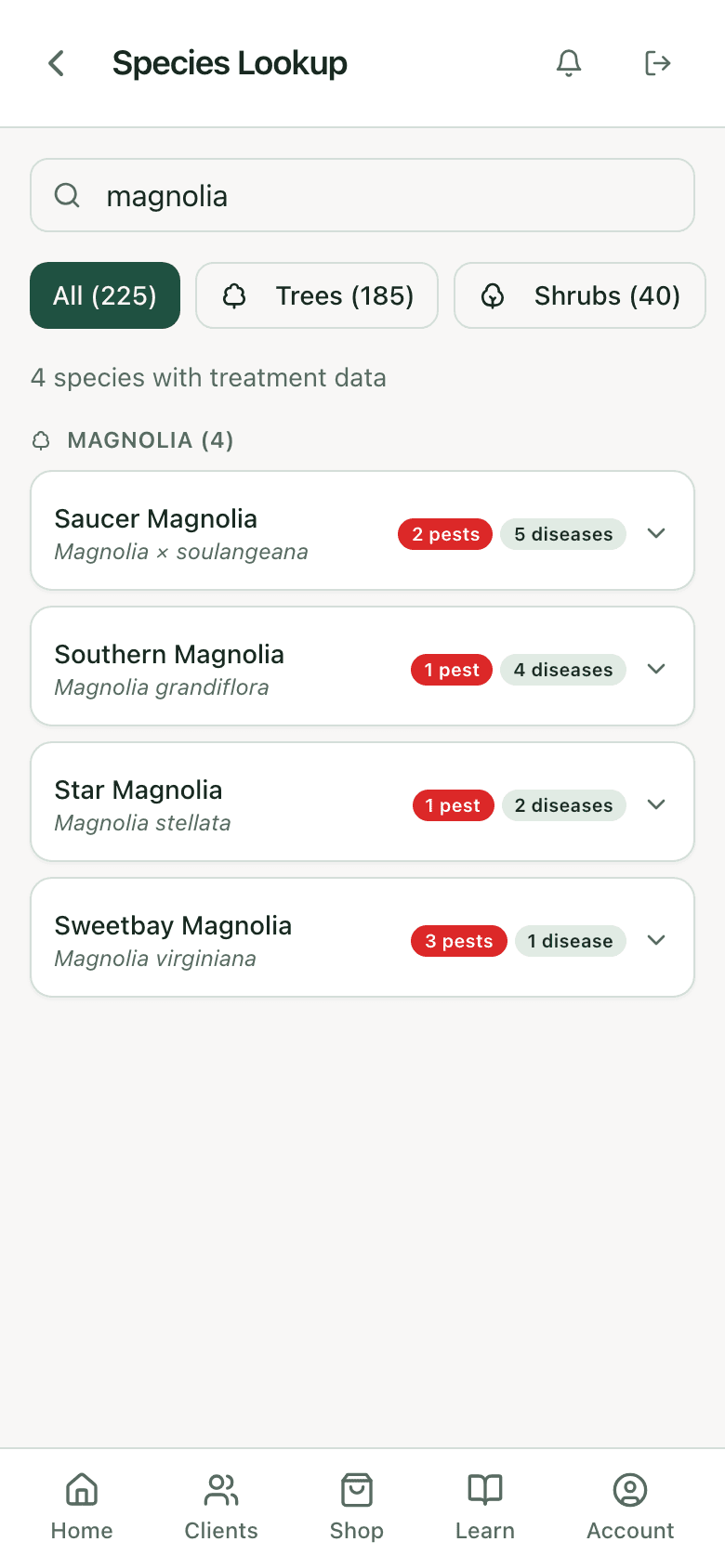
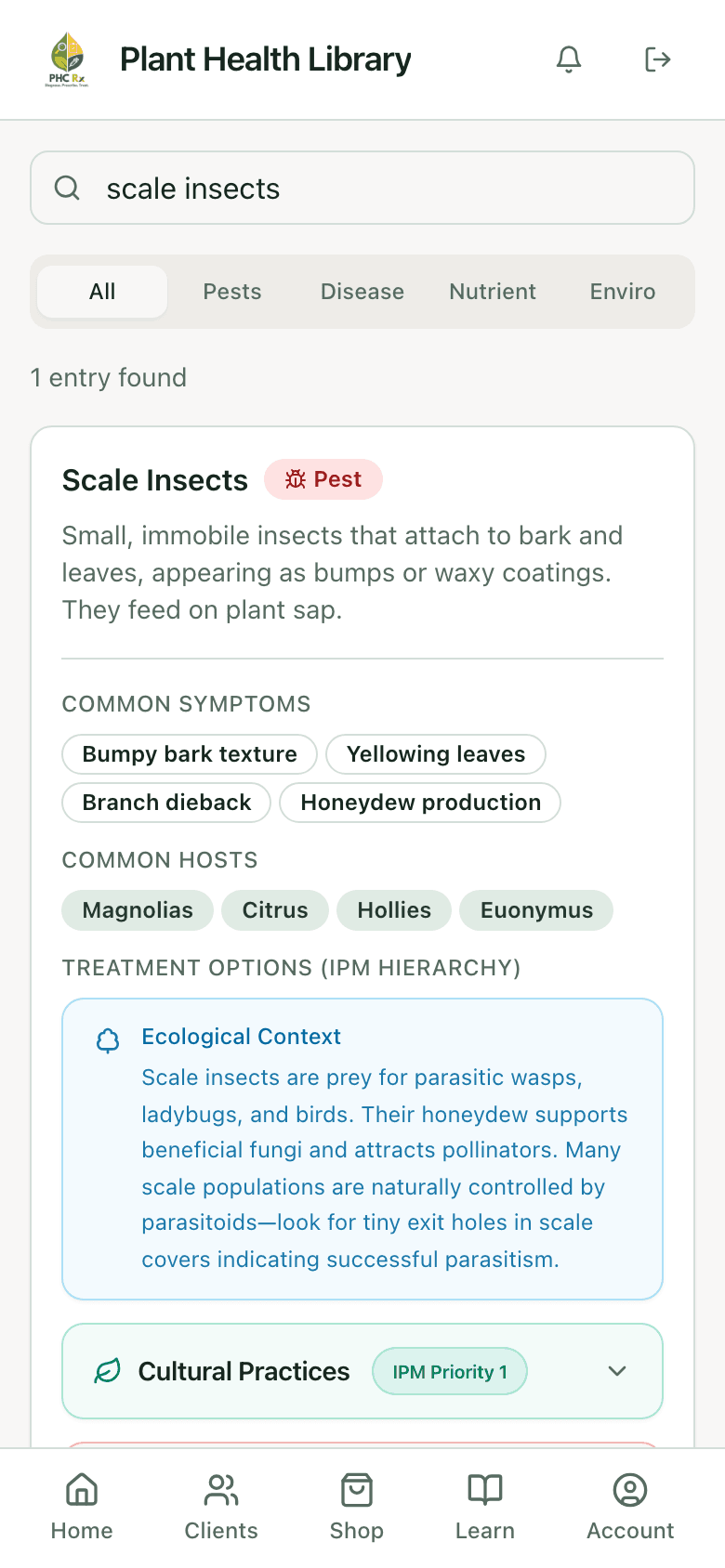
Sap-feeding insects that settle on bark, twigs, or leaves and stop moving. Soft scales (magnolia scale, tuliptree scale, lecanium, cottony maple scale) are larger, produce honeydew, and are open to systemic insecticides because they feed on phloem. Armored scales (euonymus scale, oystershell, pine needle scale, obscure scale on oak) hide under a hard waxy cover, make no honeydew, feed on cells instead of phloem, and mostly shrug off systemics. The crawler, the one mobile stage, is the only stage a contact spray reaches, and it lasts about two weeks.
Symptoms (the tree's response)
- Yellowing leaves and thin canopy on the infested limbs
- Twig and branch dieback, worst on the interior
- Honeydew, sooty mold, and wasps on soft scale hosts
- Slow decline over several seasons on armored scale hosts
Signs (the organism itself)
- Bumps on twigs and bark that scrape off with a thumbnail and leave a wet spot
- White, gray, or brown waxy covers on needles, leaves, or bark
- Crawlers, tiny yellow or orange dots moving on new growth, visible on a piece of double-sided tape
- Parasitoid exit holes in old covers, which means something is already working
Common hosts: Magnolia, especially southern and saucer magnolia, Holly, Euonymus, Oak, particularly pin oak and white oak, Maple, Tulip poplar and linden, Hemlock and pine, Camellia and boxwood
Timing window
8 active monthsOrganism active
Preventive treatment
Curative treatment
Dormant oil in late winter, February into March before bud break, smothers overwintering stages of most species and is the foundation. Crawler emergence depends on the species and runs from May through August; use growing degree days for the species you have and a tape trap to confirm. Systemics go in during spring uptake, April into June, on soft scale hosts. Identify the species first, because the calendar is different for each one.
Treatment options
Product, rate, delivery, timing
Rates below are per inch of trunk diameter at breast height unless the row says otherwise. The registered label wins over anything on this page.
Dinocide (Mauget)
- Active ingredient
- Dinotefuran
- Rate
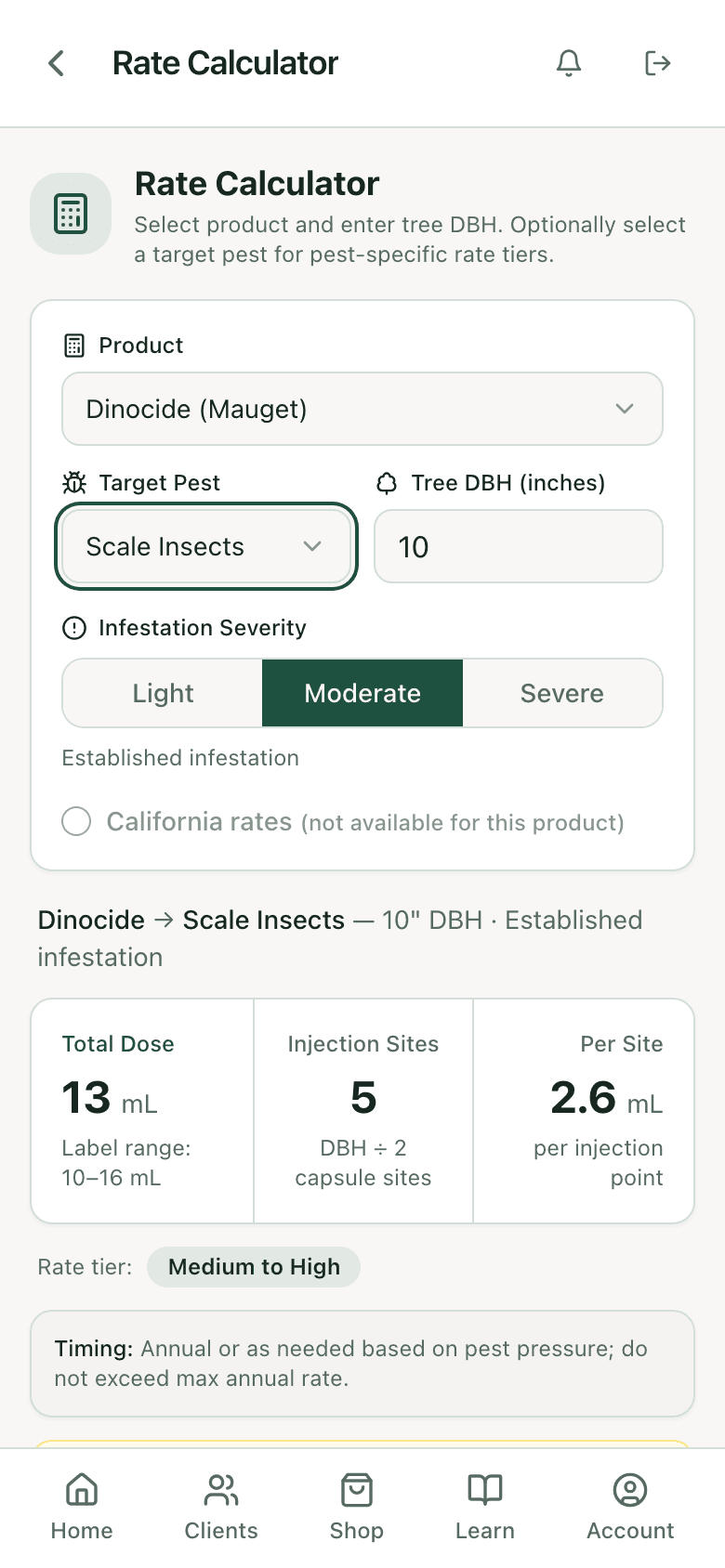
- Capsule micro-injection by DBH band. A 10 inch magnolia is 8 to 10 mL low, 16 to 20 mL high (label band 8 to 10 in); an 18 inch oak is 21 to 27 mL low, 28 to 36 mL high (label band 14 to 19 in)
- Delivery
- Mauget capsule micro-injection at the root flare
- Timing
- April through June for soft scale; can be applied in summer when crawlers are active
- Frequency
- Annual or as needed based on pest pressure; do not exceed max annual rate.
Imicide (Mauget)
- Active ingredient
- Imidacloprid 10%
- Rate
- Capsule micro-injection by DBH band; a 12 inch tree is 15 to 18 mL low, 20 to 24 mL high (label band 11 to 13 in)
- Delivery
- Mauget capsule micro-injection
- Timing
- Spring, April into May, ahead of crawler emergence
- Frequency
- Annual
ACE-jet (Arborjet)
- Active ingredient
- Acephate 97.4%
- Rate
- Label table by DBH band; a 14 inch tree is 72 mL low, 100 mL medium, 125 mL high (label band 14 to 16 in)
- Delivery
- Trunk injection
- Timing
- At crawler emergence, or on a heavy soft scale population in summer
- Frequency
- Per label
Horticultural Oil (Southern Ag)
- Active ingredient
- Mineral Oil 98%
- Rate
- Per label, dormant rate in late winter, summer rate at crawler emergence
- Delivery
- Foliar and bark spray to the point of runoff, every surface where scale sits
- Timing
- Late winter before bud break, and again at crawler emergence if needed
- Frequency
- Annually in winter; crawler sprays as needed
Bifen I/T (Control Solutions)
- Active ingredient
- Bifenthrin 7.9%
- Rate
- Per label, diluted, sprayed to wet all infested twigs and foliage
- Delivery
- Foliar spray
- Timing
- Crawler emergence only, confirmed by tape trap
- Frequency
- One or two applications 7 to 10 days apart during the crawler window
- Dinocide (Mauget): Dinotefuran, the systemic that also reaches some armored species where imidacloprid does not. Fast uptake, one season. The first choice on magnolia scale, tuliptree scale, and lecanium.
- Imicide (Mauget): Imidacloprid, season-long on soft scales. Weak on armored scales, so confirm the species before you sell it. Follow pollinator restrictions on linden and other bee-worked hosts.
- ACE-jet (Arborjet): Acephate. Short residual, fast, and one of the few injectables with activity on armored scales. Time it to the crawlers.
- Horticultural Oil (Southern Ag): Mineral oil. Works by suffocation, so it needs full coverage and has no residual, and it is the one product that treats armored and soft scale alike. Watch the temperature rules on the label; oil on a blue spruce or on foliage in a freeze does damage.
- Bifen I/T (Control Solutions): Bifenthrin. Contact only, so it does nothing to settled scale under a cover. Sprayed at the wrong week it kills the parasitoids and leaves the scale, which is how a scale problem gets worse after a spray.
Worked examples
Dose per tree
Dinocide, capsule micro-injection
10″ DBH
8 to 10 mL low, 16 to 20 mL high (label band 8 to 10 in)
Dinocide, capsule micro-injection
18″ DBH
21 to 27 mL low, 28 to 36 mL high (label band 14 to 19 in)
Imicide, capsule micro-injection
12″ DBH
15 to 18 mL low, 20 to 24 mL high (label band 11 to 13 in)
ACE-jet, from the label table
14″ DBH
72 mL low, 100 mL medium, 125 mL high (label band 14 to 16 in)
Want the number for the tree in front of you? Use the tree injection rate calculator.
Armored or soft decides the chemistry
Flip a cover with a knife. If the insect comes off with it and the cover is part of the body, soft and shiny, and there is honeydew on the leaves below, it is a soft scale, and a spring systemic injection will clear it. If the cover lifts off and the insect stays behind, flat and yellow under a hard shell, with no honeydew, it is armored. Armored scale gets dormant oil in winter, a crawler spray in summer, and dinotefuran or acephate if you are going to inject.
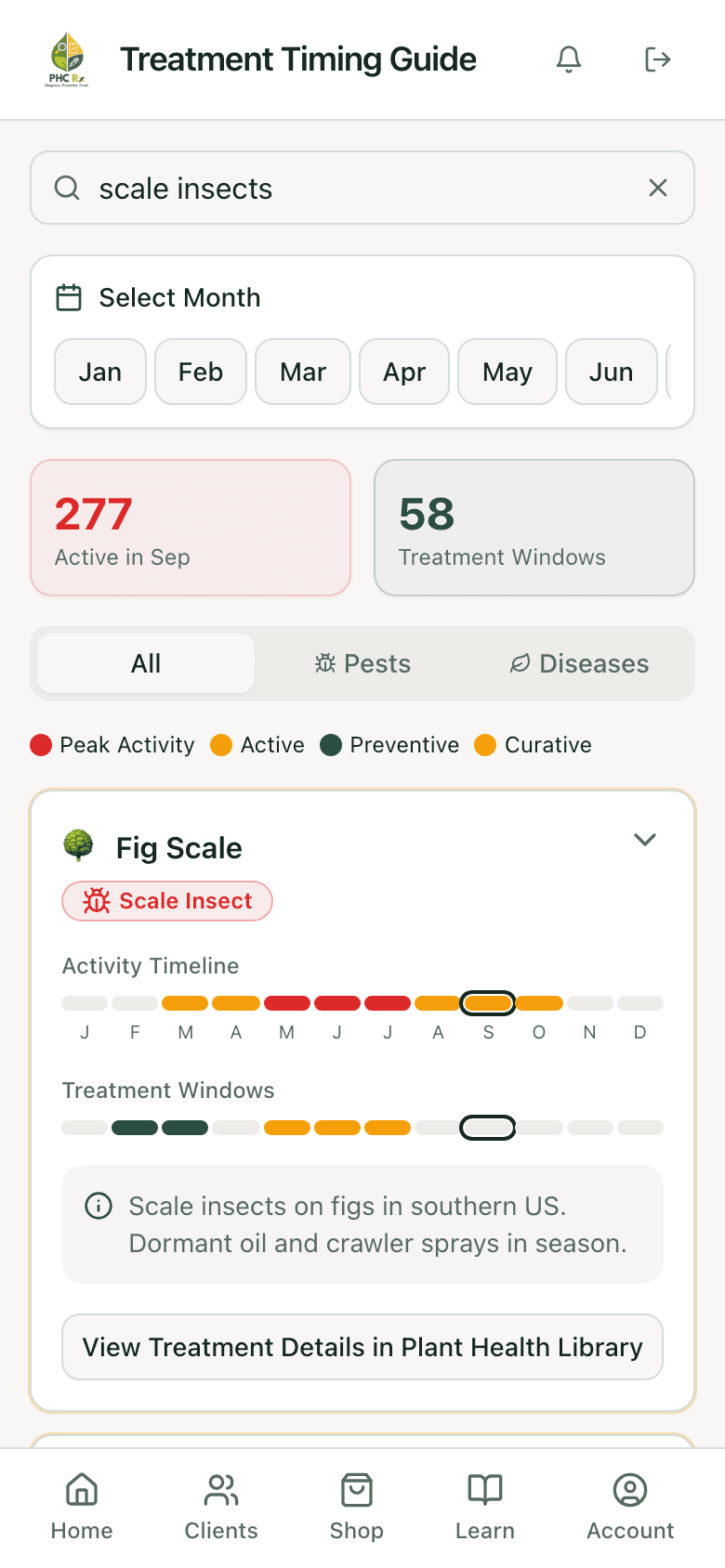
The species also sets the crawler date. Magnolia scale crawlers come in late August; euonymus scale in May and again in July; pine needle scale in May; obscure scale on oak in July. The timing guide in the app carries the window per pest so the spray goes on the calendar for the right week, not the week the client called.
The oil visit
A late-winter dormant oil application on every scale-prone tree on the property is the cheapest effective thing a PHC program does. It kills overwintering scale, mites, and aphid eggs on contact, it is safe around people, and it makes the summer visits easier. Bill it as a service line, pair it with dormant pruning, and write it into the prescription as the first step every year. Skip it on blue spruce, on anything in a hard freeze, and on hosts the label excludes.
What the label check will catch
Scale is on the dinotefuran, imidacloprid, acephate, oil, and bifenthrin labels the app carries, so the pest check passes. The label check flags a neonicotinoid on a linden in bloom, an oil application with a spray temperature outside the label range, a second injection inside the annual maximum, and a DBH below the table on a small holly or euonymus that should be sprayed instead. The flag is on the plan before the client sees it.
Label check
1 warningLast application was 14 days ago. Proceed with a documented override, or reschedule.
Pricing the job
Oil is priced per visit with a minimum, or per plant on a property with a lot of shrubs. Injections are per inch of DBH: a 10 inch magnolia at $18 per inch is $180 for the season, an 18 inch pin oak is $324. Crawler sprays are per visit and sold as a pair. The whole program for a property lands on the calendar with the product line on each event, and next year's dormant oil is already scheduled when this year's is done.
FAQ
Questions arborists ask
What is the best treatment for scale insects on trees?
It depends on the species. Soft scales (magnolia, tuliptree, lecanium) respond to a spring systemic injection with dinotefuran or imidacloprid. Armored scales (euonymus, oystershell, pine needle, obscure) need dormant oil in late winter and a contact spray timed to the crawlers, with dinotefuran or acephate by injection as the systemic option.
When should you spray for scale?
Dormant oil in February or March before bud break, and a contact spray only during crawler emergence, which is species-specific and runs from May to late August. Confirm crawlers with double-sided tape on a twig before you spray. A spray on settled adults does nothing.
Does trunk injection work for scale?
Yes on soft scales, and dinotefuran or acephate on many armored scales. A 10 inch magnolia takes 8 to 10 mL low, 16 to 20 mL high (label band 8 to 10 in) from the Dinocide rate table, applied in spring.
Why did the scale get worse after we sprayed?
The spray missed the crawler window, so it killed the parasitic wasps and lady beetles that were controlling the scale and left the scale under its cover. Time the next one to the crawlers, or switch to oil and a systemic.
Is horticultural oil safe on all trees?
Not all. Blue spruce and some other glaucous conifers lose their color, and oil applied in freezing weather or heat above the label range burns foliage. Read the label's host and temperature limits before you fill the tank.
Where do these rates come from?
The PHC Rx product catalog, built from the Dinocide, Imicide, ACE-jet, Horticultural Oil, and Bifen I/T labels, and the app's timing guide for the dormant and crawler windows.
Related