
Treatment guide
Bagworm treatment: when to spray, what to inject
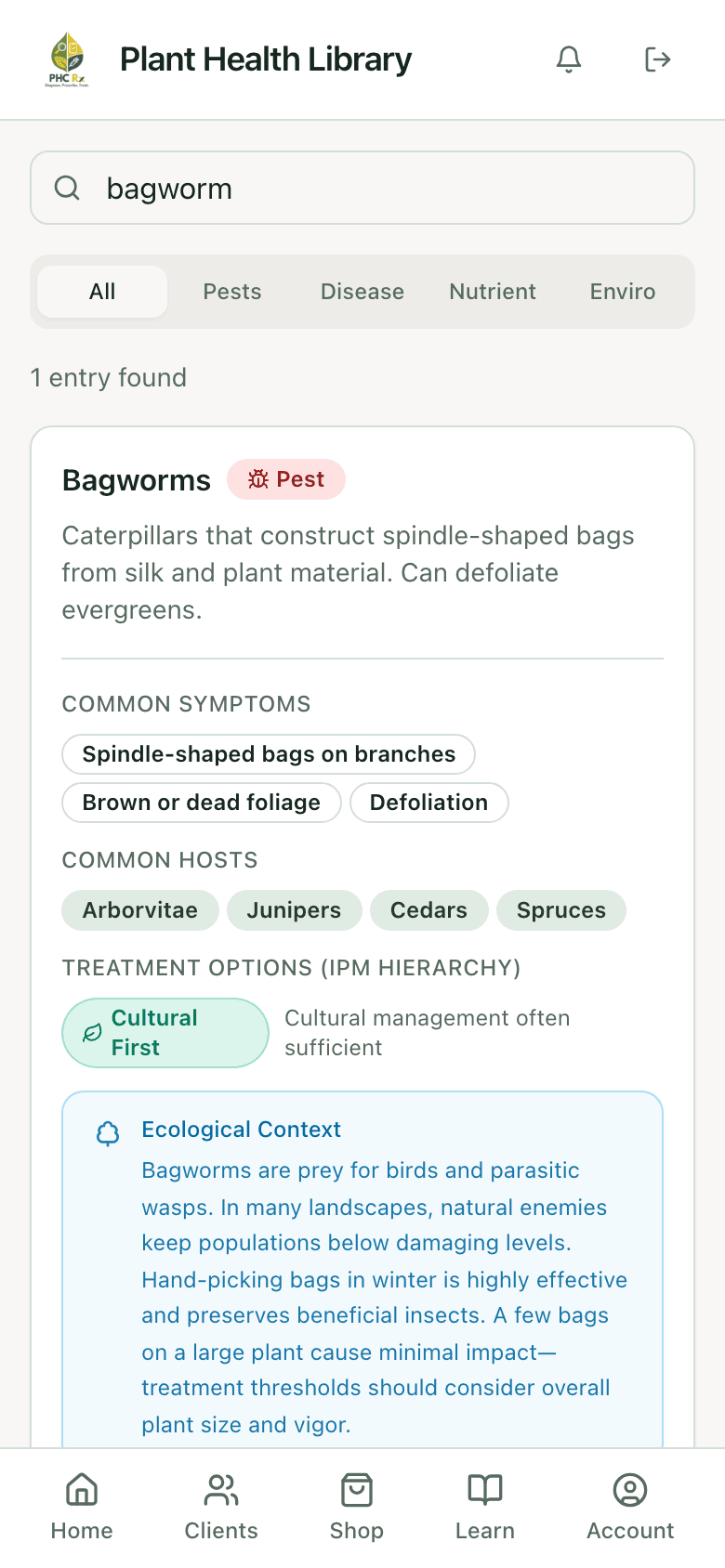
Bagworms are easy to kill in June and almost impossible in August. The whole job is timing: a contact spray or a Bt application while the bags are under half an inch, or a systemic in the trunk before they hatch. Rates, the window, and the winter step that beats all of it.
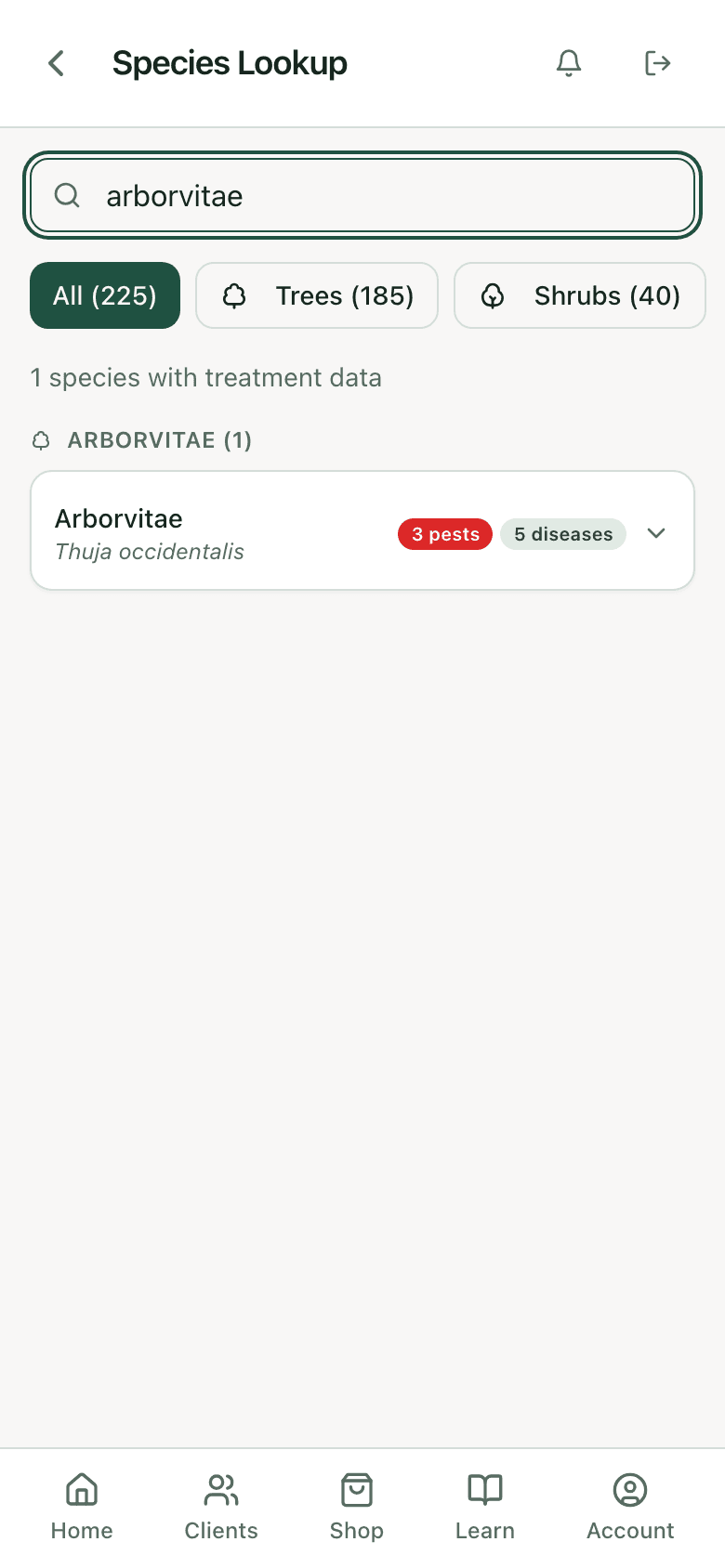
pest
BagwormsThyridopteryx ephemeraeformis
A caterpillar that builds a spindle-shaped bag of silk and host foliage and carries it while it feeds. Eggs overwinter inside the female's bag, hatch in late spring, and the larvae feed through summer. A heavy population strips an arborvitae in one season, and stripped arborvitae does not refoliate. The mature bag, an inch to two inches long in August, is a fortress; nothing sprayed on it gets in.
Symptoms (the tree's response)
- Brown or missing foliage, worst at the top of the plant
- Thinning that looks like drought or winter burn from a distance
- Whole-plant browning on arborvitae and juniper
Signs (the organism itself)
- Spindle-shaped bags hanging from twigs, small and green in June, brown and up to 2 inches by fall
- Bags that move when you watch them in early summer
- Old bags with eggs on the plant through winter
Common hosts: Arborvitae, Juniper and eastern red cedar, Leyland cypress, Arizona cypress, Bald cypress, Western red cedar, Spruce, Over 100 broadleaf species when the conifers run out
Timing window
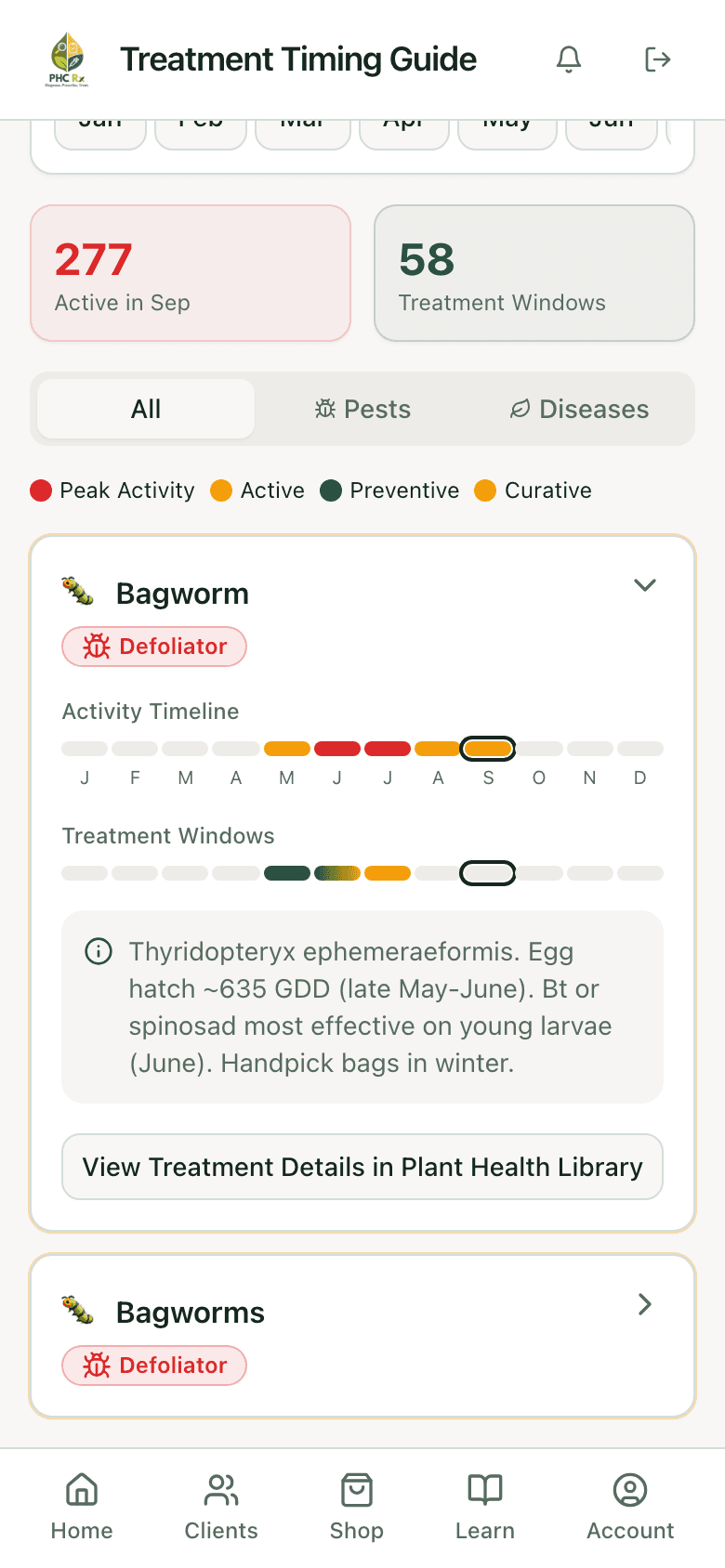
5 active monthsOrganism active
Preventive treatment
Curative treatment
Eggs hatch late May into June in most of the country. Sprays work from hatch until the bags reach about half an inch, which is June and the first part of July. After that, contact products fail and the systemics are the only option left. Hand-pick and destroy overwintering bags from November through April; it is the single most effective control on a plant you can reach.
Treatment options
Product, rate, delivery, timing
Rates below are per inch of trunk diameter at breast height unless the row says otherwise. The registered label wins over anything on this page.
TREE-äge G4 (Arborjet)
- Active ingredient
- Emamectin benzoate 4%
- Rate
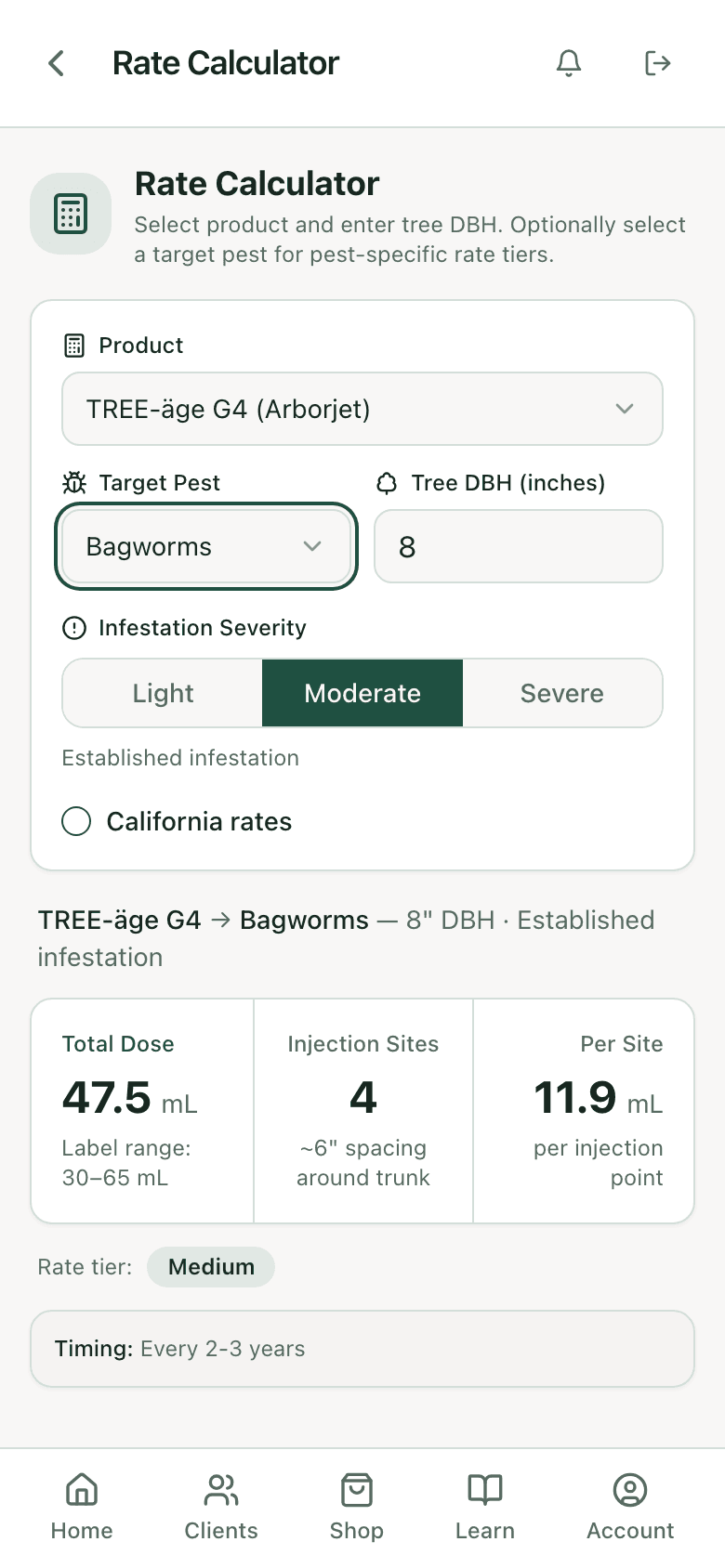
- Label table by DBH band. An 8 inch arborvitae is 20 to 30 mL low, 30 to 65 mL medium, 65 to 90 mL high (label band 7 to 9 in); a 12 inch juniper is 30 to 35 mL low, 35 to 90 mL medium, 90 to 120 mL high (label band 10 to 12 in)
- Delivery
- Trunk injection at the base; on multi-stem plants, ports on each stem large enough to take one
- Timing
- Spring before hatch, so the product is in the foliage when the larvae start feeding
- Frequency
- Every 2 years per label
ACE-jet (Arborjet)
- Active ingredient
- Acephate 97.4%
- Rate
- Label table by DBH band; a 10 inch tree is 45 mL low, 50 mL medium, 75 mL high (label band 8 to 10 in)
- Delivery
- Trunk injection
- Timing
- Late spring when larvae are active and small
- Frequency
- Annually, as needed
Abacide 2 (Mauget)
- Active ingredient
- Abamectin 1.9%
- Rate
- Capsule micro-injection by DBH band; a 12 inch tree is 15 to 18 mL low, 20 to 24 mL high (label band 11 to 13 in)
- Delivery
- Mauget capsule micro-injection
- Timing
- Spring, before or at hatch
- Frequency
- Annually
Bifen I/T (Control Solutions)
- Active ingredient
- Bifenthrin 7.9%
- Rate
- Per label, diluted, sprayed to wet all foliage
- Delivery
- Foliar spray, thorough coverage including the interior of the plant
- Timing
- June into early July while bags are under half an inch
- Frequency
- One or two applications at the label interval
Bacillus thuringiensis kurstaki (several brands)
- Active ingredient
- Btk
- Rate
- Per label, sprayed to wet all foliage
- Delivery
- Foliar spray
- Timing
- From hatch until bags reach about half an inch
- Frequency
- Every 7 to 10 days while larvae are feeding, usually two or three applications
- TREE-äge G4 (Arborjet): Emamectin benzoate, labeled for bagworm. Two seasons of protection from one visit, which is the case for it on a specimen conifer that gets hit every year. Not for trees under 2 inches DBH, which rules out most arborvitae hedges.
- ACE-jet (Arborjet): Acephate. Fast, one season, and the right call when the client noticed the bags in late June and the spray window is closing.
- Abacide 2 (Mauget): Abamectin, labeled for bagworm. The capsule route for crews without an injection rig.
- Bifen I/T (Control Solutions): Bifenthrin, a contact pyrethroid. Kills what it touches on the day you spray, so coverage and timing are everything. Hard on beneficials; the parasitic wasps that keep bagworm down between outbreaks are on the same plant.
- Bacillus thuringiensis kurstaki (several brands): The larvae have to eat it, so coverage of the new growth matters and it stops working once bags are large. Safe for beneficials and the choice on hedges near a pool, a patio, or a bee yard. Not in the PHC Rx catalog as a specific product; write the brand you use.
Worked examples
Dose per tree
TREE-äge G4, from the label table
8″ DBH
20 to 30 mL low, 30 to 65 mL medium, 65 to 90 mL high (label band 7 to 9 in)
TREE-äge G4, from the label table
12″ DBH
30 to 35 mL low, 35 to 90 mL medium, 90 to 120 mL high (label band 10 to 12 in)
ACE-jet, from the label table
10″ DBH
45 mL low, 50 mL medium, 75 mL high (label band 8 to 10 in)
Abacide 2, capsule micro-injection
12″ DBH
15 to 18 mL low, 20 to 24 mL high (label band 11 to 13 in)
Want the number for the tree in front of you? Use the tree injection rate calculator.
Spray or inject
A hedge of 4 inch arborvitae gets sprayed. Btk if the bags are small and there are people around; bifenthrin if the population is heavy and the timing is late. A single 10 inch juniper or a row of specimen Leyland cypress that gets bagworm every year gets injected, because one emamectin visit in April covers two summers and nobody has to be there the week the eggs hatch.
The failure mode is the August call. Bags an inch long, foliage brown, client asking for a spray. Contact sprays do nothing at that stage. Acephate by injection can still kill the larvae feeding inside, and it is worth doing on a plant that still has green on it, but the honest conversation is about next year: hand-pick this winter, inject in April, or spray in June.
The winter step
Every bag on the plant in winter is a female bag with several hundred eggs in it or an empty male bag. Pulling them off and dropping them in a bucket of soapy water, November through April, removes next year's population from that plant. On anything under 8 feet it is the treatment. On a tall tree it is a reason to send the injection crew instead. Put it on the prescription as a service line; clients pay for it and it works.
What the label check will catch
Bagworm is on the emamectin, acephate, abamectin, and bifenthrin labels, so the pest check passes. Where the app flags a plan is DBH (TREE-äge G4 on a 1.5 inch arborvitae, below the label minimum), timing (a contact spray scheduled for August), and the reapplication interval on a two-year product. The label check shows the flag before the client sees the plan.
Label check
1 warningLast application was 14 days ago. Proceed with a documented override, or reschedule.
Pricing the job
Sprays on hedges are priced per visit or per linear foot with a minimum. Injections on specimen conifers are priced per inch of DBH like any other injection; a 10 inch juniper at $18 per inch is $180 for two seasons. Hand-picking is billed hourly and usually pairs with a winter pruning visit. All three land on the calendar with the product line on the event.
FAQ
Questions arborists ask
When is the best time to spray for bagworms?
June, from egg hatch until the bags are about half an inch long. In most of the country that is early June into early July. A spray in August does nothing to a mature bag.
What kills bagworms on arborvitae?
Btk or a contact insecticide such as bifenthrin sprayed to full coverage in June; acephate, abamectin, or emamectin benzoate by trunk injection on plants large enough to inject; and hand-picking bags in winter, which on a hedge is the most effective thing you can do.
Can bagworms be treated with a trunk injection?
Yes, on plants at or above the label's minimum DBH. TREE-äge G4 gives two seasons from one spring injection; an 8 inch tree is 20 to 30 mL low, 30 to 65 mL medium, 65 to 90 mL high (label band 7 to 9 in) from the label table. ACE-jet and Abacide 2 are one-season injectable options.
Will the arborvitae grow back?
Arborvitae and juniper do not refoliate from old wood. Green tips will fill in over a few seasons; brown branches stay brown. That is why the June timing matters more on these hosts than on a spruce or a broadleaf.
Where do these rates come from?
The PHC Rx product catalog, built from the TREE-äge G4, ACE-jet, Abacide 2, and Bifen I/T labels, and the app's species library for hosts and timing.
Related