
Treatment guide
Japanese beetle treatment for trees: the linden, the systemic, and the threshold
A skeletonized linden in July looks like an emergency and mostly is not; a healthy tree refoliates and shrugs off one season. The treatment decision is about which trees, how much damage, and whether a systemic in spring is worth more than a contact spray in July. Rates per inch, the window, and why the beetle traps go in the trash.
pest
Japanese beetlePopillia japonica
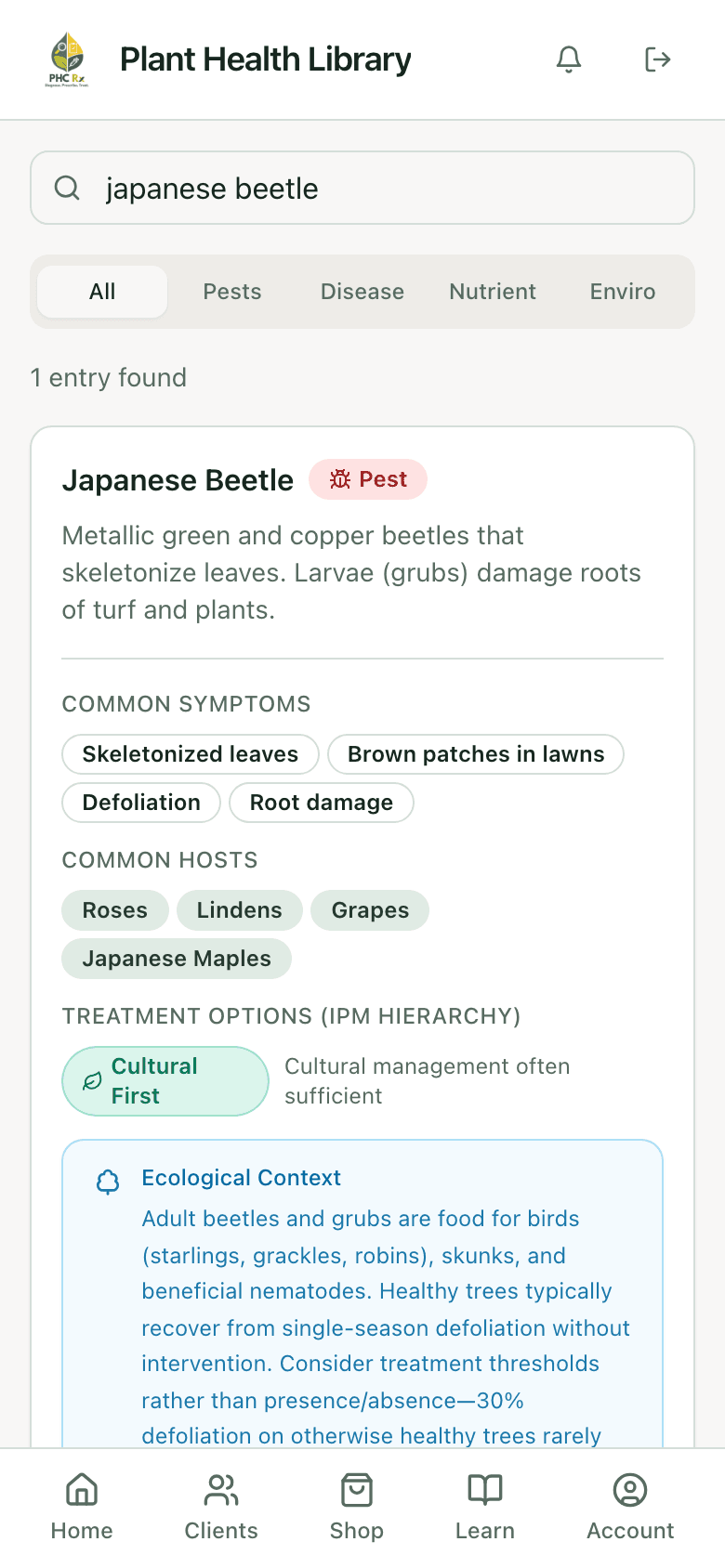
A metallic green and copper scarab, half an inch long, that emerges from turf in late June and feeds in groups on the sunlit upper canopy for six to eight weeks. Adults eat the tissue between the veins and leave a lace skeleton; a tree with a heavy population goes brown from the top down in July. The larvae are the white grubs in the lawn. Healthy trees refoliate the same season or the next and recover; a tree that is skeletonized several years running, or one that was already stressed, loses vigor. The damage is mostly to the look of the tree, and the treatment threshold should reflect that.
Symptoms (the tree's response)
- Skeletonized leaves with the veins left, upper and outer canopy first
- Brown, lacy canopy on a linden or birch in July
- Premature leaf drop on heavily fed trees
- Grub damage in the turf under and around the tree
Signs (the organism itself)
- Beetles in clusters on the sunny side of the canopy, late June through August
- Beetles that drop when the branch is shaken
- Chewed flowers on roses and crabapple
- Skunks and raccoons tearing up the lawn for grubs in fall
Common hosts: Linden, littleleaf and American, the favorite, Birch, Crabapple and apple, Japanese maple and Norway maple, Elm, sassafras, and Ohio buckeye, Rose, grape, and hibiscus on the shrub side, Over 300 species when the population is high
Timing window
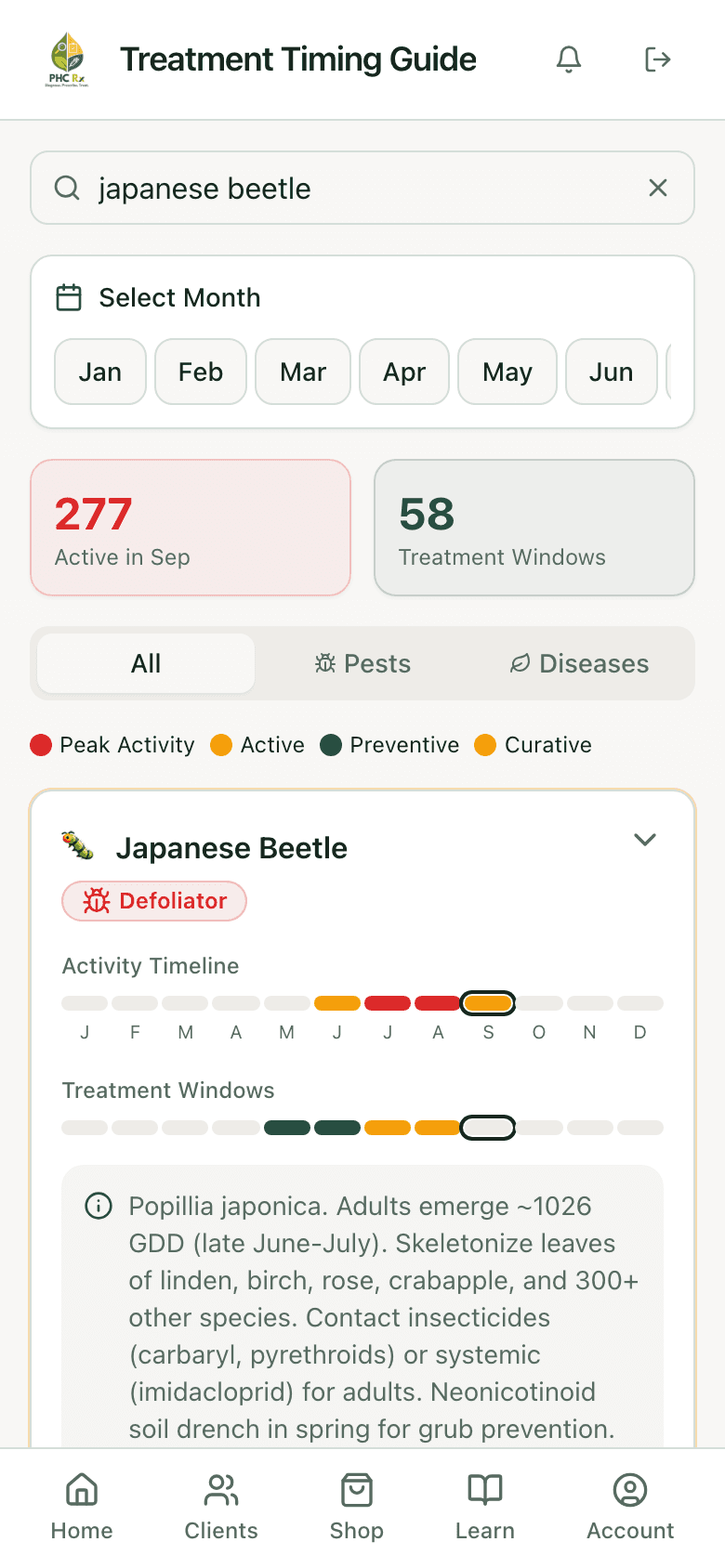
4 active monthsOrganism active
Preventive treatment
Curative treatment
Adults emerge around 1,000 growing degree days, late June into early July in most of the range, and feed through August. A systemic injected in May or early June is in the leaves when the first beetles arrive. Contact sprays go on when beetles are present and repeat as new ones fly in. Do not put out bag traps; they draw beetles from a half mile away onto the property. Grub control in turf in late July into August is a separate program.
Treatment options
Product, rate, delivery, timing
Rates below are per inch of trunk diameter at breast height unless the row says otherwise. The registered label wins over anything on this page.
Imicide (Mauget)
- Active ingredient
- Imidacloprid 10%
- Rate
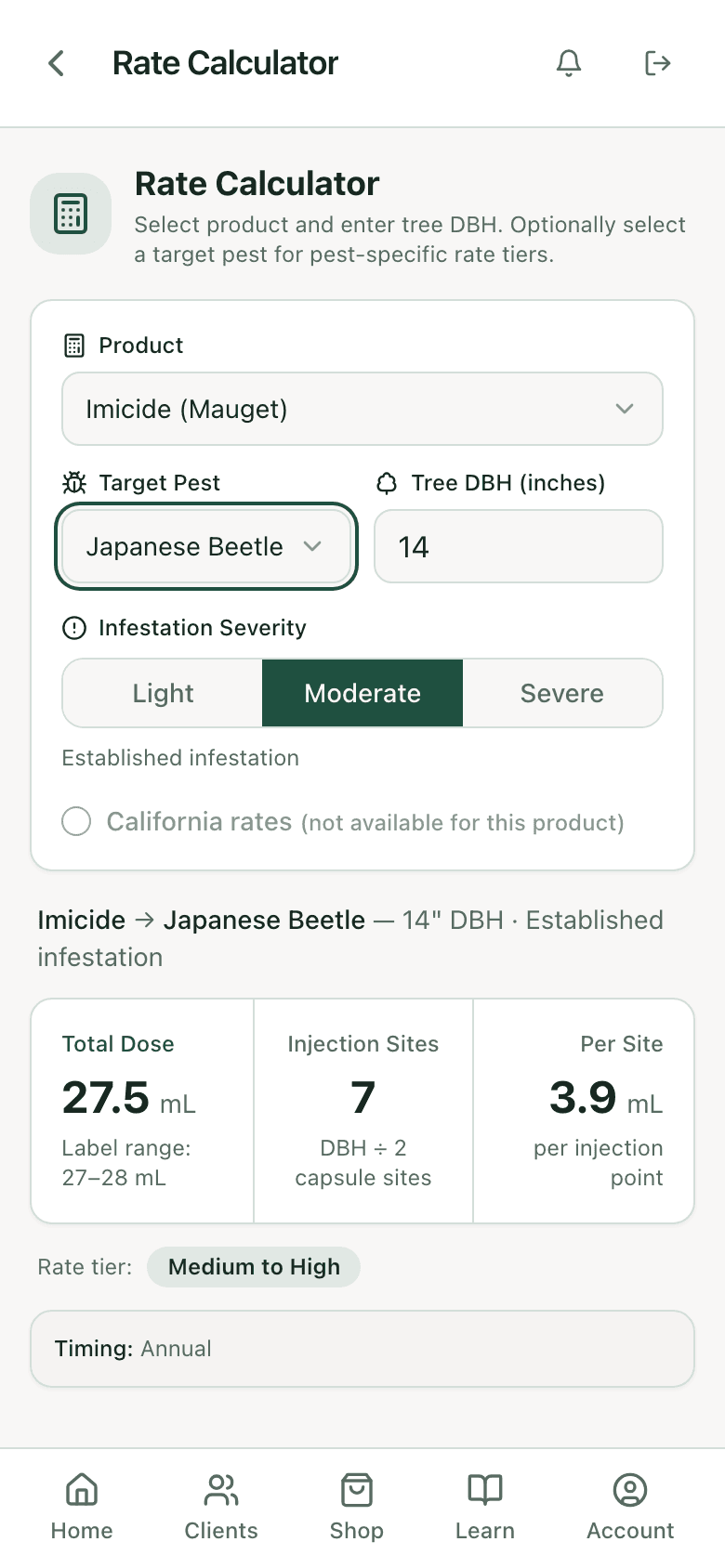
- Capsule micro-injection by DBH band. A 14 inch linden is 21 to 27 mL low, 28 to 36 mL high (label band 14 to 19 in); a 20 inch birch is 30 to 33 mL low, 40 to 44 mL high (label band 20 to 22 in)
- Delivery
- Mauget capsule micro-injection at the root flare
- Timing
- May into early June, ahead of adult emergence
- Frequency
- Annual
Dinocide (Mauget)
- Active ingredient
- Dinotefuran
- Rate
- Capsule micro-injection by DBH band; a 14 inch tree is 21 to 27 mL low, 28 to 36 mL high (label band 14 to 19 in)
- Delivery
- Mauget capsule micro-injection
- Timing
- Early June, or at first beetle sighting; moves into the canopy in days
- Frequency
- Annual or as needed based on pest pressure; do not exceed max annual rate.
ACE-jet (Arborjet)
- Active ingredient
- Acephate 97.4%
- Rate
- Label table by DBH band; a 16 inch tree is 72 mL low, 100 mL medium, 125 mL high (label band 14 to 16 in)
- Delivery
- Trunk injection
- Timing
- When beetles are on the tree
- Frequency
- Per label
Agrilicide (Mauget)
- Active ingredient
- Emamectin benzoate 4%
- Rate
- Capsule micro-injection by DBH band; a 14 inch tree is 35 mL low, 70 to 140 mL medium, 140 to 210 mL high (label band 13 to 15 in)
- Delivery
- Mauget capsule micro-injection
- Timing
- Spring
- Frequency
- Every 2 years
Bifen I/T (Control Solutions)
- Active ingredient
- Bifenthrin 7.9%
- Rate
- Per label, diluted, sprayed to wet the foliage where beetles are feeding
- Delivery
- Foliar spray, reaching the upper canopy
- Timing
- When beetles are present, late June through August
- Frequency
- Repeat every 7 to 14 days per label as new beetles arrive
- Imicide (Mauget): Imidacloprid, season-long. Beetles feed on the leaf, take up the product, and stop within a day or two. On a linden the label restrictions on pollinator-attractive hosts are the thing to read; linden blooms in late June, exactly when the beetles arrive, and the bees are on it.
- Dinocide (Mauget): Dinotefuran, the fast option when the client calls in late June with beetles already on the tree. Same pollinator rules on a blooming host.
- ACE-jet (Arborjet): Acephate, fast knockdown, short residual, and no neonicotinoid pollinator issue. A good fit for the linden in bloom.
- Agrilicide (Mauget): Emamectin benzoate, labeled for Japanese beetle, two seasons from one injection. The choice on a tree that is also being treated for a borer, or a specimen that gets stripped every year and the client wants covered for two summers.
- Bifen I/T (Control Solutions): Bifenthrin, contact and short residual. Works on the beetles it hits and the next group flies in a week later, so it is a series, and it is hard on beneficials. The choice on shrubs and small trees where a systemic is not justified.
Worked examples
Dose per tree
Imicide, capsule micro-injection
14″ DBH
21 to 27 mL low, 28 to 36 mL high (label band 14 to 19 in)
Imicide, capsule micro-injection
20″ DBH
30 to 33 mL low, 40 to 44 mL high (label band 20 to 22 in)
Dinocide, capsule micro-injection
14″ DBH
21 to 27 mL low, 28 to 36 mL high (label band 14 to 19 in)
ACE-jet, from the label table
16″ DBH
72 mL low, 100 mL medium, 125 mL high (label band 14 to 16 in)
Want the number for the tree in front of you? Use the tree injection rate calculator.
The threshold
A healthy shade tree that loses a third of its leaves to beetles in July is not in danger. It looks bad, the client is upset, and it will leaf out fine next spring. The treatment decision is aesthetic on most trees and only becomes a health decision on a tree that is stripped every year, was recently transplanted, or is already stressed by something else. Say that on the prescription and let the client choose whether the look of the linden over the patio is worth the injection. Most say yes; the point is that they chose.
Traps make it worse. A bag trap in the yard pulls beetles from the whole block, and most of them land on the trees on the way to the bag. If the client has one, the first service line is removing it.
Linden and the bees
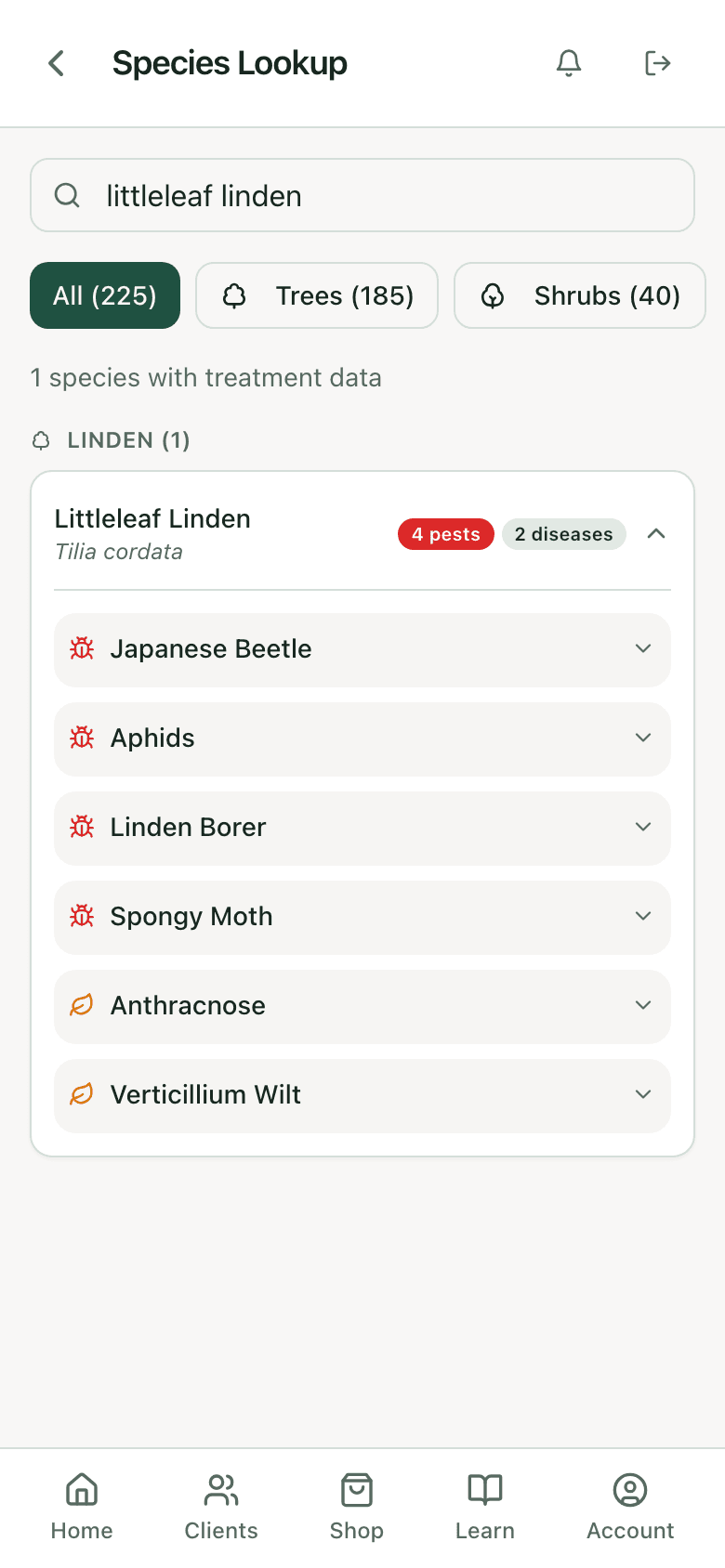
Linden is the beetle's favorite tree and one of the most bee-worked trees in the landscape, and the two overlap in late June. Neonicotinoid labels restrict applications to linden and other bee-attractive hosts around bloom, and some states go further. Read the label the app pulls up, and where the restriction applies, use acephate by injection or wait until bloom is finished. The label check flags the host and the bloom window so the crew does not find out from a neighbor with a hive.
What the label check will catch
Japanese beetle is on the imidacloprid, dinotefuran, acephate, emamectin benzoate, and bifenthrin labels the app carries, so the pest check passes. The label check flags a neonicotinoid on linden during bloom, a repeat injection inside the annual maximum, a bifenthrin spray scheduled on a windy day near water, and a DBH under the table minimum on a young Japanese maple that should be sprayed or left alone.
Label check
1 warningLast application was 14 days ago. Proceed with a documented override, or reschedule.
Pricing the job
Injection is per inch of DBH: a 14 inch linden at $18 per inch is $252 for the season, a 20 inch birch is $360. Sprays are per visit with a minimum, sold as a series of two or three. Grub control in the turf is a separate line if the client asks. Put it on the calendar with the product and rate on the event, and schedule next May's injection now, because the beetles come back every year and the client will call the same week in July.
FAQ
Questions arborists ask
What is the best treatment for Japanese beetles on trees?
A systemic trunk injection in May or early June on the trees that matter, imidacloprid or dinotefuran on most hosts and acephate on a linden in bloom. Contact sprays with bifenthrin work on the beetles present and need repeating as new ones arrive. Remove any bag traps.
Will Japanese beetles kill my linden?
Almost never on their own. A healthy linden refoliates after a season of skeletonizing. Repeated years of heavy feeding, or feeding on a tree already stressed by transplanting or drought, reduces vigor and is the case for treating. Otherwise the decision is about how the tree looks in July.
When should you treat for Japanese beetles?
Inject a systemic in May or early June so it is in the leaves when adults emerge around late June. Spray when beetles are on the tree, late June through August, and repeat per label. Grub treatments in turf go on in late July and August.
Does tree injection work for Japanese beetles?
Yes. Beetles feed on leaf tissue that carries the product and stop within a day or two. A 14 inch linden takes 21 to 27 mL low, 28 to 36 mL high (label band 14 to 19 in) from the Imicide rate table; on a linden in bloom, follow the label's pollinator restrictions or use acephate.
Do Japanese beetle traps work?
They catch a lot of beetles and attract more than they catch. Research consistently shows more damage on plants near a trap. Take them down.
Where do these rates come from?
The PHC Rx product catalog, built from the Imicide, Dinocide, ACE-jet, Agrilicide, and Bifen I/T labels, and the app's timing guide for the emergence window.
Related