
Treatment guide
Black knot treatment: the winter cut and the spring fungicide
Black knot is a pruning disease with a fungicide assist, not the other way around. Every knot left on the tree in March is a spore source for the next wet spring. Cut them out in winter, protect the new growth from bud break through shoot elongation, and the ornamental cherry or plum stays worth keeping. Rates, the cut, and the window.
disease
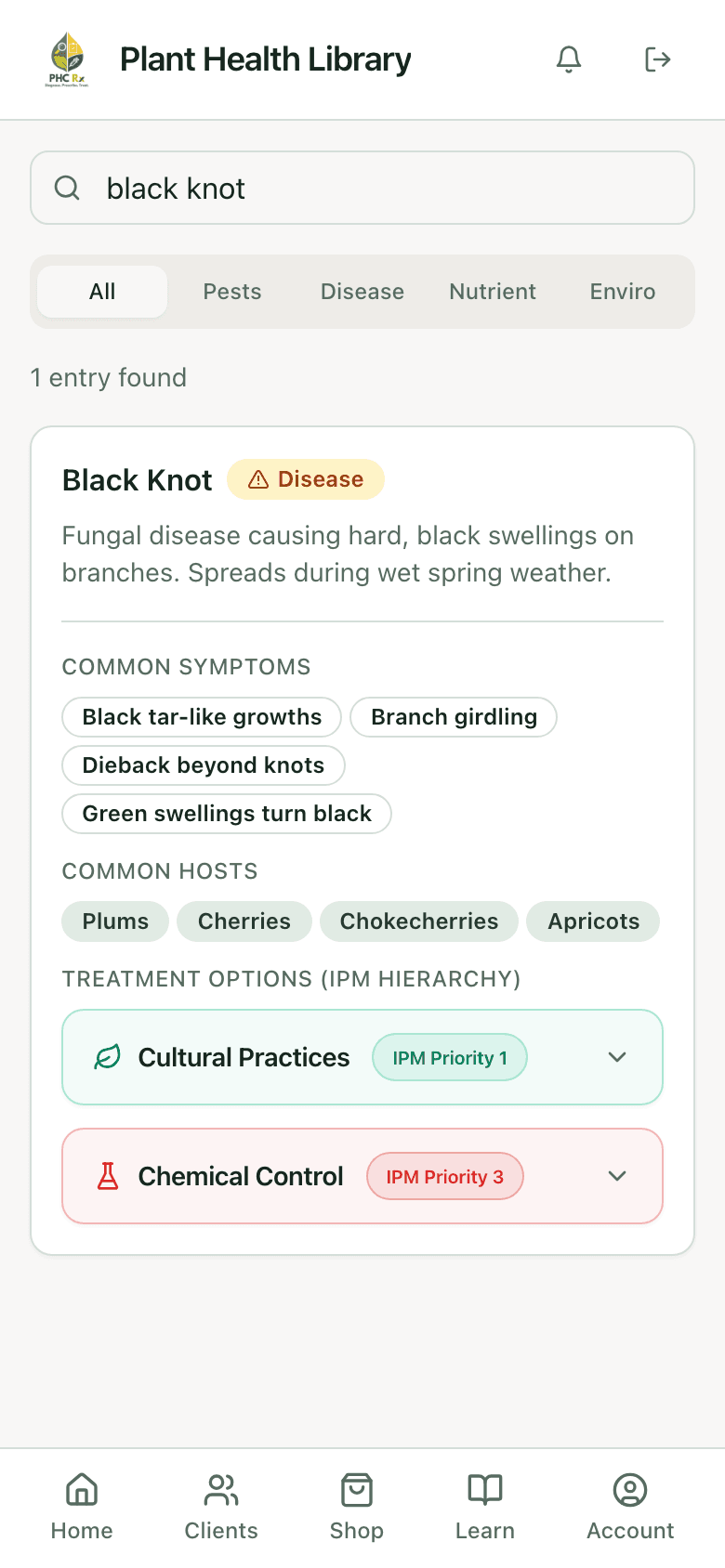
Black knotApiosporina morbosa (syn. Dibotryon morbosum)
A fungus of Prunus that grows in the wood of twigs and branches and produces a hard, black, elongated gall. Spores release from the mature knots during spring rains, land on succulent new shoots, and infect through the green tissue. The first year the infection is a small olive-green swelling that is easy to miss. The second year it turns black, cracks, and starts producing spores of its own. Knots girdle the twig beyond them, and a tree carrying dozens of them thins and dies back from the tips. Wild cherry in the fence line keeps the spores coming.
Symptoms (the tree's response)
- Dieback of twigs and small branches beyond the knots
- Thin canopy and poor bloom on a heavily infected cherry
- Leaves wilting on a branch girdled by an old knot
Signs (the organism itself)
- Hard black swellings an inch to a foot long on twigs and branches, rough and cracked
- Olive-green velvety swellings on last summer's growth, the new infections
- Knots that have spread into the main stem on an old tree
- Wild cherry or chokecherry nearby with the same galls
Common hosts: Plum, edible and ornamental, Cherry, including Kwanzan, Yoshino, and weeping cherry, Chokecherry and black cherry, the wild reservoir, Apricot, Occasionally peach and almond
Timing window
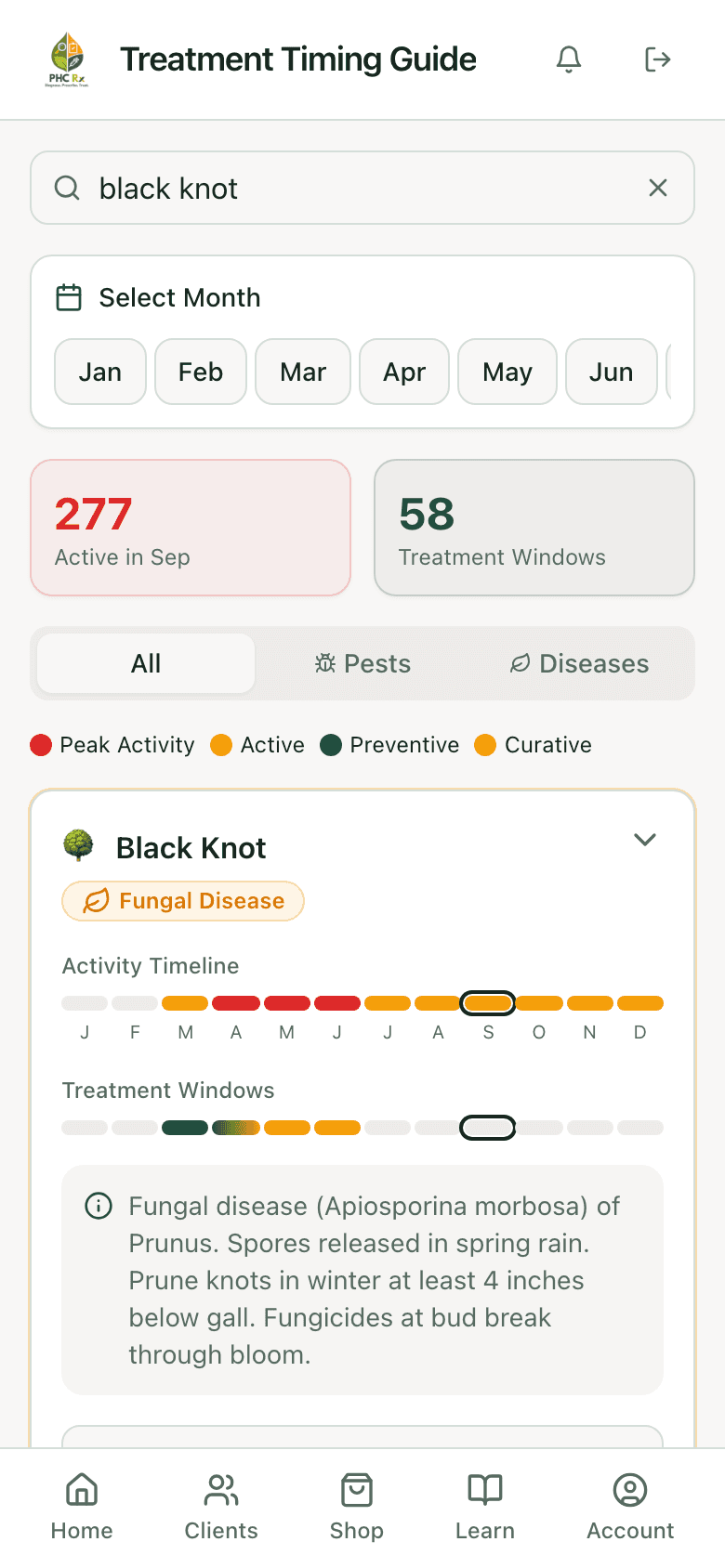
10 active monthsOrganism active
Preventive treatment
Curative treatment
Prune knots out in late winter while the tree is dormant and the knots are easy to see against bare wood, at least 4 inches below the visible gall and 8 inches on a large one, and burn or bag the cuttings. Spores release from bud break through about three weeks after petal fall, in warm rain. Protectant fungicides start at bud swell and repeat on the label interval through shoot elongation. An injected systemic goes in at bud break for the season.
Treatment options
Product, rate, delivery, timing
Rates below are per inch of trunk diameter at breast height unless the row says otherwise. The registered label wins over anything on this page.
FUNGISOL® (Mauget)
- Active ingredient
- Debacarb, Carbendazim
- Rate
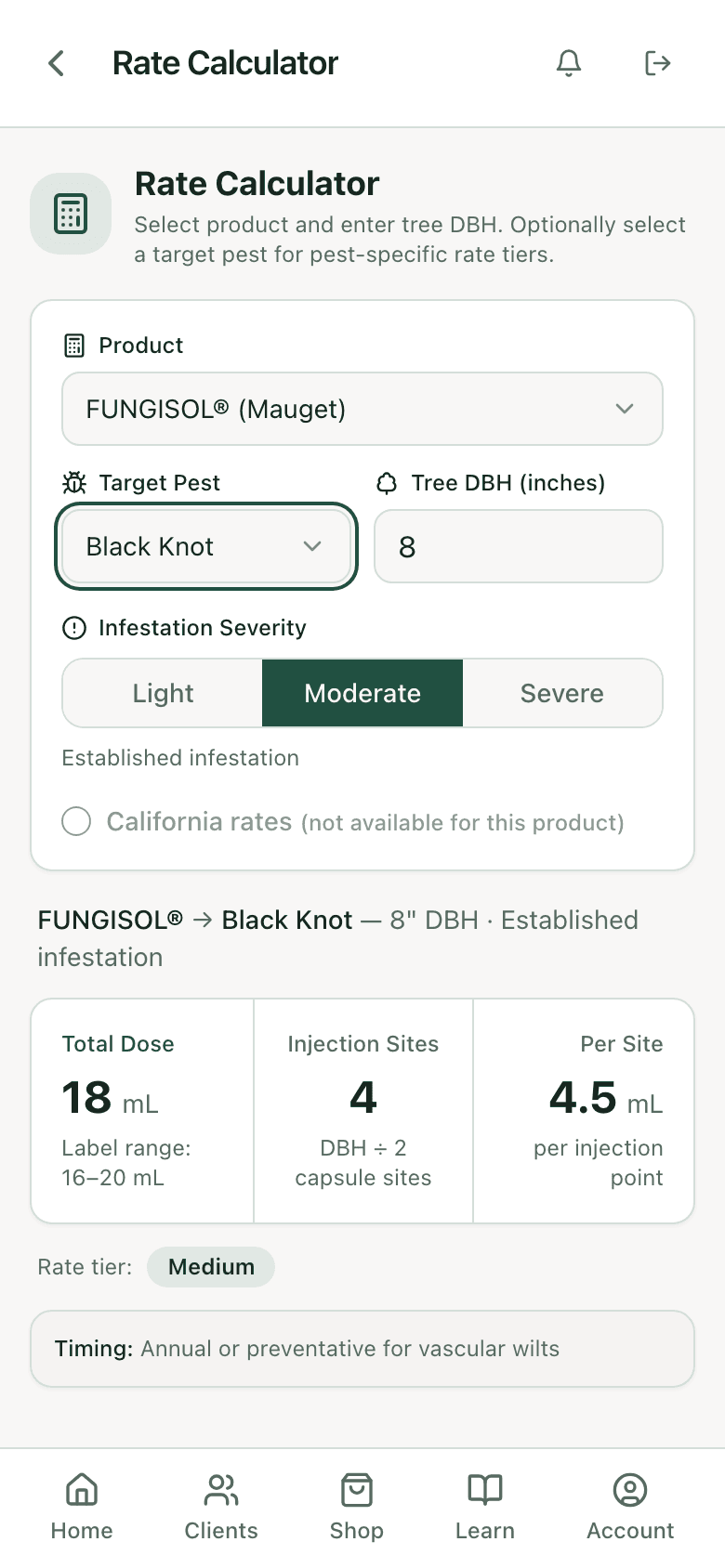
- Capsule micro-injection by DBH band. An 8 inch cherry is 16 to 20 mL low, 16 to 20 mL medium, 16 to 20 mL high (label band 8 to 10 in); a 12 inch plum is 30 to 36 mL low, 30 to 36 mL medium, 30 to 36 mL high (label band 11 to 13 in)
- Delivery
- Mauget capsule micro-injection at the root flare
- Timing
- Bud break, so the fungicide is in the new growth during spore release
- Frequency
- Annual or preventative for vascular wilts
Tebuject 16 (Mauget)
- Active ingredient
- Tebuconazole
- Rate
- Capsule micro-injection by DBH band; a 10 inch tree is 16 to 20 mL low, 24 to 30 mL high (label band 8 to 10 in)
- Delivery
- Mauget capsule micro-injection
- Timing
- Bud break
- Frequency
- Annual application or as needed during the growing season.
Propizol (Arborjet)
- Active ingredient
- Propiconazole
- Rate
- Label table by DBH band; a 10 inch tree is 100 to 120 mL low, 200 to 240 mL high (label band 10 to 12 in)
- Delivery
- Trunk injection
- Timing
- Bud break
- Frequency
- annual
TM 4.5 (Quali-Pro)
- Active ingredient
- Thiophanate-methyl 46.2%
- Rate
- Per label, diluted, sprayed to wet all new growth
- Delivery
- Foliar spray
- Timing
- Bud swell, then on the label interval through three weeks past petal fall
- Frequency
- Three to four applications in a wet spring
Chlorothalonil (several brands)
- Active ingredient
- chlorothalonil
- Rate
- Per label, sprayed to wet all new growth
- Delivery
- Foliar spray
- Timing
- Bud swell through shoot elongation, on the label interval
- Frequency
- Every 7 to 14 days during spore release, usually three applications
- FUNGISOL® (Mauget): Debacarb and carbendazim, a systemic fungicide that moves into the shoots where infection happens. The injectable option for a specimen ornamental cherry where a spray series is not practical or the client will not have spray on the patio.
- Tebuject 16 (Mauget): Tebuconazole. A triazole with a different mode of action for rotation on a tree that gets injected every spring, and the choice where FUNGISOL is not labeled for the host.
- Propizol (Arborjet): Propiconazole for crews running an Arborjet rig. Same window, same job.
- TM 4.5 (Quali-Pro): Thiophanate-methyl, the protectant the extension guides name. Only protects what it covers, so the series matters more than any single spray. Rotate with a different mode of action to slow resistance.
- Chlorothalonil (several brands): Multi-site protectant with no resistance problem, the rotation partner for thiophanate-methyl. Not in the PHC Rx catalog as a specific product; write the brand you use and its rate.
Worked examples
Dose per tree
FUNGISOL, capsule micro-injection
8″ DBH
16 to 20 mL low, 16 to 20 mL medium, 16 to 20 mL high (label band 8 to 10 in)
FUNGISOL, capsule micro-injection
12″ DBH
30 to 36 mL low, 30 to 36 mL medium, 30 to 36 mL high (label band 11 to 13 in)
Tebuject 16, capsule micro-injection
10″ DBH
16 to 20 mL low, 24 to 30 mL high (label band 8 to 10 in)
Propizol, from the label table
10″ DBH
100 to 120 mL low, 200 to 240 mL high (label band 10 to 12 in)
Want the number for the tree in front of you? Use the tree injection rate calculator.
The cut does the work
No fungicide reaches a knot that is already there. The knot has to come off, and it has to come off with margin: 4 inches of clean wood below a small gall, 8 inches on a big one, because the fungus is growing in the wood ahead of what you can see. On a knot in the main stem, cut the gall out down to clean wood if it is small, and put the tree on the removal list if it is large. Bag the prunings and get them off the property; a pile of knots by the shed sporulates just fine.
Do it in late winter. The knots stand out on bare wood, the tree is dormant so the wounds close in spring, and there are no spores flying. A winter pruning visit on every Prunus on the property, billed hourly, is the treatment. The spring fungicide protects the new growth while the neighbor's wild cherry keeps sending spores.
Spray or inject
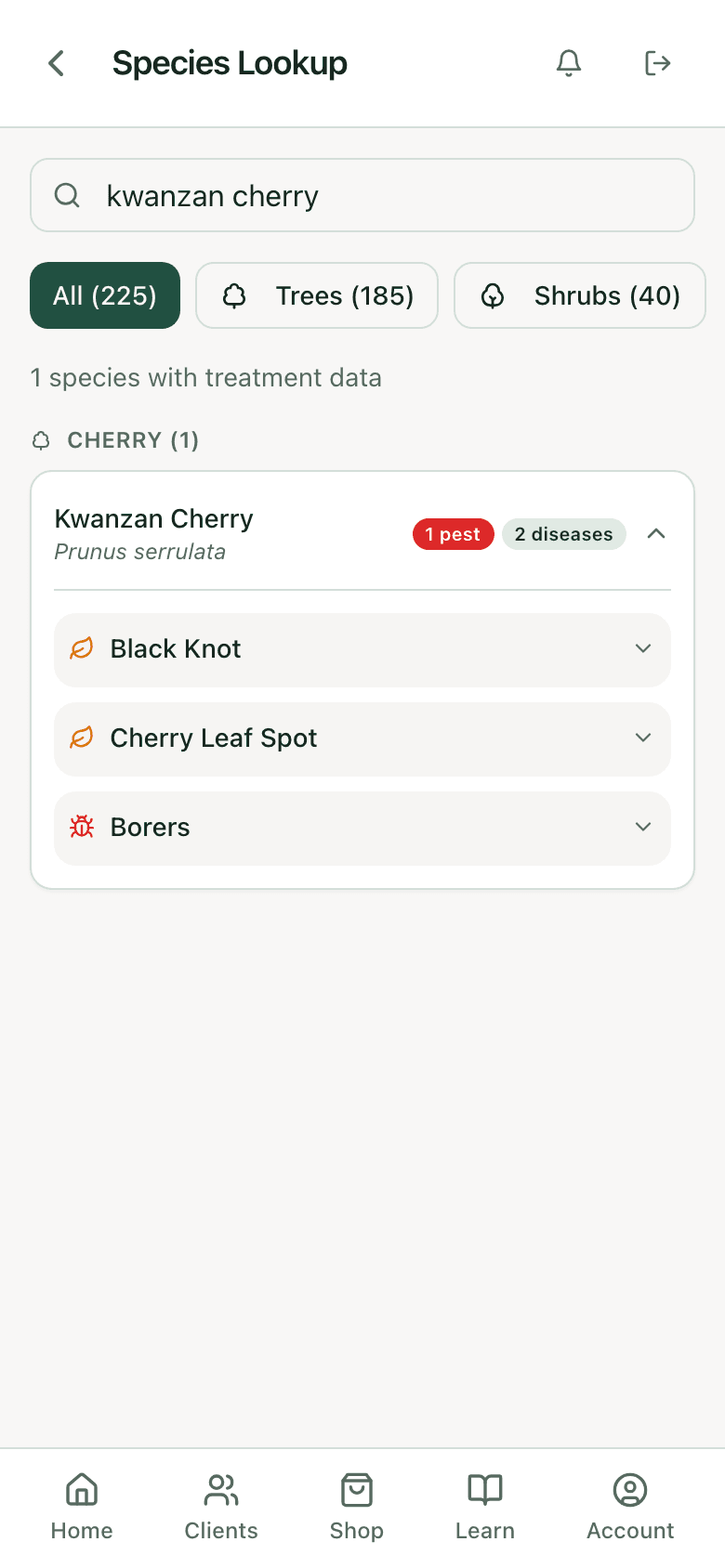
A row of purple-leaf plums along a driveway gets a spray series, three or four passes from bud swell through petal fall, because they are small and the coverage is easy. A single 10 inch Kwanzan cherry over a patio gets injected at bud break, because the client does not want a sprayer on the patio four times in April and the injection covers the season. Either way the winter cut comes first, and either way it is on the prescription as a multi-year plan, because a tree with black knot in the neighborhood will be re-infected.
What the label check will catch
Black knot is on the debacarb, tebuconazole, propiconazole, and thiophanate-methyl labels the app carries, so the disease check passes. The label check flags a fungicide injection scheduled in June after spore release is over, a DBH under the table minimum on a young plum that should be sprayed, and the same triazole two years running without rotation. On an edible plum it flags the pre-harvest interval on the spray.
Label check
1 warningLast application was 14 days ago. Proceed with a documented override, or reschedule.
Pricing the job
Winter pruning is hourly with a minimum. Spray series are per visit, sold as the set. Injection is per inch of DBH: an 8 inch cherry at $18 per inch is $144 for the season, a 12 inch plum is $216. Put the pruning visit and the bud-break treatment on the calendar for next year before you leave this one, with the product and rate on the event. The client sees a program, not a series of surprises.
FAQ
Questions arborists ask
How do you treat black knot on a cherry tree?
Prune every knot out in late winter, 4 to 8 inches below the visible gall, and destroy the cuttings. Then protect the new growth from bud swell through three weeks after petal fall with a fungicide, either a spray series of thiophanate-methyl rotated with chlorothalonil or a trunk injection at bud break.
Can black knot be cured?
A tree can be cleaned up and kept healthy, but not made immune. Knots that are cut out are gone; new infections come every wet spring from wild cherry and untreated trees nearby. Expect an annual winter inspection and pruning for as long as the tree stands.
When should you spray for black knot?
Starting at bud swell and repeating on the label interval until about three weeks after petal fall. That is when the spores are releasing and the shoots are soft enough to infect. A spray in summer protects nothing.
Does tree injection work for black knot?
Yes, as the protective step after the pruning. FUNGISOL at bud break covers the season; an 8 inch cherry takes 16 to 20 mL low, 16 to 20 mL medium, 16 to 20 mL high (label band 8 to 10 in) from the rate table. It does not remove existing knots.
Should I remove a tree with black knot?
When the knots are in the trunk or main scaffolds, or when there are more knots than you can prune out and keep a tree shape, yes. A wild cherry or chokecherry in the fence line with knots should go regardless, because it is the spore source for everything on the property.
Where do these rates come from?
The PHC Rx product catalog, built from the FUNGISOL, Tebuject 16, Propizol, and TM 4.5 labels, and the app's timing guide for the pruning and spray windows.
Related