
Treatment guide
Pine wilt treatment: a preventive injection or a removal
A Scots pine that goes from green to brown in six weeks in August has pine wilt, and it is already dead. There is no curative treatment. There is a preventive abamectin or emamectin injection in spring that keeps the nematode out of a healthy pine for two seasons, and a removal protocol for the dead one so the beetles that carry the disease do not fly to the next tree. Rates, the window, and which trees to protect.
pest
Pine wiltBursaphelenchus xylophilus, the pinewood nematode, vectored by Monochamus pine sawyer beetles
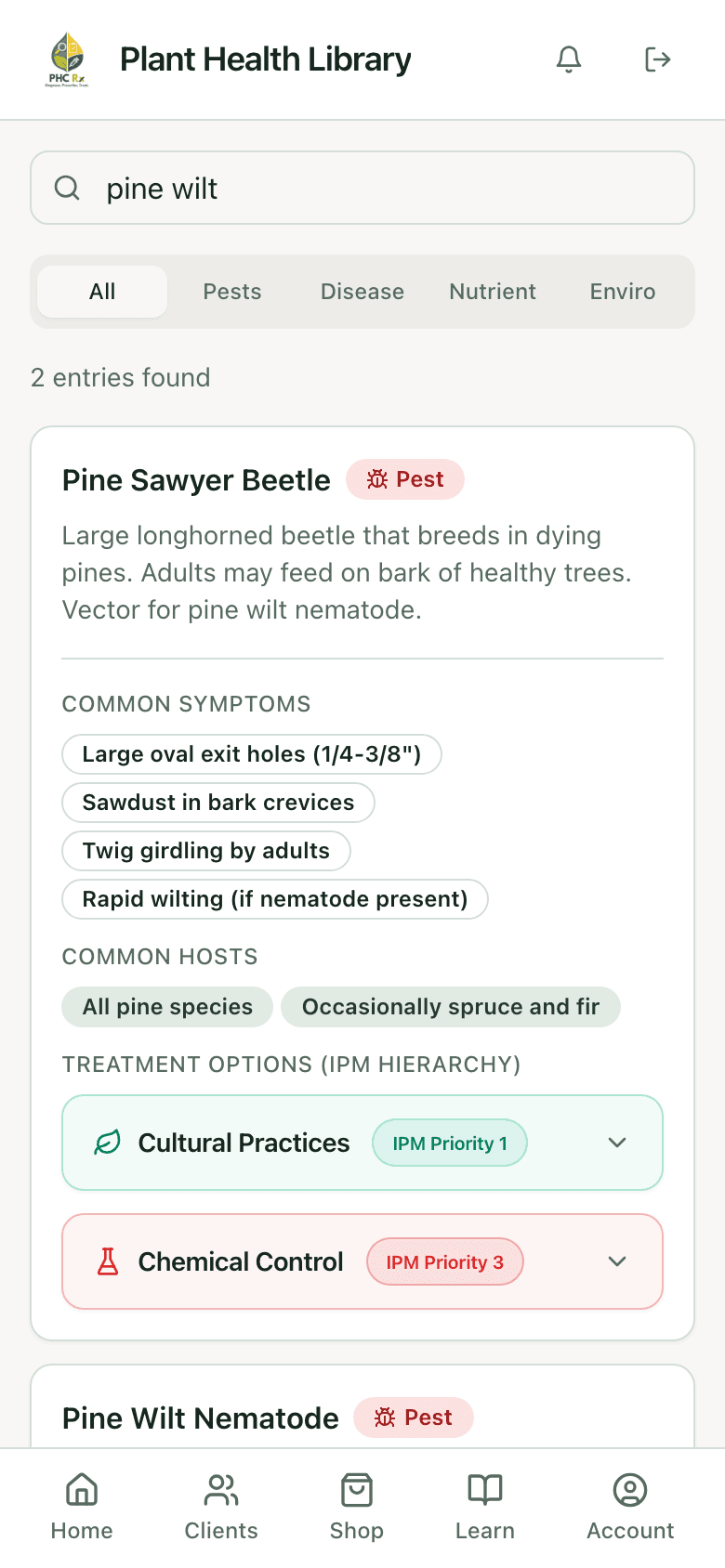
A microscopic nematode carried tree to tree by pine sawyer beetles. The beetle feeds on twigs of a healthy pine in early summer, the nematodes leave the beetle and enter the wound, and they multiply in the resin canals until the tree cannot move water. A healthy 40-year-old Scots pine wilts and browns in a few weeks in late summer and is dead by fall. The dead tree becomes a beetle nursery: sawyers lay eggs in it, the larvae pick up nematodes as they develop, and the next generation flies out in spring carrying the disease. It runs through a windbreak or a neighborhood one tree at a time, hottest and driest sites first.
Symptoms (the tree's response)
- Whole-tree wilting: needles gray-green, then yellow, then brown, over four to eight weeks in July through September
- Needles that stay on the dead tree through winter
- No resin flow when a branch is cut, on a tree that should bleed pitch
- Sudden death of a pine that looked fine in June
Signs (the organism itself)
- Round sawyer beetle exit holes about a quarter inch across on the trunk and branches
- Blue stain fungi in the wood of a felled tree
- Lab confirmation from a wood sample, which is cheap and worth doing before you sell a program to the neighbors
- Other dead Scots or Austrian pines within a few hundred yards
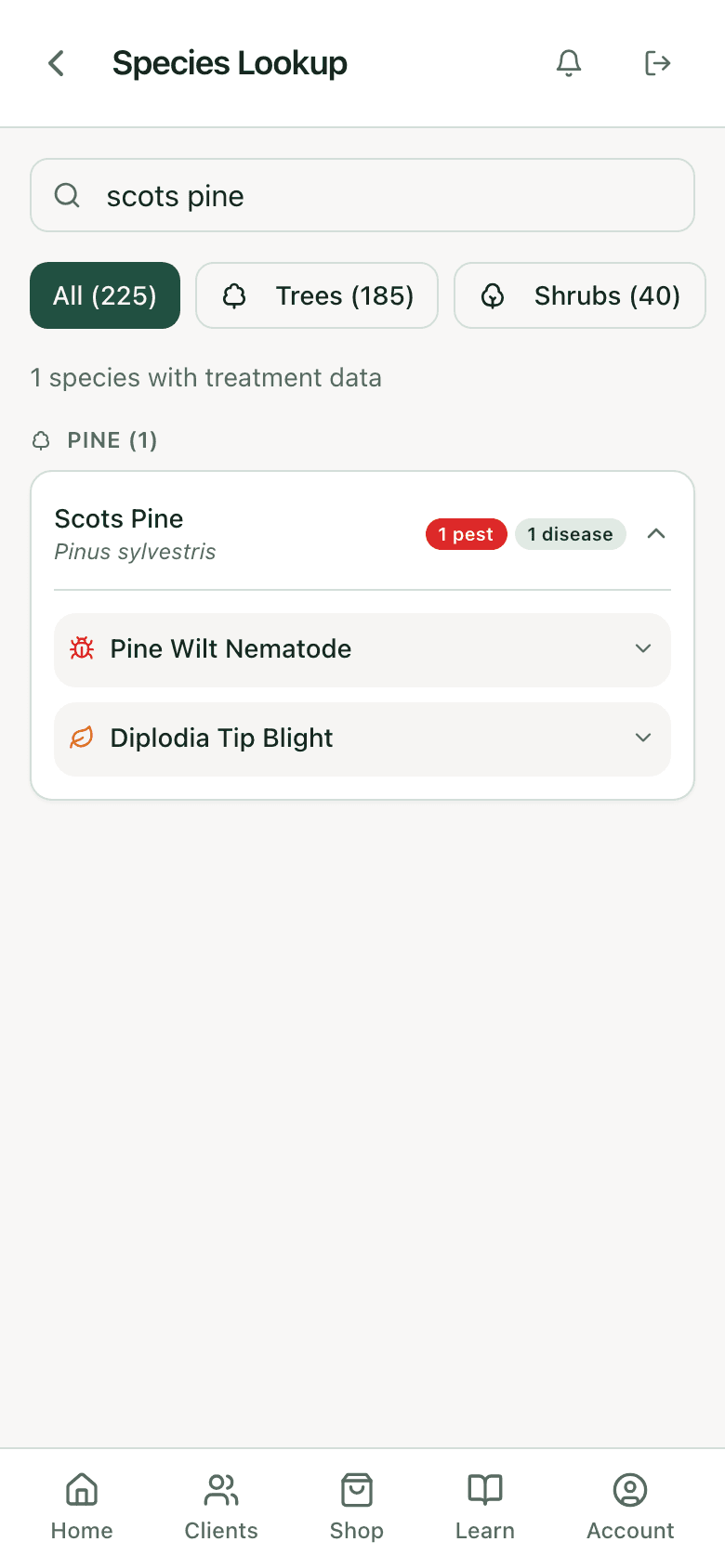
Common hosts: Scots pine, the most common victim in the Midwest and Plains, Austrian pine, Japanese black and Japanese red pine, Mugo pine, Other non-native pines under stress, Native pines are mostly resistant, though eastern white pine is occasionally hit
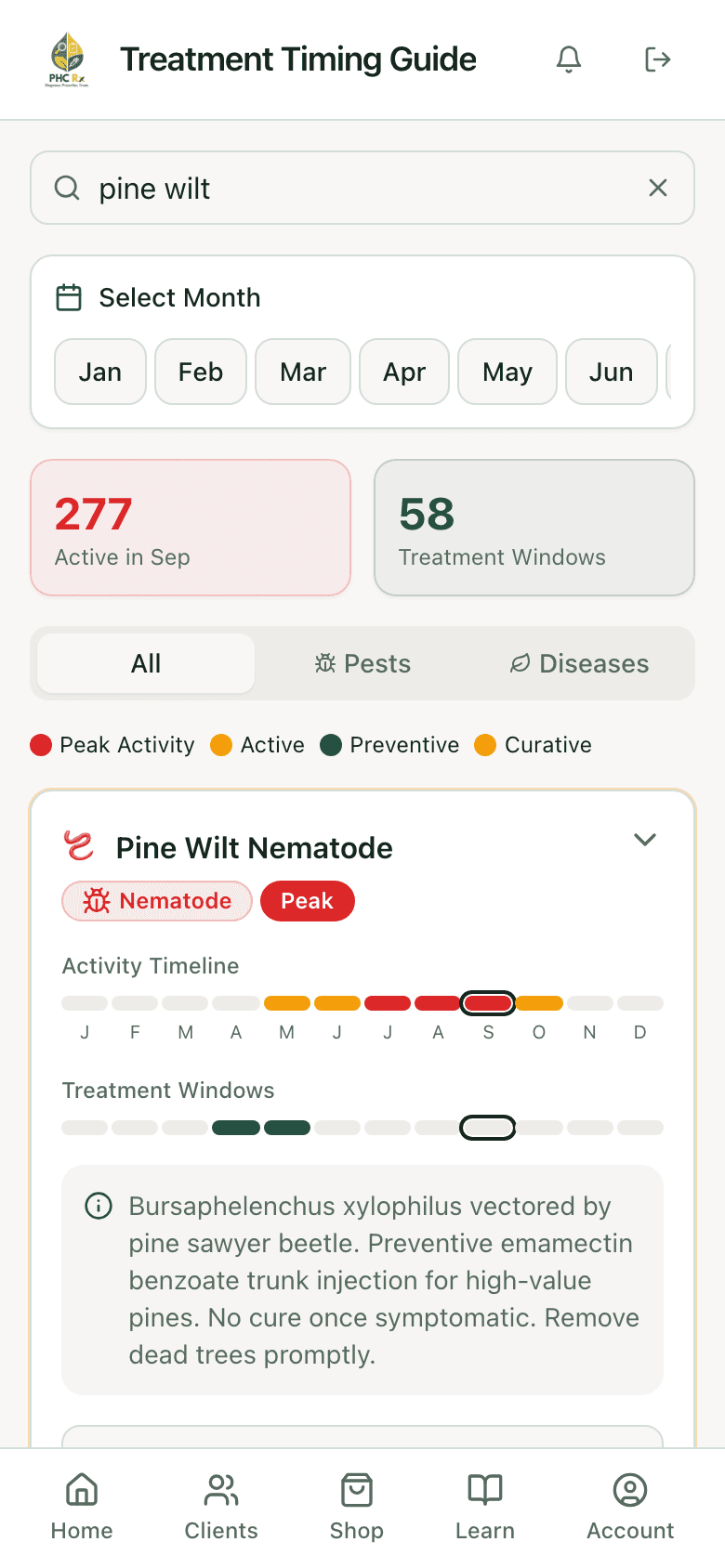
Timing window
6 active monthsOrganism active
Preventive treatment
Curative treatment
Sawyer beetles fly from May through the summer and feed on healthy pines. Preventive injections go in during April and May, before flight, on trees you want to keep, and hold for two seasons. There is no curative window. A tree that is browning is dead; cut it and remove or chip it before April so the beetles developing in it never fly. Do not stack the logs.
Treatment options
Product, rate, delivery, timing
Rates below are per inch of trunk diameter at breast height unless the row says otherwise. The registered label wins over anything on this page.
Abacide 2 (Mauget)
- Active ingredient
- Abamectin 1.9%
- Rate
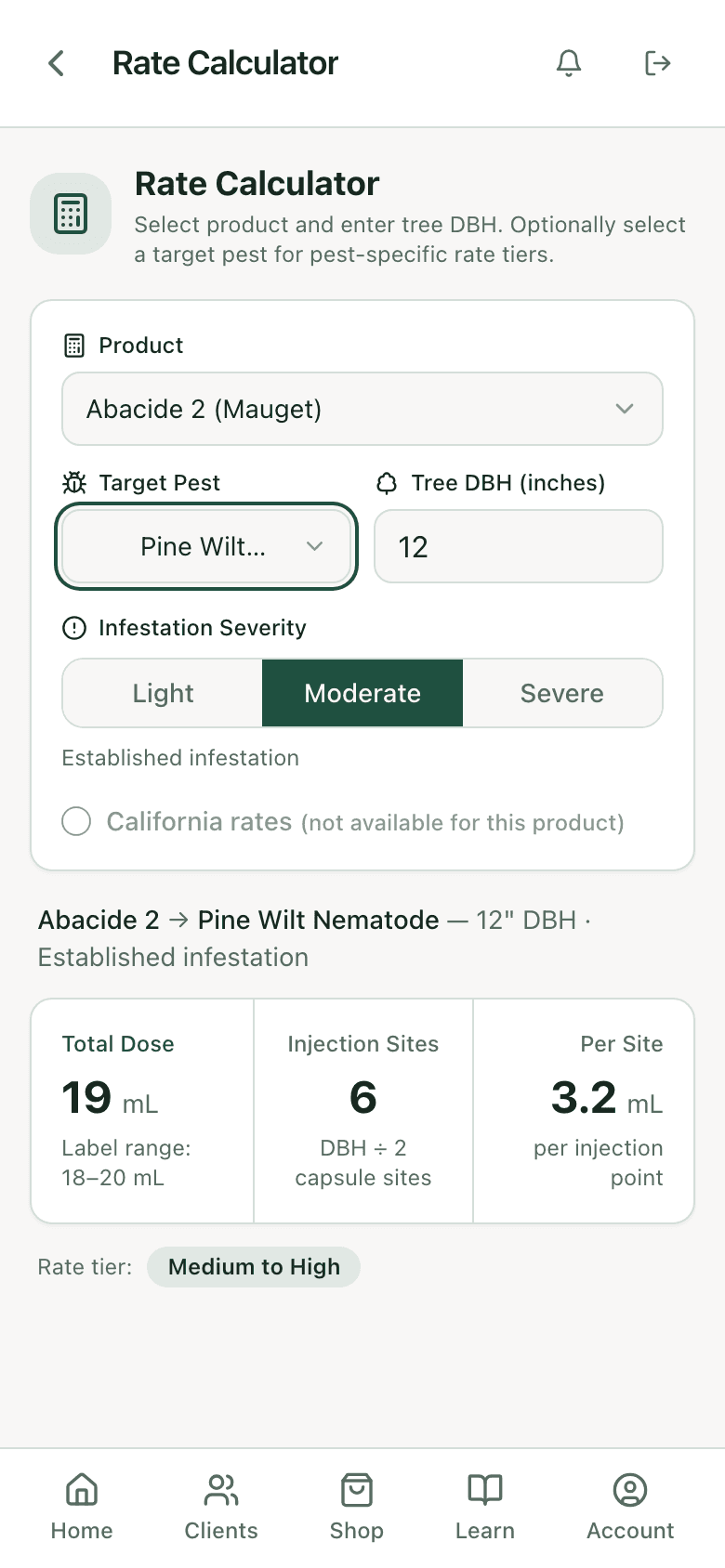
- Capsule micro-injection by DBH band. A 12 inch Scots pine is 15 to 18 mL low, 20 to 24 mL high (label band 11 to 13 in); an 18 inch Austrian pine is 21 to 27 mL low, 28 to 36 mL high (label band 14 to 19 in)
- Delivery
- Mauget capsule micro-injection at the root flare, capsules spaced around the trunk
- Timing
- April into May, before sawyer beetle flight
- Frequency
- Every 2 years
Agrilicide (Mauget)
- Active ingredient
- Emamectin benzoate 4%
- Rate
- Capsule micro-injection by DBH band; a 14 inch tree is 35 mL low, 70 to 140 mL medium, 140 to 210 mL high (label band 13 to 15 in)
- Delivery
- Mauget capsule micro-injection
- Timing
- April into May, before flight
- Frequency
- Every 2 years
TREE-äge R10 (Arborjet)
- Active ingredient
- Emamectin benzoate 9.7%
- Rate
- Label table by DBH band; a 14 inch tree is 14 mL low, 28 mL medium, 56 mL high (label band 14 to 15 in)
- Delivery
- Trunk injection with an injection rig
- Timing
- Spring, before beetle flight
- Frequency
- Every 2 years
Sanitation: remove and destroy dead pines
- Active ingredient
- none
- Rate
- Every dead or dying Scots, Austrian, or other susceptible pine on the property and, where you can arrange it, the neighbors'
- Delivery
- Fell, then chip, burn, or bury before April 1; do not leave logs or firewood on site
- Timing
- October through March, before the sawyers emerge
- Frequency
- Every year the disease is active in the area
- Abacide 2 (Mauget): Abamectin, the chemistry with the longest record on pine wilt and labeled specifically for it. One spring injection protects a healthy pine through two beetle seasons. The lead product on a high-value pine in a county where the disease is moving.
- Agrilicide (Mauget): Emamectin benzoate, two-year protection, and the same product a crew is already carrying for borers. Kills nematodes and the sawyer larvae in the tree.
- TREE-äge R10 (Arborjet): Emamectin benzoate at the higher concentration for crews running an Arborjet system. Two seasons per label.
- Sanitation: remove and destroy dead pines: The dead tree is the source of next year's infected beetles. Removing it before spring flight is the single most effective control on a property and the one clients skip because the tree is already dead. Sell it as protection for the pines that are still green.
Worked examples
Dose per tree
Abacide 2, capsule micro-injection
12″ DBH
15 to 18 mL low, 20 to 24 mL high (label band 11 to 13 in)
Abacide 2, capsule micro-injection
18″ DBH
21 to 27 mL low, 28 to 36 mL high (label band 14 to 19 in)
Agrilicide, capsule micro-injection
14″ DBH
35 mL low, 70 to 140 mL medium, 140 to 210 mL high (label band 13 to 15 in)
TREE-äge R10, from the label table
14″ DBH
14 mL low, 28 mL medium, 56 mL high (label band 14 to 15 in)
Want the number for the tree in front of you? Use the tree injection rate calculator.
Which trees to inject
Not all of them. A windbreak of 60 Scots pines is not an injection job; it is a replacement plan with native species and a removal schedule. The injection goes on the pines that matter: the 40-year-old Austrian pine that screens the neighbor, the pair of Japanese black pines by the entrance, the specimen Scots pine the client planted the year the house was built. Price those per inch, every two years, for as long as the disease is active in the area, and tell the client the rest of the pines are on borrowed time.
Confirm the disease before you sell the program. A wood sample from a dead pine to the state diagnostic lab costs less than one injection and settles whether the neighborhood has pine wilt or a drought year. The diagnosis in the app carries the finding and the confidence, and the lab result goes on the record.
The dead tree
A pine that wilted in August is full of sawyer larvae by October. Cut it before April, chip it or burn it, and get it off the property. Firewood is the way this disease travels between counties, so no log pile and no free firewood on the curb. Put the removal on the prescription with the deadline on it, and when the client pushes back because the tree is dead anyway, the answer is that the removal is a treatment for the pines that are not.
What the label check will catch
Pine wilt is on the abamectin and emamectin benzoate labels the app carries, so the pest check passes. The label check flags an injection scheduled in July after flight has started, a repeat inside the two-year interval, and a DBH under the table minimum on a young mugo. It also flags an injection on a tree the diagnosis marked as symptomatic, which is the flag that saves a client from paying to inject a dead pine.
Label check
1 warningLast application was 14 days ago. Proceed with a documented override, or reschedule.
Pricing the job
Per inch of DBH, every two years, on the pines worth keeping. A 12 inch Scots pine at $18 per inch is $216 for two seasons; an 18 inch Austrian pine is $324. Removals are quoted as removals, with the deadline written in. Both go on the calendar with the product and rate on the injection event, and the spring re-injection two years out is scheduled the day this one is done.
Products on this page
FAQ
Questions arborists ask
Can pine wilt be treated?
Not once the tree is symptomatic; a browning pine is dead and should be removed before spring. Healthy pines can be protected with a preventive abamectin or emamectin benzoate trunk injection in April or May, which holds for two seasons.
What is the injection for pine wilt?
Abamectin (Abacide 2) or emamectin benzoate (Agrilicide, TREE-äge R10) injected at the root flare before sawyer beetle flight. A 12 inch Scots pine takes 15 to 18 mL low, 20 to 24 mL high (label band 11 to 13 in) from the Abacide 2 rate table, every two years.
How fast does pine wilt kill a tree?
Four to eight weeks from the first gray-green needles to a brown tree, usually in July through September. A pine that looked fine in June and is brown in September, with the needles still on it, is the classic case.
What do I do with the dead pine?
Cut it and chip, burn, or bury it before April 1, when the sawyer beetles that developed in it start to fly. Do not keep the logs for firewood or leave them on the property. The dead tree is the source of next year's infections.
Which pines get pine wilt?
Scots, Austrian, Japanese black, Japanese red, and mugo pine, and other non-native pines, especially on hot dry sites. Native pines such as eastern white pine and the southern pines are mostly resistant.
Where do these rates come from?
The PHC Rx product catalog, built from the Abacide 2, Agrilicide, and TREE-äge R10 labels, and the app's timing guide for the preventive window.
Related